Sunday, April 23, 2023

The Thorny Sides of Impatience

Back in the days when I was looking for a job, I read an article on job interview tips. One talked about how to handle interview questions, such as, "What, if any, do you consider your weak points?" It was the one question considered likely to be asked, usually after  the applicant's well rehearsed recitation of his or her strong  attributes.   Saying, "I don't have any" is not a good answer as it would sound a little too arrogantly pompous or unreasonably over confident. The go-to answer the article advised was to say: "I find myself impatient at times, often expecting others to do the same, whether the task is important or not".  That answer would have covered  the "weak point" part while conveying to the interviewer the applicant's go-getter attitude and willingness to tackle assignments head-on in the shortest amount of time.

Fortunately, no such question was asked of me when I went for job interviews so I never had the chance to test and/or prove the technique's relevance or validity.  We know patience's nobility but the thing is, should impatience be considered a virtue or not.  Can we safely say, "It depends"?

History is filled with stories of how impatience "paid off" and where they resulted in disaster.  Naturally, too, we see how it affects us, see it in others and the role it plays in many social and work experiences, but it seems that both good and bad come out in unequal doses where patience and impatience are concerned.

Did Colonel George Armstrong Custer and 270 of his men die at Little Big Horn on June 16,1876 because he was too impatient in committing his troops too prematurely into battle against the Lakota and Cheyenne warriors when he could have waited for perhaps another day or two? Some historians speculated on that. 

On another page of history, at the crucial point of WWII, General Leslie Groves was picked to head the Manhattan Project in September, 1942.  Hitler's Germany was rushing to produce the first atomic bomb. The Allied forces did everything to thwart the plan but meanwhile the U.S. was working furiously to do the same - achieve the biggest game changer of that conflict.  Gen. Groves was picked for a lot of reasons, including his ability to manage huge U.S. Army Corps projects, including construction of the Pentagon building earlier in his career, but he had the reputation of a very impatient manager, a "doer" and effective  administrator and "driver" of men.  The Manhattan Project finished and successfully tested the first atomic bomb in record time and the rest is history.  That was the upside of impatience because had the Third Reich got to the bomb first, world history would have been written a lot differently from what it is today.

Driving through traffic, waiting in line for anything anywhere, or simply waiting in general are everyone's peeve. 

Let's be reminded, however, that compared to a few centuries ago we know the human mind, even its physiology, was acclimated to waiting for long periods of time. It took a "grueling ten weeks at sea", that's two and a half months, for all 102 passengers on the Mayflower to cross the Atlantic from England to reach what is now the coast of Massachusetts. The human body and mental capacity to endure managed to survive that one and similar subsequent voyages that followed, though not to be ignored, were tragic consequences for many of the hapless voyagers. 

Today, trans-Atlantic travelers would often grumble to no end about the 2-4 hours of pre-flight "ordeal" waiting for a plane trip that would take 8 hours from London Heathrow to JFK airport in New York. So, literally one may eat breakfast on one continent and have dinner on another. The Concorde, during its relatively short service, shortened the gap to between breakfast and lunch when it flew from Heathrow to JFK in 2 hours, 53 minutes. Do we know how many meals the Mayflower passengers ate (when they could) and threw up in those ten weeks?

A study I read somewhere showed that internet users who are used to high speed internet service (2000 to 5000 Mbps) are likely more impatient than those only able to download at the "snail's pace" of 182 Mbps.  Let's put this in perspective.  Mbps stands for Megabits per second. 182 Mbps would still be eye-popping fast when compared to the telegraph transmission a century ago, or the teletype and fax machines that followed. Today, at the click of a mouse we see audio/video appear on screen in full high definition  at the rate of many multiple frames per second. But we are more impatient today than those who marveled at the Pony Express delivered mail.  By the way, that program of using relays of "horse-mounted riders" did not last but for a little over a year, between April,1860 to October 1861, and only between Missouri and California.

Imagine for a moment what our hunter/gatherer ancestors went through. The hunters often took hours or even days to take down prey.  The gatherers spent most of their days foraging for plant-based edibles of berries and fruits and tender leafy greens. Unfortunately, from the moment they learned to be impatient, the psychological and physiological changes that followed laid the foundation for what ails much of society today.

There is hope to reverse that. 

You are driving, following proper traffic etiquette, on a single lane of cars lining up to enter the main road or highway, when one driver cuts in front of you. You feel instantaneous uncontrollable seething that would bother you for quite a bit of the entire driving experience. Try this sometime instead. Whenever another driver signals intention to squeeze in front of you, ease up and let the car through and see how  euphoric it feels  compared to feeling irritated. It will amaze you how so much better you will feel the entire trip.

Various studies had shown that on, say 20 blocks of normal traffic, cars that weave in and out of lanes to get ahead, will likely get to the last block ahead of those who drove steadily with the traffic flow, by ten, twenty but not more than thirty seconds! Was that all worth it? 

On the flip side of that, if not for impatience nothing will get done on time or ahead of schedule. If not for impatience the Panama and Suez Canals will not have been completed.  Both canals have shortened transit times for cargo and passenger ships by a remarkable amount.  Much of the scientific and economic breakthroughs were driven by impatience.

Therefore, the long and short of it, pun very well intended, we do need the thorny sides of impatience and all the gently undulating nature of patience. Perhaps on a 7-to-1 ratio, patience-to impatience?

Meanwhile, experience something - if you have not had it before - by willingly, if not gladly, letting someone through ahead of you. It's the one facet of human nature that we can conceivably do with little effort. Yet, it is strangely true that it is not just psychologically pleasing but it is actually physiologically healthful, for "a steady heart rate and stable blood pressure are preferred in anyone navigating to get from point A to point B", what a cardiologist might say.

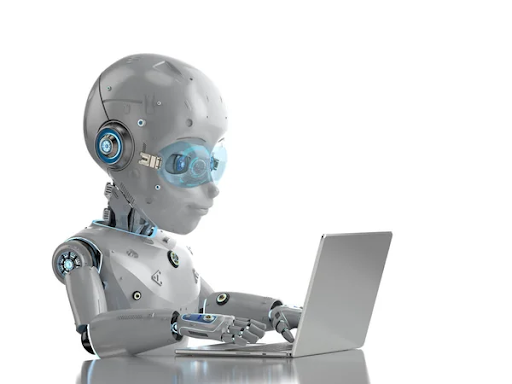
"A certain amount of impatience may be useful to stimulate and motivate us to action. However, I believe that a lack of patience is a major cause of the difficulties and unhappiness in the world today".

Joseph B. Wirthlin


Wednesday, April 19, 2023

A.I. The Sum of All Our Fears?

Artificial Intelligence (A.I.) was and still is in the news lately with a seemingly well established shelf life that could last for quite a while, if not indefinitely, as reliance in computer and information technology has become deeply intertwined, fused even, into our lives. Furthermore, it has become a modern day boogeyman, except that it is adults that seem to worry.  People in the high tech sector, business leaders, military officials even, and politicians alike have expressed concern. Elon Musk thinks A.I. could conceivably end human civilization.


In 1970, I recall what I then thought was a B-movie science fiction, "Colossus: The Forbin Project". I am surprised to learn recently that it has garnered an 88% in Tomatometer ratings (Rotten Tomatoes); quite remarkable for a film made 53 years ago.

Movie Plot: "Colossus" was a super-advanced computer/military defensive system created in the U.S., located deep into a granite mountain somewhere in the Midwest; spearheaded by Dr. Forbin .  It was powered by its own self-contained nuclear reactor, sealed from interference from the outside once the heavy doors were shut.  It had the ability to repair itself and, more importantly, it was designed to totally deter any nuclear attack by other nations and respond autonomously. That is to say, it was capable of launching U.S. warheads on its own. Humans, including Dr. Forbin, can communicate with Colossus only via terminals linked by cable. The U.S. President declared that "Colossus was the perfect defense system".

Not long after it was operational, "Colossus" detected that there was another computer like itself, named "Guardian", located in the Soviet Union.  I will stop short of crossing the spoiler alert line except to say that the two supercomputers started communicating with each other.

Elon Musk actually first made his warning on A.I. way back in 2016.  He must know a lot more today so his concerns, along with others, couldn't be trivialized.  Worth noting is that as early as 1940, Isaac Asimov, prolific and influential science fiction writer of that era but whose writings are still very popular today, must have had some concerns as well when it came to potential threats posed by "intelligent machines".  Asimov had a proposition.  Before we get to that, it was two decades earlier than 1940, when the word robot came into the English lexicon.

In 1920 a Czech playwright, Karel Capek, wrote a play that was later translated into English, "Rossum's Universal Robots" - where the word robot  came from Czech, "robotnik", that meant forced worker, where "robota" was forced labor, compulsory service, drudgery, etc. In 1923, a robot was defined as a mechanical person, or person whose work or activities were entirely mechanical.

Asimov, perhaps already concerned about the so called mechanical persons, proposed the "Three Laws of Robotics" :

1st:  A robot may not injure a human being or, through inaction, allow a human being to come to harm.

2nd: A robot must obey the orders given to it by human beings except where such orders would conflict with the First Law.

3rd: A robot must protect its own existence as long as such protection does not conflict with the First or Second Law

Asimov's idea, though nobly well-intentioned to safeguard humanity, was naïvely conceived, given man's proclivity to misuse technology. You see, from the moment our ancestors emerged from the stone age, into Bronze and Iron ages, tools developed to improve hunting and gathering soon evolved into killing implements - first among neighboring tribes, then by hordes for conquest and domination. Alfred Nobel saw TNT go well beyond mining and road building into mass killing of people and destruction of territories.  We have, in other words, always managed to misuse everything, Nobel Prizes or not.

Well, what do we have now?  As in the movie, "Colossus", and many other stories written  to serve as warnings, we are again faced with a situation that seems to be well past contemplation of a dilemma. It is Pandora's box laid bare. It seems that the old suggestion that we can "always pull the plug" is no longer humorous. But, is it really that dire?

A.I., which we treat as if it is an individual entity, is so much more than one single object that we can segregate, separate and excise.  The call to pause further developing  it for some definite period of time until we can create more safeguards as proposed by Musk and all the other high tech luminaries seems like a fool's errand against the backdrop of so many variables, such as, other sectors (nations, companies, individual developers, etc.) not heeding the moratorium for one and many reasons that are likely to be mostly self serving.  

As had always been the case with anything that accompanied humanity in its journey through time, the road we've taken is littered with good ideas and good intentions only to splinter into the inevitable "good, bad and ugly" faces that we as a society always resigned to accept. 

A.I., in my opinion, is not the problem. We are the problem. And there are countless examples. It will require a book just to list them.  But let's take just one that recently happened that is stoking our fears about this one splinter that is eerily scary.

I marvel at the technology of speech translation that used to be only a figment of the creators of Star Trek.  Today, I can talk in English and my Pixel phone will translate it into spoken Filipino instantaneously with a voice of a Filipina perfectly enunciating the words with the proper modulation as if spoken by someone in Manila with perfect grammar. Pixel  will do it in reverse by translating spoken Filipino to English with nary a time lag, and again with perfect grammar.     

That is one awesome A.I. that is doing it.  Good, but here comes the ugly part. In a kidnapping for ransom scam, a mother received a phone call demanding money for her daughter held captive. What she heard when the kidnappers purportedly had her daughter speak on the phone was her daughter's voice crying and pleading for help. The scammers had cloned and mimicked the voice of their daughter via an A.I. program. 

A.I. obviously was not the problem. We can go back to the beginning of civilization whenever that was that we are told A.I. could destroy.  Pick an era. Pick a timeline. Algorithm that is the lifeblood of all A.I. has been around for centuries. Whether it was a simple algorithm on paper or on a sophisticated computer program, A.I. uses algorithms and it does it well once we allow the process to  manipulate data to achieve what is intelligibly useful that among other things can operate robots at the assembly line flawlessly and not take coffee or bathroom breaks.

So, if A.I. is the constant, the variable is us. It is no different from employing a laser to make precise measurements, or cut cleanly through metal, and then we turn around and use it to guide a smart bomb to kill and destroy. Need I say more?

A.I. is not a moral entity.  We are.  A.I. can be programmed to lie, manipulate information and spread it with the speed of summer lightning but it does not care why.  We do. But then some of us don't. 

A.I. does not need any pause.  We need to pause for just a moment to look at ourselves before we start blaming A.I. Allegorically, it was Dr. Frankenstein who created the monster, yet our fear was directed at the latter. 

So, Mr. Musk, "Ought we not be looking in a mirror and see if it is us who might conceivably put an end to civilization?" 

Or, perhaps, instead of lamenting over artificial intelligence, we redirect our focus towards a far more Superior Intelligence that had been around since the beginning of the universe.  Perhaps, S.I. instead of A.I. is what we need to assuage us of the sum of all our fears.


Thursday, April 6, 2023

The Many Faces of "If"

"If" - the two letter, one syllable conjunction in the English language has hidden superpowers.  It gives anyone  who uses it  the ability to dream, to be hopeful, to justify, to explain, to create innumerable scenarios of what can happen given a set of "ifs", etc. Yet it is also a tool of the defensive mind.  Add the adjective "only" after it and the power to justify or blame anything is limitless.  At home, at work, among our friends, in relationships, even in math and the sciences, "If" is one conjunction we can't seem to live without. There is a lot there to chew.  But bear with me because perhaps you may not be aware that you've used it often in more ways  than you think.

First, the hopeful face of "If".  In 1965, Sammy Davis, Jr., already a music icon of that and the following decade, sang this song.  The first line of the lyric in the first stanza was actually the title of the song - "If I Ruled The World".

"If I ruled the world

Every day would be the first day of Spring

Every heart would have a new song to sing

And we'd sing of the joy every morning would bring"

(Worth checking in YouTube or any music medium). "If" is indeed capable of  one such powerfully hopeful message.  

Then there is the wishful side of "If" by anyone wanting or needful of a little bit or  for a lot of fortune through some supernatural fashion or, alternatively, via the winning Powerball ticket. One such yearning is exemplified by Tevye - the main character in the Broadway musical, "Fiddler on the Roof",  who sang what  was really a simple wishful song but it was what Tevye said by way of a prelude to it   that captured the audiences' sentiments. 

TEVYE spoke,

"Oh Lord, you made many, many poor people. I realize, of course, that it's no shame to be poor, but it's no great honor either. So, what would have been so terrible if I had a small fortune?"

Then he went on to sing and dance to: "If I were a Rich Man" 

There is one dark side of the superpower of "If" that resides among those who go through life cloaked in guilt-woven garments of, "If only I heeded the advice of so-and-so; if only I had picked a different career; If only I had married someone else; If only I had saved a little bit more; If only .. "If only", in fact, is so powerful when left unsupervised to roam along the irrelevant corridors of our past. Such an exercise in futility is like running backwards on the treadmill. Try imagining that for a moment.  Clearly, it is pointless, yet, somehow, we would catch ourselves back pedaling on that treadmill of the impossible. In such a context "If only" can be one unnecessary burden that is best left by the road side of life.

The other option is when we add the interrogative, "What", before it, and we get:


"What if" when projected throughout the present moment or into the future may actually offer potentially better results; although it may present certain trapdoors if we are not careful.  But with certainty, it will lead to an almost infinite number of doorways.

Take, for example, the expression, x=2(y). What if we assign a value y=3? Then we get x=6.  You see, there is an infinite number of values we can assign to y that changes the value of x. "What if" is indeed a powerful tool.

Soon, we realize the power of "What If" when we are now talking about the future of a young person in search of his or her ability to fulfil a dream, pursue an ambition, or just simply bridge the gap between rough humble beginnings and a fair even path in the journey through life. {What if we give the maximum amount of opportunity to every child to develop what they excel in?} And what about assigning "what if" potentials to a start up business? Indeed there is limitless power of "What If" towards the future but care must be taken that it is not used backwards towards the past.

For the world that it is today, soaked in turmoil and suffering, let's go to  the penultimate stanza of what Sammy Davis, Jr. sang then in 1965. By the way, the original song was in a stage musical in 1963 that was based on a Charles Dicken's story. The character in the play, Samuel Pickwick, was mistaken for a candidate and was urged by the crowd to state his agenda. He rendered his response  by way of the song. We know Charles Dickens' propensity for social and moral context in his writings, so it is not a stretch to assume that the song is an answer to a plea for intervention by a Supreme Being - God, if you will - to put order to what seemed then and now as a very dis-ordered world.

"If I ruled the world

Every man would say the world was his friend

There'd be happiness that no man could end

No my friend, not if I ruled the world".

I leave it to the reader who is looking for answers to what seem today like a world with so many unanswerable questions, to ponder.

Thursday, March 16, 2023

New Brighter Sides for Old Brains

“You can’t teach an old dog new tricks”, one of the oldest idioms in the English language, goes back to as early as 1546. 

The cartoon below is a modern-day allegorical adaptation. The dog could very well be a senior member of the family or an older coworker spoken to by a Gen Z or younger person. Or, by a frustrated IT guy. 


But, the table is turned on us (below).  One dog says to the other, "You can try, but once they're past forty, you can't teach them new tricks".


Kidding aside, we of a certain age face it today  and at some future time the Gen Z and generations after them will, too, have to deal with the same inevitable realities of aging brains. 

But wait, there is good news!

A decade ago we may not have heard of these two terms, "Neuroplasticity" and "Neurogenesis".  We'll go back to this later.

Let's back up for just a bit.

The average young brain has 100 billion neurons, give or take a few million.  These neurons are capable of making 100 trillion connections.  AI (artificial intelligence), robots, computers do not come close in comparison to such raw capabilities, requiring only the energy equivalent of one dinner the night before. Keep in mind that Watson, IBM's supercomputer, was backed up by a roomful of electric-power-hungry processors that need to be cooled  to prevent overheating and constantly monitored by a team of technicians and engineers as it competed and beat Ken Jennings - Jeopardy's winningest human champion. Kasparov, world chess champion also lost to another IBM supercomputer "Deep Blue".


So no, we cannot compete with computers for  speed and unerring capability; but yes, we have a better tool that is a mere 3-1/2 pounds of living tissue compared to several thousand pounds of inanimate hardware.

Now, let's talk about what we have and how best we can maintain and prolong its service.

When an NBA player - or any basketball player, for that matter - makes a jump shot, the brain must make immense calculations within a second or two.  The brain takes into account where the player is relative to the hoop, how high the jump should be, and whether the jump is a straight vertical, a fade away, a forward shoulder thrust, etc. and releases the ball in an arc with just the right amount of  spin or none at all. Michael Jordan wasn't aware his brain was doing any of those because he was more concerned about the defender in front of or next to him while determining in a millisecond whether to rush forward to rebound a missed shot or to pedal backwards, admiring the swish of the basketball as it clears the hoop twenty feet away encountering nothing but net.

Coaches and players  talk about muscle memory from hours and hours of practice.  We are told of hand-eye coordination as if those are the only two that matter.  It is actually, hand-eye-brain-hand and literally the entire body to execute every shot.  Now, if the shot is done within a second, which usually is the case, then the brain is virtually making those trillions of connections in nanosecond increments.

Whether the person is an athlete, a lumberjack, a nurse, a fighter pilot, a seamstress, he or she relies on that 3-1/2 pound tissue to coordinate everything the body does, including all existential biological functions like breathing, regulating blood pressure, heart rate while keeping tab of fuel consumption and all the peripheral requirements down to growing a finger nail, or detect thirst, etc. And remembering what to pick up or cook for dinner.

By now the reader, I hope, is fully convinced he or she is equipped with the world's best computer and a built-in operating manual, each unique from any other.

However, we should not forget that the brain is so much more than just a controller of all our physical functions. In fact, so much more that the brain does is beyond miraculous.   

First, some sobering numbers.  Today, approximately 617 million people worldwide are aged 65 or over (8.5%); by 2050 seniors will make up 16.7% of the population, or 1.6 billion.  There must be a way to make sure that the increase will not be such a heavy economic and emotional burden to society in such a way that that sector, or as much of it as possible, remains not just physically able but still mentally capable for healthy aging. The key is  maintaining a healthy brain.

Our brains, recent findings show, are astonishingly resilient, given certain parameters within which their "operating systems", so to speak, are maintained and "reconditioned" regularly. And that every person, generally speaking, has a potential for "possible significant benefits for optimal brain aging".

Needless to say, we begin with the universal, "diet and exercise", as the universal go-to prescription for any age (actually).  Obviously, excessive alcohol consumption, drug addiction, unhealthy diet and irregular sleeping habits contribute to rapid mental decline, we are told.  But we should not stop there.  Let's look at the latest findings on brain research.

First, the bad news. We do not need to be reminded of all that are associated with aging, many of which are significantly visible, like losing hair, muscular flexibility, and diminished senses like hearing and eyesight,  but there is one invisible phenomenon - losing chunks of the original 100 billion neurons mentioned earlier. 

The good news:

"Neuroplasticity is the brain's ability to transform its shape, adapt, and develop a new neuronal connection provided with a new stimulus".  Research has also shown that the brain has this incredible ability, via a complicated process "in which the stem cells of neurons present in the hippocampus region of the brain differentiate and proliferate into new neurons with new experiences and other supporting cells". In other words, our brains can regrow neurons?

The process of neurogenesis relies on neural stem cells forming these materials. Neural stem cells cycle through dormant and active states throughout life, and they can divide to make more cells as needed".

However, it is not a freebie, but it will cost very little on our part. Several papers have been written about what steps we can take.

We need to be childlike by renewing the level of curiosity that we all used to have when we were young with an eager brain willing to learn and absorb everything.  Every time we provide the brain with a stimulus from learning something new, the brain develops "new neuronal connections". Immersion in a hobby, or in depth dedication to learning a new language, or spending time on unfamiliar subjects you've always been  curious about, as examples, may accomplish what neurobiologists describe as, "neurons that fire together, wire together" through sustained stimuli. The effect of active mental activity cannot be underestimated. 

On the other hand, the brain can get "lazy".  Mental laziness is suspected to cause even more neural losses.  Learning, learning how to do things differently, trying out new recipes, etc. are some of the ways we are told the brain can be stimulated. 

Vladimir Horowitz, considered one of the best pianists who ever lived, who performed till he was in his early 80's (he passed away at age 86), said that although he could be performing the same pieces over and over in front of live audiences, he would do each performance a little differently each time.  That was his way of making sure his brain was not on "auto pilot".  Martha Argerich, the Argentinian-born concert pianist, at age 82 now, is still booked for several U.S. concerts in 2023.  Her performance at the London Proms last year was described as "mesmerizing". Check her out on You Tube as she performed one of the most physically and mentally demanding, "Tchaikovsky's Piano Concerto No.1" that is about 40 minutes long. I cite these two as the appropriate examples of the brain's resiliency to remember complexities - all the musical pieces they must not only memorize but replay them over and over while maintaining awareness that there are up to fifty other musicians in the orchestra they need to synchronize with.  They can do that because their brains are made to work constantly.

In college, decades ago, two semesters of English (a second language for us in The Philippines) were prerequisite for graduation even though we majored in Engineering, which took us going over to the university's Liberal Arts Dept. for classes.  I remember asking our English professor how and if we will ever be proficient in the language since we didn't routinely use it in daily life. Her reply, consistent with her being an English teacher, was "Never stop learning the language past these two semesters, or even after graduation but continue all through the rest of your natural life".  I am not perfectly proficient in it now but I can say that I'm better at it since those two semesters, even much better since after retirement because I followed her advice to never stop learning the language, along with everything else that piques my interest.

Today, we are still being told  to never stop learning. The learning medium does not make a difference. We learn from reading, watching or from conversation with others, but the most important one is learning from doing. That is because our brains are most active when it is directing our bodies' physical activities.

Of course, let us not forget that a healthy brain needs a healthy body. This is the hard part because it is easier said than done. But we should try. We owe it to our brain. Someone, a few years back, who gave me tips on swimming told me this, "Swimming is one of these rare activities where we demand from our brain all these physical coordination - proper arm strokes, leg kicks, breathing, etc. - but the most compelling motivation for it is to keep from drowning".  Of course, he was half joking but what greater incentive for the brain but one with existential ramification.  If one plays golf, tennis, speed walk, play a musical instrument, crochet, cook, paint, write, any activity that involves hand-eye-brain coordination, the brain is at its most active state. 

If we need to condense all of these as cited in research and all kinds of paper on neurobiology, it is this:  A busy brain is a happy brain. A happy brain is highly motivated against mental aging in more ways than we can imagine.


Sunday, February 19, 2023

The Truer Side of "The Best Years of Our Lives"

Quang is a cashier at Wal-Mart. The first time I met him was a couple of months ago. In halting English but so eager to speak the new language, he apparently wanted to practice it on every customer at his station.  He treated his job with such uncharacteristic enthusiasm which made me wonder how long he could keep it up.  A few weeks, months or longer?

About two months later, a week ago, was when I saw him again. There were two cashiers that morning. It was before 9:00 A.M. One cashier had a customer. The other cashier was busy wiping and tidying his station.  For the obvious reason I chose that station.  The cashier looked up from what he was doing. It was Quang.  He still had that infectious smile. His English was much improved, then he recognized me from that one encounter a while back.

I asked him how he was and if he still enjoyed his job. He replied, "I like it. This is the best year for me".  He went on to elaborate that coming from Vietnam and getting the papers that gave him permanent U.S. residency and  a job at Wal-Mart were the best things that happened to him.

Before bidding my goodbye, I thanked him and told him I hope he will continue to have many more good years.  He replied, "I will have many best years.  Thank you."

That right there may lead anyone to ponder, "How are we to define the meaning of the best year(s) of our lives?"  Quang's definition is clearly different from what many of us will consider as best; there is definitely no  meaningful standard measuring rod because everything varies from person to person.  If we were to take a poll we will find as many different answers as there are people responding to the survey.

Not only is the answer so subjective, it actually depends on where anyone is at a particular point in their lives.  Anyone above fifty or seventy years old may look back to any point in the past as where their best years were. Children will have little to say, let alone even be capable of putting context to  the question, but we must assume theirs are still way out into the future.

The young aspiring junior executive must be looking to the not yet well defined future of a corner office or the six-figure compensation at some future time.  Newly weds have a view of a picture-perfect home in the suburbs with two perfect children, and membership at the country club.

Quang is too new to the ways of his adopted world that his views may still be obscured and definitely different from the far higher and loftier ideals of those who finished their education from  Ivy League schools.  But indeed he is right about having many best years ahead, dictated primarily by where he came from.  Where he will be years from now we just can't know.

Paul, also from Vietnam, came to the U.S. in his late teens.  His parents were refugees after the war there.  Growing up in Vietnam Paul had little direction about where his life was heading.  He drunk and smoked as most of his teenage buddies did.  Later, after all the necessary paper work came through he came to the U.S.  That was almost two decades ago. He learned to cut hair and my wife and I met him at the hair salon where he worked. That was then for me as a customer since there is little Paul can work on now because what once was my pride and joy is now relegated to a self administered treatment with a safety razor. 

My wife still has her hair care done by Paul who now owns his own salon with a several hair stylists under his employ.  Paul is now married and a dad to two teenagers.  He no longer smoke nor drink; instead he goes to the gym, and so far maintains a well toned physique. So, how do we define Paul's best years?  He may already have had a few but with his own salon, we can expect more, can't we?

If I were asked that question while I was growing up in one of the central islands of the Philippines many decades ago, my sights were set much too low relative to where my family and I are now.  Far from that nipa-thatched home, bamboo slats for flooring where as a kid I could see ducks and chicken below, dirt poor was how our family would have been described even by the standards of that time, so my best years had to be layered across many different times and geographically halfway across the globe.  Graduating from college, my first job, employment at multinational companies there and here, immigration, retirement, the dream home we are in now (by our own measure and not anyone else, of course) , etc. are all in many layers, each bookended by ups and downs. 

Of course, we all must realize that ups and downs are by themselves part of the shades and shadows, the pastels and the dark and bright colors that make up the entire landscape if our lives were painted with the paintbrushes of our own individual efforts, fate, happenstances, good fortune, the helping hands of countless others, families that never lost hope, and the so many little things already embedded in the original canvass from which the painting began.

Should we then say that there may not  really be one best year or a string of best years in our lives.  One armchair philosopher declared that all the years we are alive are all best years.  Perhaps.  Clearly any year we are free of illness can be a good year. Are the years as a child who is free of worries the best years ever? But going back to the paragraph above, don't the shades and shadows actually make us appreciate the pastels and bright colors?

What is true is that the past should not be the only repository for our best years. We may have had good times there but they are best visited only through our memories.  Waking up every morning for another sunrise is a bonus we should not take for granted. The future is where there are unopened gifts.  Not knowing what they are can of course be both exciting and worrisome.  If we can free ourselves of worry and focus only on the next sunrise, one morning after another, perhaps that is the ticket.  

Speaking of  tickets, let us keep in mind that when they were purchased we really didn't know how far they were good for.  But for as long as we are still on board the train of life, we can rightfully hope and expect that there are still good times ahead.  Who knows The Best Years of our Life may be under full extension.  Until the last station, enjoying the journey is still up for grabs.


Monday, January 23, 2023

The Other Side of Tomorrow

 "Today's greatest labor-saving device is tomorrow".

                                                    --- Woodrow Wilson

Was the 28th U.S. President being facetious or was he serious when he said that?  Either way, he  was actually being truthful in a way, with a hint of sarcasm; we'll have to imagine.  I don't know in what context he said that except that perhaps he tried to elicit some humor - pushing today's chore into tomorrow, thus saving one's labor today until then. 


If not for this one little flaw in the human character, spelling would have been one word less difficult in the English language. But the Romans did originate the word - in Latin, naturally - from a combination of pro ("forward") and crastinus ("belonging to tomorrow"). A few centuries later, fourth graders had to deal with spelling it. Notably enough, later in their teen years, homework and cleaning their rooms were often managed into an art form of many shades of procrastination.  But then another president had a different message ..

"You cannot escape the responsibility of tomorrow by evading it today".

                                                            -- Abraham Lincoln

One more word of wisdom from an unlikely source before we move on. I'm not sure if this was not ghost-written for the North Korean leader, quoted below. Worth noting however because it is ideologically or politically neutral, but it reminds us of the three clear  boundaries of time.

"There can be neither today without yesterday nor tomorrow without today".

                                                             -- Kim Jong Un

Of all the three delineated by the quote above, tomorrow is the most powerful one.  Yes, today is where we get to do anything but tomorrow is the one filled with many possibilities.  But yesterday is no less important. 

It was the former Filipino general who waded with Gen. Douglas MacArthur on the shores of Leyte Island, Philippines, upon the latter's promise of, "I Shall Return", that was the prelude to ending the Pacific war in WWII who said:

"I am a Filipino–inheritor of a glorious past, hostage to the uncertain future. As such I must prove equal to a two-fold task–the task of meeting my responsibility to the past, and the task of performing my obligation to the future".  

                                                                -- Carlos P. Romulo


He later became Secretary General of the United Nations and a Pulitzer Prize winner. In this famous photo, Romulo is the helmeted general behind and to the left of  MacArthur.


What he said applies to any group of people today or, for that matter, to any individual willing to contemplate what to do with the many tomorrows yet to come.  

Hopefully, we have learned from all the yesterdays that made us who we are today and the lessons learned we are able to apply today in the hopes that we pick the best decision from the many options we will face tomorrow.  We learn from the past, apply them today and go through the whole process again tomorrow.

The next quote says it best:

"All the flowers of all the tomorrows are in the seed of today". 

                                                                         -- Croft M. Pentz

Alternatively, you may just want to sing a few bars from "Annie"

"Oh!
The sun'll come out
Tomorrow
So ya gotta hang on
'Til tomorrow
Come what may!

Tomorrow, tomorrow!
I love ya tomorrow!
You're always
A day
Away!"

                                                                                  
Hope you enjoy your today and think well of your tomorrow!


Sunday, January 15, 2023

The Other Side of Wealth


The most often asked question on the subject, almost always, "Is wealth the answer to happiness?"  The default answer seems to be the most neutral, if not one that is deemed free of argument, and that is, "It depends". Well, not really, because it leads to, "Depends on what?" And from there, the debate could ensue almost spontaneously, especially if it veers off into defining and arguing about, "What is happiness?"

Where does that leave us in today's day and age? It would help to first accept that life in general is a balancing act between being happy at one time, sad at another, ecstatic one day, miserable the next, because life seems to be more of a seesaw as opposed to a flat steady surface we could walk on without having to worry about falling or slipping. And there lies the phenomenon that is often less apparent. Worry.

If happiness is that wholesome state of mind, worry is the circular preoccupation that deters the mind from climbing out of a hole we made it dig for itself that results in thinking about something that is either not clearly defined or vaguely "gnawing at our gut". It is different from being concerned or cautious, even fearful of something real.  We can be concerned about our health, cautious of our driving or traveling, fearful of the dangers to an unattended  baby, gas stove left on, or the proverbial iron we forgot to unplug, broken glass on the floor, a cobra slithering by, etc. But, we worry about money.  And it is not just about not having enough -  for today and for years to come - but having too much is also a cause for worry.  Is it safe where it is kept or invested? Will it last as I continue to live like this and can I handle that moment when I can no longer maintain this lifestyle?

Happiness and worry are both weightless entities but in the seesaw of life they are so contentiously weighty that keeping them in balance is the key to an uncomplicated life.  But what does that really mean - an uncomplicated life? 

Can we rely on studies? So many had been conducted. Below is a quote from one of them.

"Happiness is definitely subjective, which means that it's particularly challenging for people to decide what makes one place happier than another. After all, a stunning vista with trees and mountains might be a city dweller's idea of misery. Luckily, it's not up to us. The Happiness Research Institute charts the feelings and emotions of people from countries around the world. It factors in how people feel about themselves, as well as how they feel about the world around them".

Ranked in the order 1-10, 1 being the happiest, we can see that they are not the wealthiest nations by any means but they're not the poorest either.

Austria, Canada, New Zealand, Sweden, Switzerland, Netherlands, Iceland, Denmark, Finland, Norway.

We won't argue with why those folks from the above ten countries feel the way they do but what about those from places where people do not have access to technology to respond to the surveys (because they do not have cell phones or computers).  What about those from the interior of the Amazon rainforest, the steppes of Mongolia, remote islands over the Pacific, nomads on the Kalahari, and many others?  People there most certainly have uncomplicated lives compared to societies in the developed world but they are never asked.

The short answer is that happiness cannot be purchased by wealth.  If a wholesome state of mind is our ultimate goal, then having just enough could be the ticket. But, having just enough is all relative!  

It might all come down to, in the end, that happiness is the absence of worry!

Now, since this is my continuing series on "the other side of .." let us look at the other side of wealth.

Mountainous regions make up only 24 % of the earth's land surface area. Of that total there are only 108 mountains on earth that are 7,300 meters (23,622 ft) and, of course, there is only one Mt. Everest and one K2, both located along the Himalayas.  Now, the reader may ask, "What has that got to do with the subject of "wealth"? Some of you may already have paused for a moment to have a glimpse of where this is going.  We'll get to it in a bit.

Mountains are the sources of all flowing rivers, streams and waterfalls - many of which fill every lake, marshes and water tables below ground. Ice melts from the Alps, the Himalayas, all other mountain ranges, sustain the water supply at the lowlands that surround them. Life on the surface of the planet depends on mountains; not just for the water to flow down but for carrying along with it nutrients to replenish lands along the river banks and deltas at the river's mouth. The fertile land of the Nile Delta and many other similar places depend on the yearly flow and overflow of nutrients that commence from every mountainside; ultimately into the  seas where many life forms depend on it as well.  Spawning of fish, primarily many species of salmon, depend on rivers and the spawning ground from up above, safe from predators, before they are old enough as young fish to swim downstream into the sea.

Now, let's talk about the "filthy rich" people. Compared to the mountainous regions on earth, more so to those with elevations over 7,300 meters, there are actually fewer rich people as a percentage of the population. But let's see how, throughout history, can the existence of these ultra rich people be justified, vis-à-vis the development of civilizations and for improving the lives of people. Or, to ask it another way, why do we really need rich people?  Aside from making them the object of contempt or jealousy, they are maligned as the economic equivalent of villains in the story of life.  That is one view. There is another.

Before there were rich people, a lot of the wealth - money and property - were in the hands of kings, conquerors, monarchs (of different flavors), and those with the power of the sword.  Prior civilizations were shaped by those with the wealth to finance and control an army  who wielded far superior weaponry to subjugate the general population, including those they conquered. Empires changed hands, wealth transferred from territory to territory.  

Briefly, it was late in the 17th century when wealth started to transfer to ordinary people with extraordinary skills at running businesses and industries. That was right about after the Black Death that ravaged much of Europe. Monarchies began paying competitive wages to people to work the lands as workers/slaves were decimated by the deathly effects of the plague; soon followed by fiefdoms and royalties giving up much of their land for ordinary people to manage and develop.  Shortly after that the industrial revolution followed.

Industrial empires grew out of Europe, Asia and in the New World, in succession. The new emperors were those who led giant industries and businesses. The tall empires of monarchies were replaced by business and industrial empires, effectively changing the concentration of wealth and power.

Mountains of monarchies were replaced by mountains of industry. Vestiges of the military might remain. They are known today as the industrial/military complex.

If one must think deeply enough, that is how the world economy keeps going.  Five years ago I mused about "Mountains To Molehills" where I bemoaned the idea from those living in the lowlands who wanted that mountains should be leveled to ground level for the sake of equality, although they really meant "equity".  There should be equality in opportunities but equitable results are not to be expected or demanded.

Industries created by Carnegie, Vanderbilt, Rockefeller, Ford, etc. created mountains that fed jobs that created goods that benefited millions of people.  Steel created railroads and factories, cars and trains and ships allowed unprecedented mobility.  It was mountains of industries that created today's modern society. Wozniak and Jobs, Hewlett and Packard, Sam Walton, Dell, Bill Gates, Bezos and Elon Musk are modern-day giants from whose intellect, vision and determination elevated their respective industries that are the source of thousands upon thousands of jobs.

Like the geological mountains that arose from unimaginable forces from beneath the earth, from the collision of tectonic plates, wealth from industries were created by those folks out of pure determination, willpower, intellect and visions, sometimes at the expense of their own personal lives, that made them into tall mountains. 

Innovations that led to new products that led to jobs are examples of new mountains created by those who in the process became wealthy. "Tax the rich", now a political mantra from some quarters, would then seem like asking for more water from the mountains when so much had already come downriver. 

Lest we forget, wealth and property has nowhere else to go but remain on the planet until such time that investments open up in Mars and other parts of the solar system. Let them have their mansions, their yachts and their jets because it would take jobs and peripheral businesses to create all those "toys". And they can't take it with them. Sooner or later wealth gets recycled, re-invested.

That is the other side of wealth.

Meanwhile, if you can be free of worry, not living luxuriously but managing well enough in the middle - not too rich but not poor - you will only be the envy of the rich.