Sunday, February 4, 2024

It is Always the Littlest of Things

Next time you are waiting in line at the grocery's checkout station make a note of the cashier's name tag (they almost always have it) and when it's your turn, greet him or her by their name, "Hi Alice", "Hi Todd".  9 out of 10, you will notice a change in their facial expression or they'll respond with a sudden happier look on their faces.  If they have a unique name, like Luzanda, or one spelled a little differently, as in Carlee or Kirbe (with an 'e" instead of a 'y' in a typical Carly or Kirby), let them know you noticed admiringly at the uniqueness.  Whether they started at their station just minutes ago or are in their fifth hour, chances are your greeting made a difference.

Often, it is the littlest thing in the world that often matters.  

I just learned that from someone years ago.  "You see",  someone told me, "there is no sweeter word in any language than a person's name, when he or she hears it said in a friendly, happy tone with a dose of sincere feeling attached to it".  In fact, hearing their name said by someone they don't know, a customer, who took the effort to greet them that way goes a long way to picking their spirits up.  That alone makes them realize you cared enough to greet them and say their name in a gleeful way.  And, you know what, it didn't cost you anything.  It was just one little thing.

Often, it is the littlest thing in the world that often matters.  

But, we should be mindful too about the trapdoor that little things can do. Do you know that 99% of the time a huge argument - to the point of yelling, cardiac inducing screams - almost always start  from one little thing?  Do you recall arguing over something that was merely about a subplot, not the main plot mind you, of a movie, or  how to load a dishwasher, or arguing over one purchased piece of merchandise hardly worth the price of one casual discussion, or even how to get to a place that both looked forward to go for a good meal?

Five years ago I wrote, "Anatomy of the Argument", a portion of it I quote below:

What perpetuates an argument lies in the eternal view that winning is paramount when, in fact, nobody really wins. The ecstasy of victory only lasts for a moment, a battle won is not worth the agony of regret. Below is a popular quote whose authorship or endorsement is no longer acknowledged by either man or woman. But it's truth remains.

"A woman has the last word in any argument.

Anything a man says after that is the beginning of another argument."

Please simulate dead silence for a moment because I share the only antidote known by man.

Thus, all I have to say now is "Yes Dear".

I recommend reading the  quick and short musing at:

https://abreloth.blogspot.com/2018/03/anatomy-of-argument.html

It's the littlest of things indeed that really matter.  No matter how huge you think your world is, or how we perceive our infinitely huge universe is, it is the little thing where everything begins.  Wealth begins and ends with a penny, every year starts and ends with a second. When we discovered that the atom was the smallest particle of matter, where atom is from Greek, "atomos" which means indivisible, we found it was made up of a nucleus and electrons around it.  Today, we know there are even smaller subatomic components that even electrons are made of.  Now, we know there are quarks, six of them with names like charm and strange, and recent theories say subatomic strings whose loop can only be imagined in eleven dimensions are even imaginarily smaller still.  Weirder still is that fundamental matter may exhibit wave-like properties.  All minutely little things.

Little things like taking the trash out  with no prior prompting from your wife or even emptying the clothes dryer or dishwasher is enough to melt a wife's tired heart after a long day's housekeeping.  This little thing speaks loudly to the husband's unspoken appreciation of his wife's often thankless job of keeping the household in order.  Did it cost a lot? No, it was nothing.

Likewise, one little thing a wife may do is remind him what it was that made her say yes in the first place.  Husbands are more sensitive to ego boosts and it costs little for a wife to, even if only once in a while, reinforce that coat of armor or polish it to shine if only for a bit at a time.  One little dose that cost so little.

Don't we know that a cup of water will put out a fire quickly and effectively when it starts but not after it is now the proverbial conflagration to each one's regret?  As always that big fire of an argument started as mere spark from nothing.  Don't we remember a time one peaceful afternoon or one quiet evening ruined by one silly argument?  Think back to every argument that spread like one wildfire between  two people that could have been prevented if in the beginning one of two took one step backward to say, "I'm sorry, we don't need to argue about this.  I'm here to listen to your side if you're willing to listen to mine as well".  Do you know that that is the one time a soft, almost monotone of a few words will be louder than a thunder clap, only perceptible through the heart?  It didn't cost much energy either.

But like everything, there is a flip side even for one little droplet or one leaky faucet.

One droplet may cause one little dripple. A hundred of it may fill a glass but trillions upon trillions of it may cause a flood. One leaky faucet is much easier to fix but it will fill a clogged sink in no time and ruin the kitchen or bathroom floor. Often, it is us who clog our mind when all it could have taken was to let one  drip of a comment go by.  Lest we forget it takes one tiny grain of sand under our eyelid to blur our vision or cause one irritating episode of discomfort and pain.


Let not our hearts be troubled by the littlest of things.  On the other hand, it is also the littlest of things we can do to unburden someone of one heavy load.  If we do that even if only from time to time, another person's day is made brighter no matter how gloomy the forecast is.


Thursday, February 1, 2024

How We Remember, How We Forget is in The Hips

"The Hippocampus Hips and the Amygdala's Tres Amigos". It is a mouthful, and if you've only casually encountered this awkwardly put together jumble of words and recall it exactly in its entirety a day or two later, spelling and all, then you have an impeccable memory.  You may not need to read this any further. But, if you are one of a certain age, emphasis on age, then you may want to because every now and then you find yourself helplessly grasping to recall something that defies recollection no matter how hard you squint and grimace.  This makes a growing sector of the population fearfully dreadful of memory loss while advances in medicine have allowed for people to physically live longer. By the way, those jumbled words I put together were for a reason, that we will get into later.

The good news, an excellent one actually, is that not only is that recent studies show that however alarmingly frightful we've been led to believe, only 10% of 65 and older folks will develop dementia or Alzheimer's. More significantly, there are now  proven ways to improve memory effectively as we advance in age.

However, it is part of our aging reality  that forgetfulness is one inevitably acceptable part of growing old.  We accept it, but should we take that without a challenge, as if to simply agree and surrender?  "Accept", in this case, can arguably be defined as one defeatist attitude simply because we forget names so easily or where we last put our keys or wallet and why we sometimes go to the garage and we find ourselves standing there and realize we don't know what it was we were there to get  or do.  Or, we see a famous actor's face on TV that we know we used to know so well but can no longer recall his name.  And what about the so called "tip-of-the-tongue" phenomenon that exasperates us to no end until we make the recollection.  

Our brain is the single most powerful part of our anatomy if we are merely ranking magnitude of importance when it comes to function.  Let us not forget though that without it, existence is absolutely impossible.  People can go on living with missing limbs, one kidney or one lung, one eye, etc.  Artificial hearts, kidney and heart donor organs have prolonged countless lives, heart/lung machines can temporarily keep people alive, people can go on living through dialysis machines, and a few more other advances in medicine will someday allow more replacement organs possible.

Indeed, there are hopeful practical possibilities.  But a brain that is partially functioning or even temporarily affected as in a concussion or mental trauma is a critical anomaly.  Brain damage as generally defined is a serious normal life ending condition.

If we worry about forgetfulness we should first and above all be in awe of how and why we remember. Quickly, let's make one quick comparison. 

A supercomputer "Deep Blue" that beat a human chess champion (for the first time ever) was a roomful of high end CPUs (Central Processing Units) linked together into a powerful "thinking machine" that required a lot of electrical power and robust cooling system against  2-1/2 pounds of living tissue. All that Kasparov had to rely on was his experience as a chess player, what he had for lunch, some water and reserve energy in whatever body fat he had in store.  Deep Blue had the support of several technicians during the match and a chess program put together by several engineers, programmers and chess players who used volumes of references of matches played by human chess champions in the past - an artificial array of memory.

We need to go over that to show that our brain is no slouch when it comes to memory and computing power while at the same time do all the simultaneous orchestration of the functions of every body part that must all work together to sustain one complex physiology.  

We will not talk about the entire brain for that will be one gargantuan chore. Instead let's just focus on the two crucial components that are the repositories of how memories are created, sorted and recalled.

1. Hippocampus is from the Greek where "hippos" is horse, "kampos" for sea monster.  Early physiologists/anatomists saw, as in the photo below,  the hippocampus as looking like a seahorse.  Within the folds of the brain's temporal lobe is a seahorse-like tissue that is responsible for creating and retrieving declarative and spatial memories; or, simply put, remembering facts and events and routes, pathways and directions.  It is where we remember lines in a poem, dialogue in a movie, speeches, etc. and how we get back to our seats in a theatre after an intermission.


2. The Amygdala refers to two almond-like structures next to the hippocampus, so named because in Greek it means almond. They're tiny, relatively  smaller parts of the brain (the graphic below is exaggerated for emphasis).


The amygdala is responsible for storing and retrieving memories involved in processing emotions, behavior, emotional control and learning as parts of the brain's ability to empathize, react to fearful stimuli and control of our emotions. Unfortunately, the amygdala can also be responsible for obsessive thoughts, harbor uncontrolled and unexplained phobias, or engage in aberrant behavior, for example.  But without a doubt the amygdala pair is one powerful "computer chip" if we must relate our brain to a machine.

There is a long list of human mental powers, as in total recall, musical abilities to play an entire piano concerto from memory, or the conductor knowing exactly when the notes from a bassoon will be wafting above a field of swaying violas and violins in a 100-piece orchestra and ever always aware of every instrument's role  and so on and on,  but let's pick one other example.

When an NBA player makes a 3-point jump shot attempt, those two components of his brain enable him to leap from behind the 3-point line, make a correct orientation of where the  hoop is, be mindful of the defender wanting to block the shot, release the ball  with just the right trajectory and force from his fingertips and remember to land correctly back on the floor to avoid a twisted ankle and be ready to move again whether he made the shot or rush forward to recover a missed attempt. All of these happened within one second because the player's hippocampus and amygdala (H and A) learned, committed and processed to memory, practice after practice, to recall, adjust and execute the shot.

For us ordinary folks, what can we do to help our H's and A's make us better memory champions?  Maybe, not champions to the point of reciting the value of Pi to the nth digit . Ordinary folks can easily recite the value to four decimal points, as in 3.1416 - enough for 99.9 per cent in solving math problems. The world record today stands at 70,030 decimal digits. Why?  Because Suresh Kumar Sharma from India can.  Keep in mind this is just one example among countless others who exhibit extraordinary feats of memory.

Cliff Klaven, the much maligned, often derided character in an erstwhile, popular TV sitcom, "Cheers", was a U.S. Postal worker whose role at the bar almost always revolved around his mastery of trivia, deemed by his friends as useless facts. Truth be told, there is nothing so trivial about trivia if you are a "Jeopardy" contestant along with millions of fans of the  show around the world. I could be among those closet trivia fans although my reason for being one may be different from most.

Knowing, committing to memory, retrieving information as trivial as trivia is no different from lifting weights or running on a treadmill as in physical exercise.  Our muscles are indifferent or oblivious to whether we are only lifting weights or laying bricks, cutting timber with an ax or saw, just as our leg muscles are not aware if we are running in place or away from predators or going after prey.  They get exercised.  Our H and A are exercised whether we are doing a crossword puzzle, playing bridge, chess, or committing to memory useless digits of Pi after 3.14159 26535 89793..

Now, we are told that exercise, literally the physical one, is a memory booster. Studies have shown that seniors engaging in ballroom dancing or line dancing have helped in improving their memories.  If that is so, where cha-cha, Samba, Mambo, etc., are good for improving our memories, then I call these forms of exercises  as involving the "hippocampus hips". 

Any exercise that raises our heart rates and consequently blood flow to the brain helps in boosting memory retrievals and long term retention. Our brain may only be 2-2.5 % of our body weight but it demands 25% of the total energy consumption.  Blood flow is the only way oxygen gets delivered to the brain, so the more we get that going the healthier the brain is in performing its functions.

The amygdala twins need their three friends - the Tres Amigos - to be in top shape:  Diet, Exercise (that hippocampus hips provide) and Sleep.  To aid us in remembering, we will go by the acronym, D.E.S.

Diet goes with little reminding on how important it is for our general health and overall maintenance of our physiology, but one caution is to avoid over indulgence, particularly in alcoholic consumption, marijuana, and other drugs. They are memory busters.  There is little we can add to what has already been said about the right balanced diets for nutrition.

"Sleep, perchance to dream" from Shakespeare's Hamlet has more to say than the Bard of Avon may have ever imagined.  As a species, a third of our daily existence, more or less, is to sleep. It cannot be underestimated nor ignored. Our H and A demand it.  It might be the  downtime for most of our body but H and A use the time to sort, organize and file memories we've experienced throughout the day.  I am simplifying here but that explains dreams and why we have them. Now, how do dolphins and whales sleep? They are water bound air-breathing mammals, so what is their secret? Read up on it and begin your treasure hunting for trivia.  Your H and A will appreciate the exercise.

We do not have to remember the jumbled words above.  Just remember to move those hips and what D.E.S. stands for.

I don't or, more likely, can't dance but I hope my swimming routine gives enough hip actions for my hippocampus. We all would like to believe our D.E.S. levels are adequate but we should always be mindful of that.

Let's be mindful too that every modern invention or amenity in life almost always has another side, often in shades darker than gray. The couch and television are two of those that as a pair will likely be responsible for creating a path for an evolutionary diversity that in a thousand years (assuming our species will still be around) future anthropologists will identify as  a new sub-species: "homo couch potato modernis". Please take this with a sense of humor, or instead simply realize that the couch and television are memory busters if used for far too long every day.

So, because I do not have total recall, below is how I make sure I know exactly where my wallet, driving glasses and  car keys are at any moment I need them.  My cell phone would be there too except I used it to take this photo.  And this took my go-to hand eye coordination activity that is woodworking to make them.


One more thing.  Our H and A are not only in charge of one enormous filing cabinet, they catalogue them for easy retrieval.  When we were young we hardly forgot new stuff we learned as our H and A had relatively fewer files to work on.

We can imagine that as we advance in years, H and A will have a need to work harder in sorting new files or retrieving old ones. But it is also the accumulation of those files that allow us the privilege of having this most important attribute that comes with aging - wisdom.  We have H and A to thank for it. H and A also have a way of filing away bad memories to the back of the filing cabinet, and in extreme cases simply fail to retrieve them, often for good reason, or it shuts down the entire retrieval system and that is how some folks suffer from amnesia.  In other cases, bad memories are kept in front of the filing cabinet and that is how grudges remain a corrosive part of memory.

Our H and A will serve us well when they arrange for good memories to remain in front of the filing system for ease of recollection when we need to lift our spirits or to just feel good with little effort.

There is so much H and A can do for us and all they ask is regular exercise, a healthy diet and a good night sleep. The message to us is that we should never stop learning past the retirement date.  H and A still have enough room to file literally to last a lifetime. Find joy in learning new stuff for H and A to file.  We keep them busy that way. Encourage them to keep the happy files up front of the filing cabinet.

Let us look below at a few lines from Andrew Lloyd Weber's "Memory" from his musical, "Cats", 

"Memory, all alone in the moonlight
I can smile at the old days
I was beautiful then
I remember the time I knew what happiness was
Let the memory live again"

Keep the hippocampus hips moving and enough, good quality D.E.S. for our H and A to keep working for a long, long happy time.



Saturday, January 27, 2024

Message in a Bottle from 2087


I found it at a flea market.  That is about the quickest way I can begin this story. 

That’s part of the flea market allure, not knowing what you might find and making sure you’ve looked with the intensity and patience of an archaeologist.

Then, just like that, I found it. It was a bottle of sort – a cylindrical glass about two and a half inches in diameter uniformly from bottom to top, not your typical bottle indeed, and about ten inches tall with a flared rim at the mouth plugged by a glass stopper sealed by some kind of epoxy material.  It may have belonged in a laboratory or some chemistry department from some high school. Inside were rolled up pages of paper, yellowed or off-white as seen through the transparent glass.  The young seller with a ponytail joked about what I might find inside while pretending to ignore my half-hearted haggling.

It was two months later on a lazy rainy afternoon, after a boring football playoff on TV, when I decided to open the bottle. I cut it open near the bottom end with a diamond cutter. 

I was sort of disappointed that it was not parchment paper or even yellowed in color once outside the bottle, to indicate age.  There was a blank page on the outer roll that obscured the type-written documents on the inside pages of ordinary 8-1/2 by 11 inches bond paper.  The papers were way too modern though and the type set had to have come from a high end printer in clear, easy to read fonts. It established without a doubt that I was definitely suckered into a piece of junk and a not-so-funny hoax.

I unfolded several pages and began to read. It was addressed to no one in particular, not even a “to whom this may concern”…

So the message begins.

Whoever you are, wherever you are now, and whenever in the future you are, I hope you are well and found this bottle at a better time than when I wrote this message.  I am thirteen years old and I’m a girl.  Today is the year 2087, October. I cannot wait to fast-forward from these troubled times and I hope that since you found this message you are at a better time and place in the future, better than the present where I am now.

(Wait a minute!  What is this girl talking about?  Today is just 2024, January.  What is going on?)

I continued reading.

My father is a physicist at a super-secret lab here in the state of California nearby where we live.  My dad practically raised me by himself since I can remember from when my mom became sick.

My country – I do not know where you are from – is in big trouble.  The world has changed so much and is changing ever more.  Why do I worry about these when I should be having fun like all the boys and girls I know.  Well, truth be told, I just know them but we’re not friends.  Actually, there are just a handful of them (literally in one hand) I consider friends.

There are three USAs today as I will explain below but this USA, my USA, is not number one any more, although I really don’t know what that meant, except when my dad’s old friends would talk about it.  Our country was always number one in the Olympics, they’d say, for example.  I only read about it but the Olympics are no longer.  There has not been one held anywhere for years before I was born. 

My USA is not number one anymore.  I read that neither is Russia or any part of Europe. China had a good run but fizzled after more of its billion people had enough of its government. The million people protest in every major city from week to week crippled its manufacturing economy and today China is turning into agriculture just to feed its people. India tried to fill the void but its own exploding population was a drag to its development.  These were not trivial changes, so when these countries kind of failed, I am told, the Olympics that cost billions to host became frivolous and went out of style, my dad’s friends would say.

I may just be thirteen but I understand world politics better than I knew what teenagers love or talk about these days.  I wanted to grow fast and grow old, ever fearful of my mother’s fate.  I worry like no teenager should.  I worry about the future but my dad and his friends talk about the past as much as they talk about their project – the big project - which is about the future.  So I learned history so I can keep up with them.  But trust me I knew too about what they were working on.

History told me that Japan was written off five decades ago as a nation of any significance due to many setbacks in its past.  Just after I was born I was told that Japan came back like it had never before.  It formed a group of nations, a United Southeast Asia (USA) that is now the economic and military power in the region. It achieved what the EU (European Union) never did or could. Almost 90% of Japanese brands are manufactured outside of Japan, now deeply rooted all over Asia; over half of Japanese born from two generations ago were either born outside of Japan or are now living or working around the region.  For the first time one currency and borderless economy (even across open seas) has worked. An island nation of Japan and across a vast region from Thailand to Tibet is one unstoppable power.  

The other is the United Sovereign Alliance (also USA) – not exactly a nation or group of nations but rather an international entity with no specific national identity.  That much I understood about the new balance of power.  Asia and an ideology of people are the two other powerful USAs. Asia, I understood because numbers like gross domestic product, import/export ratios, currency values, etc. are expressed in numbers and I knew and loved numbers.  Ideology, I did not care much about because they were mostly words with very little numbers although this entity of people were in all governments and they wielded power in more secretive ways that I never took the time to understand.  All I know is that my USA is in trouble. 

How you got this message in a bottle is perhaps my USA’s last contribution to science and technology.  By the time you read this, you will have understood how it was done and you may even know what happened to me and my dad and his friends.  Or, perhaps this may not make much sense to you at all.  It is also impossible for me to know when in the future my message had gone to or where geographically.  Meanwhile, let me take you back to my time and explain as best as I can.  

She went to explain but it was way too complicated for anyone, like me, with 2024 knowledge of technology and zero understanding of  a yet to be discovered branch of physics 

There was a lengthy, very technical story behind how the message was sent by the thirteen-year-old girl.  She thought she was leaving a note for someone to read in the future. which would have been no different from how historians read leftover manuscripts from long ago in ancient ruins. 

Unbeknownst to the young girl, she thought she was sending her message to the future in a machine that was being developed by a government entity headed by her dad. The idea was to develop a technology that can establish contact with the future to solicit help in solving problems at the present time.  Money ran out and the project was about to shut down.  The young girl, worried for what was happening, convinced her dad to let her try to send the first test message, even though the machine was not fully tested to work. But then the funding ran out.

The message did not make it to the future.  Instead, it was transported back to the past - her past - and to the 2023-2024 present.  It is still a long story as to how, but here we are with one wild cautionary tale.  Farfetched, you say?  Is it not that history, from which we have not learned very much, simply kept repeating itself?

Back to me now. I can't quite explain why and how I came to write the sort of fantasy fable of a story above but it is not so outlandish if indeed we found something written by someone, say, from the city of Thebes at the height of the Egyptian Empire; or Athens or Rome; or by some scribe from Angkor Wat at its peak during the time of the Khmer Empire; or by a young student from sometime between 1368 to 1644 at the zenith of the Ming Dynasty, and so on and on.  The one big difference, of course, is that we could be reading them all from the perspective of history, messages from the past about each writer's concern for what was happening to the once powerful homeland they grew up in.

What we have here is merely a "future" history that is about just as repetitive as every history we know about so well.  A once and future cautionary tale about another repetition, just another historical stage play with different actors and players, different scenes and locations but the plot is the same.


Monday, January 22, 2024

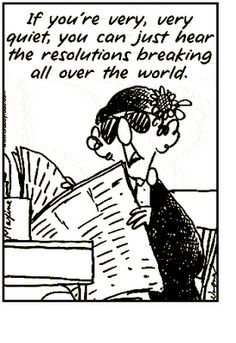
Resolved? To be Resolute? :2024 Resolutions?

At some point or another, if not a regularly recurring pledge from one year to the next, we have committed to one or more New Year's resolutions in our lives.  At one point we actually resolved to be resolute in achieving our resolution/s. Can anyone be more empathic than that?

Apparently, despite the low success rate, a mere 8% according to one research, if we can believe that, most folks still make New Year's resolutions anyhow on a regular basis at the turn of every new year.  But, when asked based on their personal assessments, 45% believed they succeeded.  We can leave the disconnect there because it would be neither here nor there to dispute what is often one of a personal nature.  

Actually, the origin of resolutions was not rooted in personal pledges if we go back to ancient times. And I mean, as ancient as about 4,000 years ago.  Known to be the seat of civilization, according to most historians, was the Mesopotamian region that was where the ancient Babylonians lived.  Their new year did not begin in January as presently celebrated but sometime in the middle of March, approximately the Spring Equinox, when planting of new crops began.

The Babylonian subjects of the empire would renew their allegiance to the reigning monarch or celebrate the crowning of a new king, as the case maybe, to coincide with the Spring Equinox.  The people would also collectively promise to their pagan gods (plural) to pay their debts and return the things they borrowed, followed by a 12-day religious celebration welcoming the new year.  It is believed that that was the forerunner of what we consider today the traditional new year's celebration and resolutions. But why is it January now and not in March as the Babylonians did?

After about twenty centuries, the Babylonian empire long gone, emerged the Roman Empire.  Julius Caesar tampered with the calendar and made January the beginning of the year.  Janus, from which January originated, was one of the pagan gods whose profile had one face looking back and the other looking forward, symbolizing a look at the previous year in preparation for what was ahead in the coming future year. If anything, this tells us the arbitrariness of the calendar.  Why so?

Well, the calendar year, as the ancients fully knew, was one earth revolution around the sun - a circular orbit that those living in the northern hemisphere understood to be divided into four seasons as the earth's tilted axis changes the orientation of the area's exposure to the sun.  The really ancient people of Europe actually believed that the sun  actually disappeared in the winter time and re-appeared in the spring - the celebration of its reappearance - which ushered the beginning of the growing season.  It was natural for people then to believe that the new year would begin in Spring.

The Julian calendar changed all that.  January 1 became the beginning of the New Year.

Technically speaking, because the earth's orbit is a circular one, we may begin the year at any point along the circle.  Imagine earth's orbit as configured on the platter of a turntable.  Individually, each individual's year begins at birth.  After one revolution, a year had elapsed and the individual was a year older.  Now imagine further that the platter on that turn table is now like a revolving giant carousel of the world's entire population. A baby's birth is the equivalent of one individual life hopping onto the carousel; an individual hopping off the carousel signifies one's passing.  That is the circle of life and the passing of another.

Perhaps then, shouldn't the New Year's resolution be a pledge at each individual's birthday.  It does make sense if we are to make our resolutions a personal one.  The question then becomes:  What do we try to resolve in the next 365 days? Furthermore, does that mean then that if one were born on February 29 (there's a number of you out there) he or she only gets to pledge once every four years?  But then ..

How serious should New Year's Resolutions be?  

"My new year's resolutions is to stop procrastinating.  I am not starting until next week though."        --- Anonymous


But this too is a resolution, isn't it?

Exercise more .. or less .. Gym enrollment peaks in January/February each year in the U.S.  


--- Maxine

Sale of exercise equipment reaches a crescendo in December, and then .. the best time to buy them is:

"And though you’re likely to see the deepest discounts in January, deals may well extend or revive in February. About 80% of Americans ditch their New Year’s resolutions by February, so you have potential to buy recent returns that are priced attractively to resell. In addition, more retailers are participating in Presidents’ Day sales events—so fitness gear may be on sale then, too".

--- NY Times "Wirecutter"


I mentioned in an earlier blog that weight gain is primarily a First World concern and a pesky problem for some. Weight loss in extreme cases can become an obsessive burden - mentally and/or physically.  In underprivileged countries, weight gain is a welcome symbol of high status, a visible sign of plenty.  It is a mother's wish for a growing child. 

In the developed countries, at every start of a new year a collective gasp can be heard:


But, to be fair, there is a fine line between being overweight and under-height  😎.  But is it fair that for a creature that swallows its food whole without chewing would be the epitome of "slim and slender" - namely, the snake; while a long distance swimmer that is the blue whale that can swim  between Alaska and Hawaii has little to show for a waistline? 

And there is no truth that there is a talking scale, when strained, will say, "Step on the scale one person at a time, please ".  Or, the one that says, "Surely you knew that a pound cake really weighs more than one pound, didn't ya?

Maxine has another statement:


Where does this leave us?  "No more new year's resolutions!"  You see, even Congress that passes all kinds of resolutions, is never accountable for any of them.

A more appropriate summation, perhaps, is that in the course of a year, "we gain some, we lose some".  We gain more knowledge, maturity, deeper insights, and who cares if we gained the dreaded pound or two?  We gain as in more money saved, or lost as in the devaluation of our savings in one form or another.  We gained a friend or lost one; sadder when we lose a loved one.  

We can plan, we can dream even. We can work towards achieving something new or different.  We can aim.  All of these do not need to be resolutions. They can be in the category of just simply living a life.


Tuesday, January 16, 2024

One Flu Over the Cou-Cough"s Nest

I can make light of it now.  But not over two weeks ago.  (My apologies to the producers of the classic Jack Nicholson movie, "One Flew Over the Cuckoo's Nest"). The New Year, starting on the eve of the 31st, ushered one of humanity's oldest punishers to visit and  inflict a successful invasion into one's physiology (namely mine) that from long ago had already forgotten what it was like to suffer from it.

Ordinarily, coughs and sneezing do not necessitate a doctor's visit.  Two days and nights of chills and achy joints will.  

After a 30-minute wait for the lab results the doctor came in, "I have good news and bad news.  The good news is that you do not have Covid.  The bad news is that you have the flu".

"How is that possible, Doc? I had the flu shot as I always had annually for over a decade now between Thanksgiving and the start of winter".

"Well, it's not always a 100%. Look at it this way.  Your symptoms could have been worse had you not had your flu shot." He replied. 

Since I had the lab test and was prescribed medications (2), I made it to the CDC statistical data bank.

From October, 2023 thru Jan. 6, 2024, CDC estimates said that there were 14-26 million cases of flu. I was one of 12 million who went to the doctor, but not one of 320,000 who had to be hospitalized; thankfully, not one of as much as 28,000 who did not make it through.  CDC states that these are estimates because it has no way of capturing all the cases. Take it for what it is - one of a few annual cautionary tales about this or that seasonal contagion.

This invasive visitation requires re-visiting the age-old question: Is a virus a living organism?  If not, what is it really? There was not a whole lot a flu-sickened person can do but to immerse oneself into the hidden micro-world of these tiny creatures.  

The Invisible Body Snatcher


Yes, indeed!   Standard light microscopes, using only natural light and a lens to magnify tiny organisms were all that were needed in 1675 when Anton van Leeuwenhoek invented the first device.  Bacteria for the first time was revealed. But it took another three centuries before scientists could have a grainy picture of the "invisible" virus. Viruses are so tiny that it took cutting edge microscopy to get a glimpse of it, namely, the electron microscope.

Whether a virus is a living organism has always been debated.  It does not fit the standard definition of a living entity because it is not able to reproduce on its own and it does not really metabolize nutrients like every living thing is able to do.  Below is one unique description by a research paper from the prestigious Cleveland Clinic.

"A virus is a small piece of genetic information in a “carrying case” — a protective coating called a capsid. Viruses aren’t made up of cells, so they don’t have all the equipment that cells do to make more copies of themselves. Instead, they carry instructions with them and use a host cell’s equipment to make more copies of the virus.

It’s like someone breaking into your house to use your kitchen. The virus brought its own recipe, but it needs to use your dishes, measuring cups, mixer and oven to make it. (Unfortunately, they usually leave a big mess when you finally kick them out.)"

It is not a parasite the way parasites affect their hosts.  But a virus is the ultimate survivor, a true alien invader and very resourceful at adapting to its environment for something so invisibly tiny.  How tiny?

A human hair is 75,000 nanometers; however, one nanometer is only  a billionth of a meter.  A virus is only 120 nanometers. Roughly, a virus is over 600 times smaller than the width of a human hair.  But how can it cause so much damage to animal physiology (birds, monkeys, humans, etc.) billions of times bigger than it is?  And why does it try to and at times actually does destroy its host?

Indeed, why?  It is both a scientific and philosophical question.  Let's set that aside for now.

Not only have we coexisted with microbes throughout our evolutionary journey for thousands of years, tiny organisms occupy our entire body, inside and out, and our very survival depends on over a 1,000 different species of trillions upon trillions of them residing on our skin, mucous membranes and in our gastrointestinal tract and gut. Not only do they present a barrier against harmful organisms, they actually synthesize vitamins and breakdown food into absorbable nutrients but stimulate our immune systems as well.  These organisms are so tiny that in sheer number (not by weight or volume) there are ten times more of them than there are human cells in our body.

We've cultured, synthesized, developed antibiotics against bacteria but not against a virus. But we can "train" our immune system to recognize, neutralize and attack viruses through prior exposure.  Exposure means our immune system recognizes the invader once an earlier assault was thwarted (and we survived that attack); or our immune system is exposed to a weakened strain of the virus in vaccines which  equates to a controlled exposure.

Interestingly, genetic researchers discovered that the human genome contains genetic codes associated with viruses in our distant past developments.  It is not too far fetched to conclude that in some ways or another, viruses may indeed have contributed to our development as a species. It would seem that our immune system today is what it is because  generations after generations of warfare and battle experiences have produced a standing army of reservists and veterans (whose traits, training and resolve became part of their nature) ready to defend. Or, like Spartans retaining the tradition of courage, physical traits and bravery handed down from parents to offspring, fathers to sons over generations of tradition. Okay, I was too over dramatic there but lightheadedness from the meds will make one's mind wander off. 

One important question is how does the virus manage to get through?  Is a virus a Trojan horse? 

Viruses actually have an easier entry than Homer's depiction in the Iliad of a giant wooden horse filled with Spartans left by the Greeks that the Trojans brought inside their fortress.  

Cold, flu and Corona viruses enter into our system as easily as we breathe in, as if by invitation. There is no quicker way to get to our circulatory system than through our noses, then into our lungs and through our blood stream.  Cleverer entry is via a hypodermic needle of the mosquitoes' proboscis through the pores of our skin, as in Malaria and dengue fever invasions.  The AIDS virus can literally be transmitted via an actual hypodermic needle in blood transfusions.  So, there it is.

New studies have postulated a new insight (new to me anyhow) into why colds and flu show up during the cold weather.  Supposedly our first line of defense relies on the warm interior of our noses and mucous membranes for our immune cells to work at maximum level for total readiness in combating microbial invaders. Exposing ourselves to the cold weather outside reduces that temperature that makes our immune cells weaker than usual. Viruses may enter through the air or, i.e., through door knobs, for example, and the moment we have our hands touch our noses, a few viruses can gain entry to do their mischief. We can take that theory with a grain of salt because viruses spread as easily in tropical weather and in relatively warmer climates.  We don't know what to conclude.  But  mothers have always warned about children and adults staying too long outside when the weather is cold.  And hence, the common cold illness.  You, the reader, be the judge.

Now, is the virus a living entity?  Not if we look at it from the perspective of how we define life.  It is just an entity, a genetic code, precluded from being a living cell. But it depends on a living cell to propagate itself. 

We can go off-tangent, and I mean really off-tangent. It is not just a survivor, it can lay dormant for years in any organism's lungs and when the conditions are right, it activates itself.  It can also move intra-species, as in the AIDS virus jumping from monkeys to humans, or the bird flu, or for Malaria transmissions via mosquitoes and microbial transfers from tsetse flies to humans, etc.  It is off-tangent to think that a virus is an extra-terrestrial invader.  It can survive under harsh conditions, it can mutate to fall under the "radar screen" of our defense system and what a clever way to replicate itself by tricking our own cells to make copies of itself.

However, the virus can also be deemed to have helped us along our evolutionary journey.  There lies the ambivalence of the nature of the virus. There also lies the conundrum for those who believe in The Creator, when asking the purpose of creatures deemed harmful to human life can lead to philosophical questions that will ultimately challenge one's faith.

On the other hand, for those relying mainly on the principle of the greatest good for the greatest number, the virus can be viewed mainly as an accessory to our development, except for the collateral hurt to the few, relatively speaking, for the greater good of the many.  The argument is that despite all the pandemics from the bubonic plague to the Spanish flu that killed millions, the human population is now at 8 billion from when it was a mere 450-475 million, that was drastically reduced by about 50-75 million after the plague.  Some people argue that viruses and bacteria may have killed so many but the survivors were made strong as a result.  And who knows before written history, how many virulent visitations had occurred without really hindering population growth.

Life has and has always found a way to survive. We are not equipped to fathom the mind of The Creator but to accept, if we adhere to the concept of creation, the idea that creatures great and small  each has a purpose we can never fully understand.  


Wednesday, December 13, 2023

Who Wants To Live Forever 2.024

Another year is soon to begin.  At any day during the next year each of us will celebrate or bemoan another birthday; often depending on where one is in the chronological ladder.    

Will our attitude about aging, dying or desire to live forever be different if, say, our average lifespan is 200 years, 500 years?  Or, put another way, what would our outlook be if we do not get past our twentieth birthday? 

"Well, your condition is serious but you can take comfort in the fact that nobody  lives forever".

 
"Who Wants To Live Forever" was a song recorded by a British rock group, "Queen" in 1986 which later became a theme song for the movie, "Highlander" which was about immortals battling each other over centuries of repeated encounters of varying identities or personas. 

A short book, more like a novelette, later made into a movie, “Logan’s Run”, tells a futuristic story of a society where people’s lives were “terminated” at the moment they were past their "Life-clock" that ended at their 21st birthday (in the movie version the individual’s “Life-clock” was changed to end at 30, perhaps because producers could not find enough named young actors twenty one or younger. In fact, Michael York, the lead actor, was already 34 years old during filming).  The book was set in the year 2116 – that was exactly a hundred years from the year when I wrote the first version of this musing, seven years ago.  

Fantasy stories in that genre are an indication of society’s fixation on aging and ultimately the fear of dying. 

Today, data reveals that the average human lifespan has gone up considerably from 75 years ago. In the mid fifties to get to 60 years old was a significant marker. Today, mid-70s has become the average mean while more and more are getting past 80 and reasonably living a fair quality of life.  In most of Africa though, mid 50s is an average high.  Of the top 5 of the population with the longest lifespan, four are in Asia, only Switzerland is from the western world at no. 4.  The U.S. is at No.47.  Women outlive men by 4-5 years in any group.

Now, for perspective, in ancient times men were old and dying in their 30s and early 40s. Baby boomers realized not too long ago, growing up, that to be 60 years old was not only a retirement terminal  but that there was not much to be expected beyond that age.  Today, we’re told that sixty is the new forty or fifty, or whatever one desires it to be.

Then again, the tombstone below asks the question:


Here is the thing though.  We look across the whole spectrum of living things and we find life expectancy that can be very short as in the life of an individual microorganism to a very long one as in one bristlecone pine that is supposed to be 5065 years old (tree ring counts prove it). The mayfly, a breathing, metabolic insect lives only for a day!  As a mayfly, that is.  It is not only a fascinating life span but one that is so fleeting yet observable within a 24-hour period.  However, I must disclose that the mayfly has a previous life as a nymph living as an aquatic insect, its activities mostly underwater, which makes it a wonder of adaptation.  It could live as a nymph for years, a predator at that, before turning into a mayfly, to surface from its watery world, develop wings, mate, lay eggs and die within a day.

On the other hand a jellyfish is immortal.  It can keep on living unless eaten by predators or physically harmed in some other way.  It is in my opinion one of nature’s weird sense of humor because a jellyfish does not have a brain, let alone a structured backbone, with only a primitive sense of sight but with no ability to hear but it is endowed with immortality.   Tortoises can live up to 150 years, although a few were known to have lived beyond that. A bowhead whale will be just about middle age as the tortoise reaches its age limit.  

Why couldn’t humans have that gift? Here we are with our advanced brain power, an unlimited capacity to imagine, dream, and think up these wild questions about immortality and our lifespan is comparatively short-lived compared to these creatures that will never understand simple philosophical questions, let alone ask the basic meaning of their lives.  I know we ask and we propose answers or speculate or offer conjectures but undeniably we do not have answers to the meaning of life either.  But we try, anyhow.

Meanwhile, since the dawn of time we asked, we pondered, we philosophized, we developed over a hundred different expressions of faith in the form of religion. We’ve come up with natural and scientific explanations of the world around us, theorized about everything as we seek for answers and indeed we did get some but not all the answers. Into the future we can expect even more as we begin to remove the cloak of mystery on many unanswered questions but only to ask even more. 

Out of all the questions we can come up with, nothing is more compelling, more intriguing, or sometimes more frightening to ask than what happens after death. It is such that we’d rather use a phrase like “passing into the great beyond” or use the alternative substitute like the “afterlife” as a way of coping. 

We have no answers but I found someone who has an idea.  

Meet ELB, the Everlasting Being. 

He has knowledge of the natural world through science which includes math, biology and physics but he is indifferent to philosophy, morality, ethics, politics and religion.  Here is ELB and his thought provoking views of the world.  He will be talking to you. The italicized writings are all his.


“Hello, I am an Everlasting Being.  I am made of recycled material and because of that, more than anything else, I am immortal. The iron in my blood is recycled from billions of years ago when it was first created at the belly of a supernova. All of the iron we find on earth today came from an exploding star that was many times bigger than your present sun.  

I can't know for sure how old I am but if I have to guess I am at least 100,000 years old.

The simplicity of the universe is what makes me immortal and its complexity is proof that I am.

The universe may only seem complex but in reality it is very simple since everything in it – from viruses to mountains to clouds to the planets, stars and galaxies – came from one basic element: the hydrogen atom that has just one proton and one electron, the simplest element there is. The most abundant elements in the entire observable universe is made up of hydrogen and  helium - 99 % of all visible matter. 

Everything in me, everything around me is recycled. Even a single cell that “dies” is recycled; cancer cells included. Nothing anymore is created to add to the bulk or energy of the universe; but neither is anything ever deducted. What the universe has today is what it will have forever. However new something is, it has to come from somewhere or from components of something else. If today I am at the tip of an endless recycling process since everything begun then have I not always existed since?

The universe is matter, energy and information.  Where matter and energy are interchangeable, information exists to keep track of events caused by matter or energy or both.   If matter, energy and information in the whole universe are eternal I must conclude that I too must be eternal.

If I had settled the question of my physical immortality then it follows that I must address the immortality of my consciousness?  Is my consciousness immortal?  I must say that it is. If I am the only one right now who can contemplate or at the very least observe everything around me, the universe is what it is because I am here to marvel at or ponder it.  Without me to think about these things that surround me who is to say that they exist or not?  How do I know that my consciousness too is not recycled?  I cannot know that but the physical vessel where my consciousness resides gives me the ability to receive and disburse information to and from the world around me. I have information, therefore I know.

Was it not Rene Descartes who said, ‘I think, therefore I am’? Descartes declared that the only thing he could truly believe to exist was his own mind.  Whether he does or does not have a point is not something I can judge, which brings me to the issue of philosophy, faith and religion. I am indifferent and I take a neutral stand for just one simple reason. Among the many differing religions and branches of philosophy that are out there, there is not one with a premise I can put to a test.

I cannot know what mechanism will be the true one but I believe in the immortality of consciousness because of what I know about this universe. Matter, energy and information are known to prevail. 

I am aware, and I know it very well, about humanity's desire to live long for many more years than what their current lifetime is. 

Keep this in mind.  If you were born in 1800 and still living today you will have been around to see or hear about over two hundred wars, revolutions, coups, regional conflicts, not including epidemics, famine, in the 19th century alone (1800-1900).  The ebb of old empires and emergence of new ones were the main source of indiscriminate anguish that often outlasted a single human lifetime.  

You were alive during the next century and you will not only have been around for the two world wars but the Korean and Vietnam wars as well.  Hitler, Stalin, Mao Zedong, Saddam Hussein and Pol Pot were just a few names  but enough for you to rethink the whole idea of such a long life, isn't it?  You had seen natural disasters devastate wide swaths of land, displaced people of all ages who escaped death and lingering illness. By the middle of that century you were in constant fear of a nuclear war.  Later, you find out that there were even more to worry about - everything a threat to your very existence, depending on who has the pulpit of speech or control of what you read.

After the last two centuries would you still want to go on living?

Count it  your good fortune if you were to live between 75 to 100 years old.  That is enough to have experienced life, lived it to be remembered by those you've encountered. 

I've encountered thousands upon thousands of people and if I ever had felt like you, as every human is able to feel - sympathy, compassion, even love for another -  I must have lost it a very long time ago.  I am indifferent to anything, to any situation, or capable of any emotional response or passion to discover and enjoy what is new.  Do you still want to live forever?

That is ELB and that is his opinion.  Is he an extraterrestrial alien?  Is he what some would identify as an angel? Or, a devil?   He is not a philosophical or spiritual reflection of my own personal beliefs.  Let me remind the reader the heading of every musing:

"When you find yourself having to take a break from those that keep you on edge and stressed out, you can take the time to ponder with me some of the un-ponderable and the whimsical and lightly thought provoking issues you did not have the time to consider but now you may want to look into because you have a moment or two to spare or you just want some of your brain cells to be tickled out of slumber".

I will continue to believe in my Judeo Christian faith because that is how I was raised and I am satisfied with its moral teachings. ELB is in fact a composite of everyone who believes that one life in the scheme of the vastness and age of the universe may not be enough to be held accountable for a mere ten, twenty, ninety years of life, or for that matter the short lives of babies, young children, or of anyone not given the opportunity to learn from the teachings of one or another faith and belief system. I leave that to anyone who cares to ponder during their own idle moments.

Another year will commence soon but it is just another journey earth makes around the sun, one revolution, four seasons at a time. Anyone can hop on that journey at any time at one's birth and will hop off at a time of one's passing. That had gone on and will keep going on for what seems like forever but each of us gets one limited turn of some duration - some shorter or longer than others.

What is important is that first, we live life as best we can, within whatever "Life-clock" was meant for us, be good to other fellow human beings and, only secondly,  how others will judge how your life was lived.