Friday, February 18, 2022

Anatomy of a Scam - A First Person Account


Nothing can be more ego deflating, stomach churning, or profoundly embarrassing than to be a victim of a scam, a con, or a  fraud. While my initial reaction is to be quiet and keep the embarrassing experience to myself, I gave in to an overwhelming compulsion to share it for the benefit of many. Thus, the choice is to open up the anatomy of a scam.

There was good news and there is quite a bit to be learned because, as we all know, the scammers are always a step ahead of everybody.  Even though the shelf life of a scam is short and quick for the most part, the scammers are always thinking of three or more different ways up ahead to further their malfeasance in some other different ways. And fraud is, of course, one of the oldest tricks man had perpetrated over another since Biblical times. 

Until this episode, I believed I had immunity to it because I thought I knew all about it.  I even blogged about, "If It is Too Good to be True .. on September 2, 2019.  My fascination with the story of, "The Man Who Sold the Eiffel Tower (Twice)" and stories of extraordinary con artists and the Academy Award winning movie, "Paper Moon", assured me that I will never fall for any con.  But, never say never, and rest assured it can happen to the best of us, including learned and sophisticated folks who fell for the Bernie Madoff and Elizabeth Holmes of the world.  Count Lustig fooled the most sophisticated business people in Paris when he "successfully" sold the Eiffel Tower, once at least, and would have done it again almost the second time (the first victims were too embarrassed to report it the first time).

I am not embarrassed to write about this little misadventure although I have already stopped asking, "How could I have fallen for it?"  Now, my dear reader, don't be too confident either but at least try to heed this one other teachable moment you may rely on and serve as one more shield toward partial immunity.

Rather than go through another method of narrating the scam, let me just include below, the summarized write up I submitted to my credit card company, after a couple of conversations with them, which resulted in my getting a full but provisional credit, for now, anyway (hoping it will be permanent). It is the good news part I mentioned early on above.  For obvious reasons, I X'ed out the sensitive information.


February 14, 2022       

Cardmember Service

P.O. Box XXXXX

XXXXXXXXXXXX

Case No. XXXXXXXXXX

XXXXXXX:

I would like to provide a full explanation of the above case that is outside of the standard form that I was sent to fill out, sent Feb. 4 which I received today, Feb. 14. To explain best about how the fraud was done, I will detail it via an actual timeline in sequence.

Feb. 2, 2022, 8:25 a.m.:  I received an email, addressing me as an Amazon customer. purportedly advising me that I was debited a purchase of an item, quote:

“ORDER NUMBER:                    DHA2022AM

PRODUCT NAME:                    IPHONE 12 PRO MAX

ORDER DATE:                           2nd February 2022

------------------------------------------------------------------

AMOUNT:                                  752.60 USD

PAYMENT METHOD:              Direct Debit

If you wish to claim a REFUND then kindly Contact our Billing Department as soon as possible

You Can Reach Us On:  +1(855–607–3088)”

I called the number. The lady on the other line informed me that my credit card, via Amazon, was hacked and being misused by people – one in Ohio, one in New Jersey, and China. She knows that there is a CVS nearby and instructed me to go there.  When I got there, I was told that she had just deposited $500 to my Amazon account but that I need to purchase a Target gift card for that amount.

Feb. 2, 2022, 9:23 a.m. I purchased the gift card

A few minutes later, the same lady asked for the gift card no.  I gave it to her because that was one way to “ping” and clear the hack, she said.

I realized then, but only after I already gave her the gift card no. and Pass code, that I was a victim of a scam.  I immediately hung up and turned my phone off completely.

Feb. 2, 2022, 10:14 a.m.  I drove to the nearest Target store to report a possible hack and presented the target gift card I purchased from CVS.

The Target representative swiped the card to check the balance.  The $500 was still there (intact) but she instructed me to call 1-800-XXX-XXXX.  I called the number while still at the store. By the time the Target representative came on the line the gift card balance was zero.  I explained that I was likely a victim of a scam.  He provided me a reference no. XXXXXXXXX

I explained to him that given the short amount of time that had elapsed, I requested that Target can still put a stop to it by intercepting all online orders made on that gift card – Gift Card No. XXXXXXXXX.  My point was that the purchase had to have been via online.  If the purchase was done in person, the card had to be presented.  Furthermore, if the purchase was done miles away from where I was, it was not me making the purchase.

The representative instructed me to get a police report.

Feb. 22, 11:30-12:00 a.m. I called the Sugar Land Police Dept.

Feb. 22   mid-afternoon.  Officer XXXXXXXXXX of the Sugar Land Police Dept. called me back.  I related the whole case to him.  He provided me with a case no. XXXXXXXX

That is what happened.  I did my level best to stop it.  I know too that the Target representative understood the point I made about stopping the orders made on the gift card.

Sincerely,


(Attachment: copies of the Target gift card (back side with the number), CVS receipt, Target Card Balance Inquiry receipt):    All time-stamped

The most crucial part is, of course, after one realizes the fraud is to act quickly and keep as much information, time stamped, if possible.

The thing about is that it was all explained in the most recent issue of Consumer Report Magazine, which we have as a subscriber.  The magazine had been sitting there on the coffee table but I didn't read it until after.

The lesson: (1) Don't get duped in the first place;  (2) Once victimized, act immediately because time is of the essence.  Most scams like this are online, so given a quick action, the scam can be stopped.  Consumer Report recommends it (including a police report).

How did someone like me fall for it?  The are  three different ways we can be induced - all functions of human nature: (1) The "too good to be true" appeals to the softest part of human nature in the mistaken belief that certain things can be had cheaply or with little effort ; (2) Fear that stokes alertness or concern if we don't do something right away to correct a perceived or induced danger (IRS, police and other coercive fraud); (3) Sympathy, kindness, pity that reaches to our human tendency to help total strangers (we give to panhandlers or anyone reaching out online begging for help, contributions, donations, etc).

In my case, it was no. (2).  They had enough information, or at least they knew enough to make me believe in the story they were telling me. A hacked credit card account was something - also serious - we hear so much about.  Fear or sense of alertness can get us into a state of almost near hypnosis that gets to our sense to follow rapid-fired instructions, almost mechanically. Fortunately, I realized just in time, almost as if I woke up from a trance. The police officer who wrote up the report told me that other individuals lost in multiples of what I went through and never got their money back.

What to do?

1. Never respond to unsolicited emails or phone calls about correcting bad orders or IRS or other threats from government or private institutions. Exception: your credit card company may call to verify or alert you to a suspicious transaction.

2. Once you realized you were a victim, act immediately. Write things down and have as much information as possible.  Contact your credit card company or other financial institutions right away. It is not uncommon for the credit institutions and sellers to be already familiar with the issues. They can and will help. I was lucky I had time-stamped documents.

Well, if this wasn't a teachable moment, I don't know what is. I was just fortunate and so I wanted to share this one embarrassingly stressful episode.

(P.S. I did get full credit refund from the credit card company two weeks after this musing.  I can only infer that by acting quickly, Target must have put a stop to shipping the orders made with the gift card. I am one of the few lucky ones.)



Wednesday, February 16, 2022

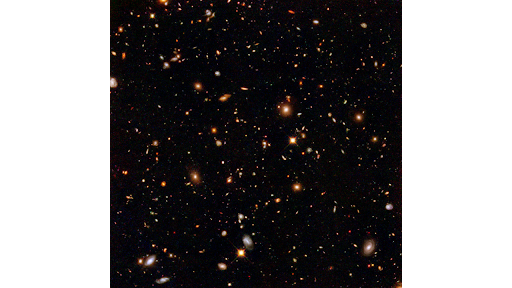
The Significance of Our Insignificance


Let’s face it. In the context of the vastness of the universe, we, the whole human population, are about as insignificant as a colony of amoeba in a puddle of water at somebody’s backyard after a rainy day.  The significance of our existence would then seem like a thin invisible thread in an unimaginably infinite fabric of space. Should we then give in to the futility of our role in the world we live in? Does our life as individuals have any meaning? Or, are we destined for something far greater than the mere biological evolution of our species?  

Let’s look at that amoeba.  Imagine one in a patch at the water’s edge of Lake Michigan.  With it were countless others that are each an exact copy of itself after countless cell divisions in a blink of an eye - by human chronological reference, that is. But the amoeba was proud of what it had achieved.  So one moonless night it looked at a faint glimmer of light that was on the other side of the lake.  It knew it was far away but it was curious.  It decided that it must go to where that light is. It is a challenge it couldn’t resist.

We scale that story up many, many millions of times to our level and within the context of just the last few hundred years of human history.  Have we not contemplated reaching for a similar distant glimmer of light? Our ancestors would look up at the glowing moon each nightfall, and with their naked eyes pondered even more at the thousands of faint lights farther out. Just like the amoeba we had let our unfettered leap of imagination soar to the high heavens – reaching for the stars.  Our evolutionary path has taken us not only to great physical wonders of anatomy but to levels of intelligence that gave us calculus, the languages, powdered milk, powered flight and a few other things.  That is the good news. However, the amoeba has a better than fair chance of reaching the other side of the lake than our reaching the nearest star.  It is a practical impossibility for any human to reach Proxima Centauri, least of all in one’s lifetime.  A journey undertaken by multiple successive generations of space travelers is a fantasy.  Let’s put this one to rest.  It takes four years for light from that star to reach us (at a staggering speed of 186,000 miles per second).  The laws of physics will not allow any object to attain that speed.  Let’s assume we can multiply our current launch capability for spaceships from earth at hundreds of times, it will still be a fraction of the speed of light, so it will still take future astronauts hundreds and hundreds to thousands of years to get to the nearest star.  Then there is the issue of cost.  There is not enough wealth and resources, let alone the international will, to finance such a voyage.  As population grows the future world economy will be no better and people will not pay for something they will not see completed in their lifetime.  No one plants a tree that will bear fruit beyond the grower’s lifetime.  We cannot also ignore the possibility that before such an adventure we will have destroyed our world through war, natural depletion of resources (food in particular), various geological catastrophes and diseases, etc. And let us not forget the inevitable asteroid strike – an event that has occurred with recurring regularity in earth’s history.  One strike actually changed the entire makeup of how life evolved on this planet over sixty millions years ago.

Current estimate puts the number of galaxies in the observable universe to be at 2-3 trillion, each galaxy with 100 to 300 billion stars.


So what is the meaning of our existence?  Here we are in a middle orbit of a solar system lorded over by a small star that is one of billions of others that make up a pinwheel-shaped averaged size galaxy. From the perspective of our own Milky Way galaxy alone, planet earth is a grain of sand on a beach along an infinite shore line.  Then we find out our galaxy is an average size island of stars scattered around with billions of other galaxies that we perceive as the known universe. We are therefore as significant as a billionth of a grain of sand trying to determine the shape of a sand dune. True. So, should we then lead our individual life with purposeless futility?

Let me bring in the amoeba again.  As organisms go, the amoeba is about as simple as it gets.  It feeds on other simple organisms that could be harmful to us.  In turn the amoeba is also food for other slightly larger organisms and the process cascades upwards to more complex life forms.  The bad news is that this type of protozoa also causes amoebic dysentery that kills thousands of people and sickens millions more, particularly in under developed nations, around the world every year.  It is not as insignificant as we might think.  Meanwhile, at our level, the pages of history are filled with individuals who have left indelible marks, good and bad. Pages of our history have been soiled with the likes of Adolf Hitler, Joseph Stalin, Pol Pot and many more.  On the brighter side of history we were given Aristotle, Abraham Lincoln, Albert Einstein and Mother Theresa. And let’s not forget ordinary folks around us - everyday people - who volunteer at the hospices, do rescue work, serve at churches, etc. 

Significant or not there is quite a lot to think about as to our place in the universe.  We may not reach the stars but we now know so much about them. All the heavy elements we have here on earth were made from exploding stars.  That led one cosmologist to declare that we are literally made of stardust.  

Iron, potassium and sodium, etc. that are in our blood could ONLY have come from a supernova explosion billions of years ago.  Our sun, in fact, could be one of the third generations of stars created by such an explosion.  Are we then a product of chance, a random roll of a cosmic dice? 

It would take a series of lucky rolls of the dice to make a habitable planet. 

It is therefore not a difficult thing to say that, indeed, we - all of us - are here for a reason because to think otherwise would mean we relegate ourselves to the seemingly insignificant existence of an amoeba.  But as you read above, that amoeba is not so insignificant after all, is it? For that reason we therefore ought not believe in our insignificance. Instead, we must marvel that we have a mind, or rather that we were endowed with a mind that is more powerful than the most massive computer system ever built. Just the last few seconds that you pondered that, no computing power can match the breadth and scope of what you just thought about. Everything else would then seem insignificant. Once we set our mind to think that, we are significant.


Friday, February 4, 2022

"For Kindness Begins Where Necessity Ends"

That quote stood out, for me anyway, from the thousands of words and word combinations in a 571-page novel, "The Lincoln Highway".

Sally, one of the characters in the book, a most adorable, virtuous and no-nonsense young lady uttered those words, as she lamented about one facet of human nature or certain habits or behavior of those she encountered in her young life.

One is most prevailed upon, as I was when I read that quote, to ask what it meant. First, I wondered why the author wrote that sentence,  which made up the entire last paragraph by itself, at the end of a chapter on page 104.  

The best selling author, Amor Towles, also wrote another best seller, "A Gentleman in Moscow". In "The Lincoln Highway", he employed a storytelling technique that involves multiple points of view; that is, the entire book is woven seamlessly from the perspective of all the different characters, sometimes in the first person and at other times it is done in the third person. From chapter to chapter, a character is the story teller or the story is told from the perspective of the character when he or she is the focus of the chapter. The characters emerge in and out, as the chapters unfold with the developing story.

When it was Sally's turn it was in the first person, so we, the readers, get to know what Sally felt and thought.  And, it was she who said those words. Having lost her mom at a young age, and a married sister who moved out of state, she takes care of all the household chores  in the home she shares with her dad, who works the farm and ranch.  Though not the main character in the story, Sally has the maturity and clear thinking of an intelligent, yet practical young woman.

Her piety begins with what is clearly a good working Biblical knowledge mixed with a pragmatic view of the world.  In her mind, it is not kindness when one does what is necessary.  Here is a quote:

"And I do it because it's unnecessary.

For what is kindness but the performance that is beneficial to another and unrequired?  There is no kindness in paying a bill. There is no kindness in getting up at dawn to slop the pigs, or milk the cows, or gather the eggs from the henhouse.  For that matter, there is no kindness in making dinner, or in cleaning the kitchen after your father heads upstairs without so much as a word of thanks.

Nope, I said to myself while climbing into bed and switching the light, there is no kindness in any of that.

For kindness begins where necessity ends".   (The chapter ends with that).

In Sally's mind, she considers kindness as doing something good to someone or others even when it is not required. More so when it is neither necessary nor expected. 

If we go by that, it is kindness when one adds to his or her tab after a meal at the restaurant a 20% up to 30% tip to the server if the conventional rule says 10-15% is all that is necessary.  When upon seeing a delivery truck about to stop by the front of one's home, one hurries to the refrigerator to get a bottled water and hands it over to the delivery person or postal worker in exchange for the package, because it was such a sweltering summer day, one dose of kindness was just dispensed.  Even if the dose of kindness was never completed because the delivery person was in such haste, perhaps because he or she was running behind, preoccupied with the prospect of not making his or her delivery quota for the day, so that by the time one opened the door, the truck had already lurched away to the next stop, the intent to offer the bottled water was kindness just the same. 

Now, we all know that kindness is never always about money; in fact, hardly is it ever about money.  And, though it is returned, it never is owed. Think about that for a minute. 

Hardly will kindness be explained by science. It will, however, defy it.  Take Isaac Newton's third law of motion, also known as the law of action and reaction, which states that for every action, there is an equal and opposite reaction.  Where kindness "defies that law" is that a single dose of kindness is most certainly but in very unexpected ways returned with multiple doses of kindness or circumstances that almost always come from somewhere else, often not from the recipient of the first dose.

Unfortunately, there is another human condition that is also well known to be true.  It is the direct opposite of the effects of kindness and if a dose of it is dispensed, unexpected doses will be returned with the same certainty. The ancient, though now extinct, language of Sanskrit gave us the one word that describes that ancient principle that we  know as karma. (Of course, from the original Hindu philosophy, karma comes as either good or bad, while today, we commonly associate it only with bad connotations).

That sentence from a fictional character named Sally stayed with me and I know that the reader of this musing will come to know and understand as well. I hope that those six words will resonate with you as it had with me.  More importantly, I hope that more than resonance will come out of it because if life were a piece of music, kindness ought to be reprised over and over by all of us. 


Wednesday, January 19, 2022

Somewhere

"Somewhere" is one of the core iconic songs that came out of the Broadway musical, "West Side Story".  The song even when heard for the first time resonated with everyone who listened to the words and the melody that carried them.  There was something universally meaningful about the song even if it stood alone.  Of course, from the context of the whole story, the message was far deeper and too emotionally laden with loftier wishes and profound longing for a place, "Somewhere", other than where one is when things are not going well.

Instead of Romeo and Juliet, each from the Montague and Capulet families, respectively, we have Antonio (Tony) and Maria from rival New York gangs of the 50's era - the Jets and the Sharks.  Families, gangs in conflict are reflective even of today's societies where players may no longer even understand what the families or gangs quarreled about, or how it all started in the first place.

Tony had just killed Maria's brother in a knife fight during a gang encounter that evening.  Tony, afterwards went to see Maria to tell her.  

That was the backdrop scene that preceded the rendition of the song between the two unfortunate sweethearts.  The song was all about each other's wish and longing to be somewhere else. Somewhere other than where they were:

There's a place for us,

Somewhere a place for us.

Peace and quiet and open air

Wait for us

Somewhere.


Before we go any further, there is something truly worth noting about how the song came about. Leonard Bernstein was already a renowned composer and conductor before the debut of the musical in 1957. The story that was adapted from Romeo and Juliet was actually written by Arthur Laurents.  Stephen Sondheim, who later became famous himself for several Broadway successes, wrote the lyrics.  Bernstein was at that time a busy man and had not quite put together the music to the song. He was traveling worldwide to conduct concerts, and he was working on another Broadway production, Candide.  He was a conductor so he knew practically all the classical pieces.  

According to Edward Barnes, a music critic of some sort, who later dissected the melody of Somewhere, Bernstein had something in mind on how that song would go but had not quite fleshed it out. Actually he took particular chords/notes from three famous composers and compositions and strung them together to make the now familiar tune of the song. Bernstein first took a few notes from Beethoven's Piano Concerto no. 5, then from Richard Strauss's Burlesque and from Tchaikovsky's Swan Lake. Edwards proved that by playing the melody of Somewhere alongside the three strings of notes. There's really nothing wrong with what Bernstein did.  Aside from the fact that the compositions of the three composers are clearly public domain, then and now (no trademark or publishing rights violation), they were truly just short passages akin to putting together phrases or words from three different speeches and stringing them together to make  entirely complete sentences with different meaning or connotations..

In other words Bernstein bridged the gap between three compositions by three different composers, written centuries earlier decades apart, to make a sensitive message to a society then in the 50's and an enduring resonance.  Fortunately indeed, it still resonates today.

We are all Somewhere at some point in time partly because of the circumstances of our birth, our family's wealth or lack of it, that brought us up, the place on earth where we happen to live, and a host of other factors that happened to be just there by the time we took our first breath of air, our first wail for attention and care.  We are Somewhere because of circumstances of our own making or they were from opportunities that came along that we were able to make something of.  And a host of other reasons. Somewhere is where we are today.  A place and a point in time.

Anyone of us must admit there was a time, even just once of a moment, when we wished we were Somewhere else.  Anywhere but the one where we found ourselves - frozen with fear, overwhelmed by worry, or unsure of what was to happen next.  We just wanted to be Somewhere else.

"West Side Story", "Romeo and Juliet" are both stories of human conflict - prejudices and bias and inexplicable hatred -  even when those presently involved do not even know why or how it all started, except for being at either side of the divide.

Here and everywhere else, Somewhere is a wish, a longing, a quest for an alternative, a refuge from when things go wrong. It is an escape. It is a prayer. But it is not enough to be just wishful.  Nothing will get anybody anything by just merely longing.  Time and effort spent to merely escape are partial solutions - a purchase that will end up costing more. It is not uncommon for one Somewhere to be no better than another. 

In other words it is not enough to be just merely Somewhere. Immigration and the countless stories of immigrants are about people finding their Somewhere but their stories are as varied as how well they strove hard to make the most of the newly found Somewhere.  Some gave up and returned to their original home after finding out that the Somewhere they found themselves in was not what they were looking for.  They went back to the Somewhere they were used to rather than to make good use of the opportunities that were at the new Somewhere. It was not uncommon for new immigrants to have second thoughts.

Our first December in the U.S. was the saddest month any family was put through.  We were at a new city, no friends, living in an apartment with fellow strangers keeping to themselves and no car in a city that was meant for families to have a car to go anywhere. I went to work relying on public transportation the first three months from October to December. I rented a car only on a few certain weekends if we wanted to go Somewhere as a family.  My wife begun to show some regrets. She used to have her own car while working in Manila.  This new Somewhere denied her what she used to take for granted.  I told her that we were going to make the most of this new Somewhere.  It was full of hope, filled with unlimited promise and lofty dreams when we boarded that 747 earlier that year. That Somewhere was still there.  We had to make the most of it.

Sure enough we did.  From where we came from to where we are today are not just separated by distant seas.  It can only be measured by however dreams can be measured by the realities of a life fulfilled.  Yes, indeed, we found our Somewhere. We found that it was a lot more than what was provided for by mere  wishful thoughts or extravagant longing.

Today there are millions more, where ever they are from and where ever they wish to be, and we can only wish them well and pray that they find their Somewhere.

To anyone who at this moment is filled with despair and longing to be Somewhere else, I hope he or she will find hope in a song that is only sixteen lines long but filled with hope:


There's a time for us,

Some day a time for us,

Time together with time to spare,

Time to learn, time to care,

Some day!


Somewhere.

We'll find a new way of living,

We'll find a way of forgiving

Somewhere . . .


There's a place for us,

A time and place for us.

Hold my hand and we're halfway there.

Hold my hand and I'll take you there

Somehow,

Some day,

Somewhere!

Thursday, January 13, 2022

It Just So Happened ..

Her day does not really start until the sixteen-year-old Honda Accord sputters into action, belching dark gray smoke through the rusted tailpipe, but somehow it eagerly growls to go one more time. She dreads the day, which she knows will come one day, when the car will no longer respond to the turn of the key. That day looms ahead but she can’t worry about that for now. She has two places to go this Wednesday. The trip will not be too far and each home is close to each other. It’s not something she plans as a matter of routine. It just happened to be so today. For someone who used to plan everything this is something that just happened. While she should be grateful, it frustrates her that her life is now distilled into, “it just so happens”. She doesn't want her life to be one giant shrug but it is now. She shifted to drive. She’s on her way. Back in the days her friends and everyone who knew her indeed  used to say, “She’s on her way”, but it had a different meaning then. Much too different. Today, “she’s on her way” simply means she might get to her first appointment without a hitch.

I wrote the above as opening paragraph to a short story that went as far as five standard printed pages of single space but never got around to finishing it.  Just recently I was going through some old files when I saw the manuscript I started years ago that came to an abrupt end, inexplicably it seems, because to this day I have no explanation for it. In fact I quit at mid sentence on the fifth page and  apparently had forgotten about it over time. And it had what I thought was an intriguing plot in progress, yet to unravel. 

Well, I might as well try to put the above paragraph to good use. If the reader has time to spare, I'll try to meander from that into something else.

Life, as it goes on, presents us occasionally with what seems like it gets going because "it just so happened" and the hope is that more of it is good than the not so good. Then, there is also about life unfolding for anyone of us  on our way to doing and achieving something or going somewhere on purpose and it gets us there, as hoped for. We would like to think that much of it is/was planned to go a certain way and not that it may go the way we didn't expect, let alone hoped for.  Are the odds of 50-50 fair?

Obviously, we would never settle for 50-50 odds of things happening to us for the good and bad, would we? But these things do happen. At a minimum we all would prefer that things happen North of the 50-50 odds. Sadly, for some, it is south of it, tragically deep southerly and downwards, for others.

If we each review our individual lives today - young, middle age, retired - we find that indeed there were strings of "it so happened" instances that may not have been part of the "plan".  Some were good and perhaps some not so. I will venture to say that for most of those among my readers good happenstances outnumber the not-so-good overwhelmingly for their lives to be that of or close to the fabled Island of Serendip.

Was it just serendipity that I started my career with a multinational company but stayed there only for three years - enough time for me to meet my wife who happened to work for the bank that the company used? I ended up leaving that company and spent the rest of my career for another multinational corporation that spanned a 12,000 mile move across the globe. I tease my wife that the only reason I started working at the first company was so I will get the chance to meet her.  The most pivotal one is that of her application to come to the U.S. long before I met her. She did not act on it when we met after it was approved.  Ten years later somebody at the U.S. Embassy in Manila resurrected her application and wrote to her about it. It so happened that her parents home address had not changed where the letter was addressed. Did it "just so happen"  made it possible for her and her family - husband, two sons, five grandchildren - to be at a place where much good than bad happened.  Our entire lives would have been completely different if not for the fact that my wife completed that application and for someone at the U.S. embassy to have chanced upon a forgotten paperwork. There were many other happenstances that occurred - too long to enumerate here.  The thing is we were put at a place in far better circumstances had it not been for many, many things to happen just right.

Now, dear reader, if you look back you will see that your life, despite twists and turns, is what it is today because things just so happened. We are all somewhere at some point in time partly because it just so happened. Not to be minimized is the fact that sometimes, if not more so, for some of us some things happen almost, if not truly, providentially like a dream.  We commonly refer to them as lucky breaks.  Or, are they? And why do others have the lucky breaks while others do not?

Two of the most popularly read of my musings I wrote almost four years ago, months apart are: "Everything Happens for a Reason?" and "Ancestry, Fredericksburg, Texas". Both, written in 2018, encapsulated what I believe are the complexities of the "it just so happened" phenomenon in the unfolding of everybody's story.  We can see that it is a mix of serendipity (something good happened unexpectedly), something good comes out of adversity, truly good things do happen to those who strive to make them happen and there is truth in the idea that something truly providential just happens to many of us that are beyond reasonable expectations.

From all of these we try and find answers for why certain things happen. However, we also find that it is not so much that things happen but what it is  that we do to make the most of it, if it were good; and how we responded when it wasn't? We find easy answers sometimes, and we search for reasons why on others.

One thing we cannot do, of course, is to turn our lives into one giant shrug. I guess I did meander back to the paragraph above afterall.  I would like to finish that story.  Sometime.


https://abreloth.blogspot.com/2018/05/ancestry-fredericksburg-texas.html

https://abreloth.blogspot.com/2018/02/everything-happens-for-reason.html

Saturday, January 1, 2022

2022 & Managing Our Fears (Happy New Year!)

It is a lazy afternoon, January 1, 2002. Do you describe yourself as portrayed by the drawing below? Worried, fearful, concerned about what's in store for the new year?


Or, are you like the one in the photo below?

We would like to think we're right about in-between the two, right?

I thought about it a few years back. It may have been a year or two after I retired when I mused about how best to manage fears about this and that. Below is the updated version.

We, as a species, who claim to have the only rational mind are also capable of harboring the most irrational fear over anything and everything. We have a list of phobias and we would inevitably create one if something we feel just now is not on it. While fear is a necessary survival instinct for our species, we accessorized it with worry and turned the latter into a cottage industry. It is ironic that as concerns over the most basic of human needs - food, clothing and shelter - may have diminished for those of us living in the industrialized world, our capacity to worry has expanded exponentially. Now imagine what it is like when those basic needs are constantly in the minds of those less fortunate, whether living in either developed or underdeveloped economies of the world. But, worry we do. So, aside from worrying about keeping the proverbial new year's resolutions, 2022, like all previous years is fraught with our real and imagined concerns, not the least of which is the current worry about the scourge of Covid and its variants.

With worry is our inability to discern the likelihood of an event and its consequence to us when it happens. We worry about low probability, high catastrophic impact events versus those that are likely to affect us, which we actually ignore. Here is a list as a way to help us manage our fears. It is more than just a list because I hope it will shape our attitude as we ponder each of them.

1.) Airline crashes worry us so much that quite a number will never want to travel by air, or we are just simply mortified when we do. In billions of passenger miles the airline is by far the safest mode of transportation by multiple factors versus land transportation. The Vietnam War went on for ten years and almost fifty thousand American soldiers died. During that same period of ten years, almost half a million Americans died on its freeways and city streets - men, women, young and old, children, professionals and blue collar workers, many in the prime of their lives. The low probability event of an airline crash catches our attention but a relatively high probability event of a traffic accident, especially among teenagers and drunk drivers, do not make it to the list of irrational fears we had managed to compile in our head. Meanwhile, do you still want to travel by air as we witness on TV the sad manifestations of human nature in how a few passengers are coping with what the pandemic has done to their behavior? However rare those unfortunate incidents are we no longer look forward to flying.

2.) The death of professional mountain climbers and errant hikers - some perhaps ignored warning signs of impending dangers - makes headlines. What does not is the fact that more people die or get injured from falling off ladders at home doing mundane weekend chores. By multiple factors over those so called "risk-taking" adventurers. Be careful this year before you tackle the mundane chores at home.
3.) Overly enthusiastic golfers who played through a misty, overcast afternoon are hit by lightning. It's in the news; it stokes our deep-seated fear of lightning. More people die, however, from electrical accidents at home while, again, doing mundane chores like fixing a light fixture, working with electric power tools outside on the same misty afternoon as those golfers did; in fact, it's worst for those who fixed light fixtures using ladders on misty afternoons. But we fear lightning more - statistically a very low probability event versus being electrocuted by a faulty wiring system at home. A housewife in Nebraska or Idaho will be fearful of a shark attack although the likelihood of her ever even dipping her toes into a gentle surf is infinitely small compared to the many times she will drive her car to the grocery store or to visit relatives fifty miles away. Shark attacks and bites from rattlesnakes are rarer than death from choking over food but we worry more about fangs and serrated teeth than biting off more than we can chew.
4.) And it must come to this - global warming! You know it was coming. Global warming will cause all kinds of disasters, the destruction of our environments, the dying off of species that would include us, the California field mice, the snail darter fish (remember, it was responsible for the delay in building a dam for hydroelectric power), etc. I have news for the extinction-mongers. Of all the species that had ever lived throughout earth's long history, 95% have become extinct over eons. The 5% surviving species that you see today, including the diversity of the human population, are thriving and are the results of constantly evolving with the changes in environment and conditions - the fluctuations between cooling and warming of the earth. The world we inhabit today had seesawed between several ice ages and global warming over millions of years. And that's not counting changes in earth's magnetic poles and the occasional asteroid hit (which killed off the mighty dinosaurs which brought about the emergence of mammals, and then us, of course).
The dinosaurs were the top species during160 million years of their existence. They had experienced, as one would imagine, countless environmental changes throughout. Imagine further, the supreme council of dinosaurs meeting over the concerns on the increase in volcanic activities and rising sea levels, small mammals multiplying to fill a small niche, and the oceans were producing all kinds of creatures the dinosaurs could not control. They all worried and called for measures to regulate all of that. Every concern they can think of was duly noted. Then one day an errant asteroid, perhaps the size of Mt. Everest, wandered into the solar system and hit what is now the Gulf of Mexico. All that reptilian worrying by the council of dinosaurs was all for naught. The good news - other species emerged and survived. A particular one became dominant. Endowed with great intelligence and capacity to organize, it is now the dominant species. With an intelligent mind came an incredible ability to solve problems. However, we also developed an irresistible capacity to worry. And worry a lot we do (by the way, that's Yoda speak for you Star Wars fans).

We did thrive with great success and diversity. The Masai grew tall and lean and developed darker pigments to deal with the oppressive heat of the equatorial sun and protection from excessive ultraviolet rays ; the diminutive bush people (pygmies, if you will) became shorter and smaller to easily navigate the thick vegetation of the forest floors; citizens of the tropics didn't need too much dark skin so they opted for brown though for those closer to the temperate zone became paler and those in the upper northern regions just simply lost pigmentation, except for the occasional freckles, but allowing for the desired absorption of Vitamin D from the sun. So the differences in skin color and physical stature are marvels of adaptation and not reasons for discriminating one race over another.
Here's the lesson from the dinosaurs. They had a long list of things to worry about. The one that was not on the list happened. Let's assume for a moment that global warming is for real. Actually it is - every summer. We all long for Winter to be over, harken to Spring to watch flowers bloom and for many to see the sun for the first time in months. Then the lovely golden days of Summer. If not for global warming of the earth, we would still be covered with body hair - it would be called fur - to stay warm. Instead, the warming up has led to the invention of the Frisbee, baseball as America's pastime and Spring gets the young and not so young men to eagerly await the latest Sports Illustrated Swimsuit edition to hit the stands or their mailboxes. If not for warm days, lazy afternoons will make no sense at all and the expression, "go fly a kite", may not have been coined to serve as an irreverent retort by someone who had just lost an argument.
So you ask, "should we not be fearful or worry at all?". Fear is good, worry is not so. Try this. Make a list of what you worried about from a year ago, last month, last week, yesterday even. How many did actually happen? Probably none. That's not to say that nothing bad ever does happen in our lives. It's just not the ones we spent nights worrying about. Global warming did not cause the plague that wiped out 25% of Europe, nor the flu of 1914-17 (or whenever that was in the early 1900s). In fact, flu disappears in the summer because people are not cooped up indoors during the cold months because they are up and about enjoying the warm days. Some of us don't like fossil fuels (oil in other words) for producing electricity to run our refrigerators to preserve and keep our foods safer, nor for refineries to process the very bottom of crude to produce asphalt that pave roads at the cheapest cost so transportation can get to the most isolated areas of human communities or for ambulances to get to the sick and the injured more quickly.
Then you ask. How then should we manage our fears? We don't. We use fear to stay vigilant and careful, to instill discipline and to avoid doing stupid things. And Yoda would say, "Worry, however, we should not". Worrying is like treading water. You could expend a lot of energy doing it but it gets you nowhere. So, you might as well swim and go somewhere.
Still anxious over anything and everything? I have four words, "Don't Worry About It"


Friday, December 17, 2021

Today Is Yesterday's Tomorrow

"Today Is Yesterday's Tomorrow" is, in my opinion, one of the least popular renditions by Michael BublĂ©, not that I am an authority on his songs. The title seems straight forward enough. Or, is it?  Someone analyzed it this way. Technically, "today is the day that was yesterday's tomorrow".  So, shouldn't it be, "Today was yesterday's tomorrow"? I am not a grammarian either, so we leave it at that.  Meanwhile, someone made a riddle out of it:

A teacher enters class and says, “If only yesterday was tomorrow then today would be Saturday." What day of the week did the teacher speak of?

A logician/grammarian had one idea.  First, he thought there were two answers - Either today is Thursday or Monday - depending on what "proper" grammar were used.  Here is the quote:

 "Both answers are correct, because the grammatically incorrect use of the word “was” introduces ambiguity. The two versions of the question that lead respectively and unambiguously to the two different answers are “yesterday had been tomorrow” and “yesterday were to be tomorrow.”

"Edit: Today is Thursday. Tomorrow is Friday. If yesterday had been tomorrow (Friday) then today would be Saturday

Today is Monday. Yesterday was Sunday. If yesterday (Sunday) were to be tomorrow then today would be Saturday".

Did you get all that?

Well, wait until you hear what others had to say.

"In our system, tonight's midnight is the first moment of tomorrow. But as for the rest of us – there's no official answer and the military use a system in which midnight is 0 hours. In that system, tonight’s midnight is the first moment of tomorrow. But as for the rest of us – there’s no official answer.. Blah, blah, blah ..

And a few other off-the-grid ideas.  Then, we have this to ponder ..

Yesterday, Today and Tomorrow went into a bar.

Yesterday: Be thankful my friends for if it were not for me how else would you have gotten here?

Today : Listen.  If not for me, how are y'all going to enjoy this?

Tomorrow: Now, now, without me what do you two have to look forward to?

That in a nutshell tells us what life is really all about.  When we think about it our lives can be summed up in three elements.  Whatever it is we do at the present moment is archived instantly as memories of the past. Every dream, each aspiration, every plan all reside in every tomorrow that is yet to happen.  Today is all we have to do anything because yesterday is gone forever and tomorrow is yet our best hope that our dreams may still come true.

However, let's be aware of the quote below:

We crucify ourselves between two thieves: regret for yesterday and fear of tomorrow.         --- Fulton Oursler