Sunday, June 18, 2023

If It Doesn't Touch My Skin ..

In a nutshell, if the reader does not intend to read the entire musing, the title will suggest a few reasons about what had gone wrong with a world when and where every conceivable means had been tried to manage it. This would seem like a very ambitious undertaking if it were not coming from a common sense way of looking at things as all of you have perhaps already done so. Why indeed did every form of governing that seemed to have started so well at first, always fail in the end.  Rulers and rulership have come and gone in all kinds of personas and methods over eons of time, yet, here we are, still searching for the perfect way to manage our society.  It just seems inconceivable that centuries of experience, with handed down and written histories aplenty, humanity still does not have an answer; always searching but apparently not learning even when histories keep repeating.

Indeed, why is this the nature of our world? This world - confined only to this planet, of course - is a world that by itself, without us, will do well on its own as it had so before we were here. What has gone wrong is purely because we are here to ponder, contemplate, tinker with it, complain and worry about it. And yes, over many centuries we tried every which way to make it the world we prefer. What we know so far is not only far from encouraging because it seems that the quest is a fool's errand  when in so many instances it had been shown to work  only briefly and often within the single lifetime of whoever it was who came up with what at first was a brilliant idea. There were many examples of that and we will try to illustrate a few to bring that point home.

First, let's examine stories we've written  about the universal dream because these fables and tales represent our longing for that so-called "preferred world". We had King Arthur and his Camelot. He envisioned the Round Table where gallant knights sat to deliberate on the noble ideals of chivalry and righteousness among all. But like all the tales told, remembered but soon inevitably forgotten, Camelot did not last much beyond the life of King Arthur.  The "Man from La Mancha" exemplified the now common phrase of man's "quixotic" aspirations that begin with the "impossible dream", the aim "to right the unrightable wrong". What only remains true of the inspirational song is that nations have always had to worry and forever be concerned about the "unbeatable foe" and continue to "bear the unbearable sorrow".  Biblically and scripturally from our most revered source of faith, we found inspirations that we heeded only for so long with little enduring effect. Even King Solomon could not and did not keep the  kingdom David worked so hard to establish. After "forty years in the wilderness" the generation that Moses led from bondage died off, only for the next generation to no longer remember the hardships of their ancestors.

Real life history is not too far off from the above stories. Kingdoms and empires used to change hands after existing ones became oppressive and repressive toward the people they governed.  New empires were created by those motivated with high ideals to right the wrongs but soon themselves became, in no time, the oppressors. Nobility and royalty controlled the seats of power in so many places at different times but they lasted in finite periods until the next one.  These turnovers were repeated over and over for millennia until it was no longer about one kingdom destroying another - be it just across the border or a wide swath of lands near and far - for things to change.

I would like to name three pivotal points in history that led to the modern era of power shifts when those changes originated from within and not directly from without.

First, there was the earth shaking upheaval brought on by the French Revolution in 1789. That was significant because that event was the beginning of the end of the grip of nobility or inherited powers of royalty over the people of western Europe.  But what was truly notable, though not often discussed, let alone given credit, was that the French Revolution was likely influenced by what happened in 1776 in the new world that ushered the birth of one of the greatest shifts of power that occurred at a place called America, thirteen years earlier with thirteen original states.  The American Revolution was just the motivation that the French needed to free themselves from the shackles of royalty.

Just twenty years later, the last remaining major seat of royalty that was tsarist Russia was toppled by a new ideology that was actually proposed by a German thinker who later lived in exile in London, and who died years before the 1917 Russian Revolution. Russia was rid of the grip of power from a long line of royalty, represented at that time by the Tsar.

Interestingly, Karl Marx did not preach so much against royalty as he did with great fervor against capitalism. Capitalism that Karl Marx saw developing quickly in Europe but was largely a main byproduct of the new ideology that started in America was in his mind the new seat of power that did not benefit the common man and the general community of people. He actually believed that capitalism was the new oppressor, run by the new elite - the rich.

Marxism took hold and took on a new identity that was to be communism - a better and more preferred ideological name for its solid reference to the commune of people.  Of course, Karl Marx did not really see how his ideology worked, and clearly we can't know if he would have approved it then as it was later practiced in Russia, later surrogated in China, Cuba, in satellite countries like Vietnam, Czechoslovakia, East Germany, and all the other eastern European countries.  

We know better today that communism, or politely labeled by its present-day proponents as socialism,  does not really work, despite the many ways it was tried. Yes, it did spread but we all know was that it was really not through peaceful means.  To soften the edges, its proponents would prefer it to be called democratic socialism.  Russia, where it begun and grew to become the Union of Soviet Socialist Republics (USSR), became a superpower after WWII, and lasted for just short of three generations (1922-91). It failed ultimately because it never really attained economic power. There was only so much the sword can do if not sufficiently supported by bread. Where it is still practiced today from its original textbook, Cuba - the only true last remaining communist country - is living evidence of how oppressive and repressive the ideology really is and that it is an abject failure relative to the economies of its Caribbean neighbors. But what about China?

What is an interesting footnote is that the Chinese revolution actually preceded Russia's by six years when it begun in 1911. We need to go back just a little farther back in time to see that it was in a way started as a revolution against royalty, as it was in Europe, when the last remaining Ming Dynasty was put to an end by the Boxer Rebellion (1899-1901), although the uprising was also anti-colonialism, anti-Christian, as it was putting an end to Chinese royalty.

China has now become both a military and economic power because it found a way to tweak the communist ideology into a hybrid of sorts. It operates its government under a communist doctrine of organization, control and enforcement but runs its economy with its own tweaked version of capitalism. Mao Zedong, if he were alive today, would have seen that the power of the sword alone was not enough until there was sufficiency in rice. The CCP (Chinese Communist Party) today is a victory of the long struggle between the PRC (Mao's original People's Republic of China) and the Nationalist Party led by Chiang Kai Shek.  They were the two competing factions after the revolution.  Taiwan today, an island of 24 million people, represents what the PRC, now CCP, did not fully integrate with the mainland.

So, this brings us to the other major method of governance - democracy. Although 1776 was when the new experiment began, democracy actually started as an idea many centuries earlier when Greek philosophers came up with it. In Greek,  "demokratia" comes from two words, "demos" for people and "kratia" for rule. The Greek's version did not really take hold until it was sort of revived in the new republic centuries later in another continent. "Res publica" was Latin for public interest.

The new country, more popularly called America, would like to call itself the seat of people power - the new Republic. Its leaders are elected through a means of a fair process of letting its people decide on who should lead them. More significantly, it allows for an automatic renewal of the people's choices through regularly scheduled elections.  That way the people choose to keep the leaders they like and remove those they deem to have failed in their duties. Along with that and its tight embrace of capitalism, the country prospered both economically and militarily. More significantly, it brought those two attributes to bear against oppressive regimes that brought anguish to the world in WWI and WWII. It succeeded in helping free Europe and for decades after that it led in proxy defiance against the new ideology that began in 1917 in Russia, and it is still going on today, except that a new regime from the East has become a formidable military and economic power, with its own worldly ambitions.

Today, America is vulnerable externally and internally. It must confront a widening upheaval that seems to show cracks in its union while its ability to confront global issues turned tentatively iffy at best.  What went wrong? It is a long story. And we can only focus on a handful of reasons. Causes and effects became less apparent when politics overshadowed policies,  selective grievances became louder than the  sentiments of the majority that became inexplicably silent, relatively speaking, that is.

Inherent in a democracy is unity in purpose and identity. It stems from the simple reason that it calls for a majority to choose from among the select few who will be charged with running the government.  Now, why is it that America today is apparently split in the middle?  The cracks may be identified along these fault lines: Political, Sociological, Ideological and Educational.

The Covid pandemic revealed to the parents who until then were oblivious to the slow devolution of the educational system, according to some of the analysis by those who became concerned. Coupled with what became  a very powerful teacher's union, education in public schools has become a point of contention where it should not have been otherwise.

The sociological shift in mores or the erosion of what was generally considered "socially approved norms or standards of moral and ethical behavior" as recently as just a decade or two ago had been hijacked by the so called alternative redefinition and assignment of gender identities alongside  newly invented  "woke movement" and "cancel culture" phrases  to intimidate a population into quiet submission.

Pronouns that used to be nothing more than literary tools to clarify and enhance language are now instead sowing confusion, especially those among the youth but disastrously more so among the older generation.  Example: Alice elected to use "they" and "their" as their personally preferred neutral pronouns.  So, Alice chose ice cream at a pool party. To avoid "misgendering" later as a matter of conversation, "They" started to eat "their" ice cream while sitting by the pool". Naturally, one may ask: "Who are they and whose ice cream were they eating?" Now, you see how confusing that made a simple narrative description? Neutral gendering has become fodder for critics but nevertheless now accepted in academia (mostly) and in some notable publications.

"Neopronouns are a category of new (neo) pronouns that are increasingly used in place of “she,” “he,” or “they” when referring to a person. Some examples include: xe/xem/xyr, ze/hir/hirs, and ey/em/eir. Neopronouns can be used by anyone, though most often they are used by transgender, non-binary, and/or gender nonconforming people".

NPR (National Public Radio) published this month, "A Guide To Gender Identity Terms".

What is happening?! But is it real? Most experts claim that it is a myth. Nobody in his or her right mind is using these "neopronouns" in normal everyday conversations.  Operative word is "normal".  You see, how easily we can make this into a "Mad, Mad World"!  This is mainly because we have allowed a much too large  platform disproportionate to what is clearly a miniscule  percentage of the population (estimated at 1+%). We have recognized their plight, understand and respect their rights, and properly so, that an entire month is designated to celebrate them. We only have one Veteran's Day, and one July 4th. Thanksgiving and Memorial Days are holidays but Martin Luther King Day isn't and so is President's Day.

The traditionally gay community may reasonably take exceptions to this runaway moral ideology.  The likes of Tchaikovsky and Alan Turing whose lives are celebrated for their contributions to the arts and sciences are known for their accomplishments as human beings, not for attributions to their being gay.

The future hopes of any country - the young children - are pawns used by the new "minority" to re-educate and indoctrinate at schools and libraries and other entertainment venues for reasons that are hard to fathom, let alone sympathized with by the general population.  Some folks may have more to say on this subject but let's move on.

Climate change has become such an ideology that instead of uniting the people on how best the environment can be managed, it has become a wedge instead of the glue that used to get the people to stick together to confront what should be  a common issue. We know that extreme views and draconian mandates do not work. More so when such mandates are dictated by those who will not be affected at all, or when most of those called upon to sacrifice will see through the hypocrisy of the "holier than thou" politicians and luminaries who will go on to fly their private jets, sail in their mega yachts or live in 10,000 square foot homes, etc. The ordinary folks are urged to abandon gas stoves, told what to eat or drink, their livelihood taken away from them as pipelines, refineries, oil exploration and even agriculture, to name a few, are to be done away with. 

Clearly most folks will see through all these machinations from those whose agenda are cocooned with this attitude, "If it doesn't touch my skin, I'm okay with it for as long as I deliver the message to the multitude who collectively will do more for the environment by doing  with less fossil oil or none at all".  I do not need to feel so bad with this one little private aircraft, which I will use to spread the word in my speeches and participation on the global stage to speak against climate change.  

"Let us have those windmills and solar panels,  because if it is not in my backyard, it won't touch my skin", a NIMBY would say.

Never mind that putting the oil industry out of business is saying goodbye to earth moving equipment for road building, heavy construction, emergency and rescue vehicles, electric generators for hospitals and essential structures, rail and air transport, even garbage collection, etc. War on oil is war on the people's way of life.

This one way - activist induced only -  solution is a slap on the face of human ingenuity and ability to arrive at common ground pathways that are not destructive but rather more along the line of common sense and logic.

Democracy will work only when there is freedom of expression from all sides because that is the only guarantee  that ensures an abundance of ideas to come out in an open forum, as opposed to decisions being dictated by unelected bureaucrats in Washington.

In a democracy, the right to lead is decided by the people whose interests must first be served and not for them to serve those they elected. Today, we have a world where those elected to serve spend much of their time focused on remaining in power and controlling an agenda that is no longer sought or supported by the public.  How?  Not through the power of the sword but through material enticements. Fifty to a hundred years ago, much of what the government spends money on for entitlements did not exist.  The republic that was born for abhorring excessive taxation is now a government that imposes punishing taxes for the middle class on programs dedicated to keeping just enough of the electorate to keep voting career politicians in perpetual seats of power. 

Politicians who do not spend a single penny of their own money so easily disburse public funds because, "If it doesn't touch my skin .."

That is the world we live in today. It seems quite obvious by now that every conceivable way humanly possible of tinkering with the running of governments has been tried. Every experiment has failed. 

What only remains that hasn't been tried but not for lack of attempts by many in the past, is unfortunately the very one that is only met with so much disagreement.  Those disagreements have actually brought violent confrontations over centuries of fighting in the name of religion. Naturally, we got it all wrong because we mistook religion for the supreme benevolence of the true Super Power we all struggle to understand or appreciate.  

I do not offer a prescription except to say that perhaps we've been doing our searches the wrong way. A truly benevolent government that will stand the test of time is the one that will proclaim, 

"It is I alone and  everyone who touches My skin will see with clarity the Light that was there all along since the beginning of time".


Sunday, June 4, 2023

Conceivable Dreams

Are dreams -  not those during REM-sleep but when we're wide awake  - supposed to be always the inconceivable kind? Or, was it what Don Quixote in "The Man From La Mancha" declared in a song: "The Impossible Dream"? Or, are they as aspirational as that which shook and changed the nation in Martin Luther's "I Have a Dream" speech at the Washington mall in 1963? Is it still a dream if it were the conceivable kind?

We all dream, even when awake, sometimes seriously and often, but no less frequently we also day-dream.  The latter is a mix of wishes, aspirations, and a no-holds-bar inconceivable desires or craving for something almost unattainable as to be relegated only in the realm of miracles; except, miracles happen sometimes, don't they? Yes, we all dream and they're different not only from person to person but from one phase to another in a person's life. These dreams change because people change, their circumstances change, their world has changed, their needs constantly change.

First, let's ask this question.  Do you dream in your sleep in color? Think about that for a minute.  Some people aren't sure; others have not really thought about it; some say it depends on the dream. Apparently, nightmares and bad dreams are always in black and white.  Not sure why. Happy dreams are remembered to be in color, or colorful. Actually, surveys are split.  Among the youth, they claim to dream in color, while most older folks believe they dream in black and white. So, personally, what do you think?  Chances are, you are not so sure anymore, are you?

Back to dreams we make up while fully awake.  There is no argument that we, in general, indulge in fantasy or wishful dreams and some of those dreams we pursue based on having the ability to at least try or we have the capacity within reason to attempt to achieve. It is totally reasonable to expect certain dreams to be conceivable. But what is conceivable to one is pure fantasy to another. 

A hot shot Wall Street trader on a good year can conceivably dream about a brand new Porsche at year's end when bonuses are handed out. Three floors below on the same street that this trader walks every day to and from an exclusive garage, a hot dog vendor may dream about the same Porsche he sees in the movies or TV ads, but that would all be pure fantasy to him. However, as I alluded to in the second paragraph, miracles do happen - such as, from the winning Power Ball  jackpot ticket; but such is itself one inconceivably long shot. Same dream for a hot shot trader and a hot dog vendor, separated by a wide chasm between what is conceivable and what is not.

Growing up on a Pacific island after the war, when I was between five and seven years old, one of countless post-war babies who were fortunate to have survived birth, reared by shell-shocked parents, during the year of independence as a country after fifty years as a U.S. colony, our young minds had too much to process.  As a young child, I thought of our world on the island as one that was in black and white, and the distant far away place we knew to be America was in color, more specifically in Technicolor. This was despite the fact that the environment around the island was filled with green vegetation, lush rice fields that turned from undulating green to a golden mat at harvest time under blue skies, flowers that bloomed year round in bright colors - all the qualities that define a tropical island.  So, why did that child's mind think that America was in color to our black and white world?

Well, both national and local papers were in black and white, and so were Filipino movies (then) while "Shane" and "War of the Worlds" were in color.  DC comics and Rod Serling's "Twilight Zone" series (all in color)  were much too expensive to own  for the kids from my poor neighborhood, so we would go to this local book store where upstairs they rented comic books for on-site reading on tables and desks. To save money a group of four or five of us will  rent one comic book each and we'd exchange them round-table-wise until we've read them all. That took us all a good part of an afternoon. "Superman", "Jack and the Beanstalk" and "Robinson Crusoe" (Fairy tales and Junior classics section) were all in color.  National Geographic was in color.  It was strange that I thought my world was in black and white while this land from somewhere so far away, we would imagine to be in color. Like I said, that was out of a child's mind.

Our early education was a hold over from half a century as a U.S. colony. Teachers were a product of the old system. American history was still part of civics classes along with learning about the newly minted republic that was an exact copy of the U.S. electoral system of mayors, city councils, the House of Representatives and the Senate, down to the parliamentary and election rules.  Although the present date of Independence Day has changed, the original Philippine Independence Day was July 4, 1946, which stood for decades until it was revised to June 12, which was the date of Independence from Spain in 1898.  Not to be forgotten, The Philippines was a Spanish colony for three hundred years. But lest we forget, 1898 was the year Spain lost the colony to the U.S. immediately after the Spanish-American War, along with Cuba and Puerto Rico.

So, in elementary school we knew by heart "America the Beautiful" and the new Philippine national anthem. We would sing "for purple mountains and amber waves of grain" that to me further reinforced the image of America in color. Though predominantly a catholic nation from the time Spain took over the archipelago, Christmas songs soon switched to American influence, so that we would sing "Jingle Bells" with gusto, although we had no clue what "dashing through the snow" were really like and what "sleigh bells" were for. Artificial Christmas trees were shaped like pine trees although pine was not a common local species. 

Post liberation after WWII, much of the country was poor.  Economic progress was slow. Post war babies turned teenagers, then to young adults and some went on to college. I was one of the fortunate ones to finish with an engineering degree from a university that was founded by an American missionary back in 1901. I had outgrown my fascination with a colorful America. I worked for a multinational petroleum company, got married; my wife and I had two children.

It was a happy middle class life; much of my "dreams" were fulfilled. My first airplane flight was not until I went to Manila for a job but it was preceded by many decades of day dreaming about it when we can only watch planes take off and land at the nearby airport. I never dreamed that later in my job I would be taking frequent business flights, including one overseas. We had a car - a luxury then during that time - although I didn't know how to drive until well after my 23rd birthday, five years after college.

My wife had a dream of her own. Before we met she had applied to immigrate to the U.S. It was three years later when she got a letter from the State Dept. with the forms necessary to start the process. But we were going to get married, I just started my dream job at the multinational company and my childhood dream of a colorful America a mere mental footnote; therefore, I was not too keen to uproot our lives and start over at a distant land.  So, she simply did not start the process.

Fast forward to seven years later, after a couple of moves to other parts of the country, we moved back to Manila. A letter came in the mail at her parents address from the U.S. State Dept. To make the story short, she went through with the process.  I was still un-enthusiastic but I went along for the interview since her application was now for the entire family. The vice-consul who interviewed us convinced me. Reading our submitted resumes and work experiences, he encouraged us to seriously consider immigrating to the U.S. and reminded us that if we did not avail of the opportunity, it will go to the next applicant in-line.  Approval was quick but we had to leave within the next 4-6 months.

As we settled into our seats in the cavernous belly of a 747 jumbo jet, I, for a brief moment, was transported back in time of the six-year-old wondering about a far away land in color.  All four of us were on that plane with tickets courtesy of the airline's "Fly Now Pay Later" program. No payment due until we were able,  via an installment plan to begin after securing employment. Mind you, the U.S. was in a recession, in the middle of an oil crisis as a result of the OPEC embargo. But I was convinced we were going to a land that was in Technicolor.  We paid for those tickets plus interest  starting on the first paycheck.  I don't remember for how long but it was fully paid,

The inconceivable dream of a young boy came true. We were blessed, I must acknowledge that. It was my wife's dream that started it but  the first few years of (any) immigrants' life were not easy but somehow not only that dreams kept evolving as our own lives kept changing, the dreams became more and more conceivable. Where and how we live now, compared to the nipa-thatched roof, with no electricity and no indoor plumbing throughout all my first sixteen years of age when the village was finally patched into the expanding electrical grid (still no indoor plumbing though), can only be described as one inconceivable dream that came true. 

Of course, there are countless stories like ours. Other narratives are more spectacular, perhaps some are more inconceivable miracles. One thing is consistent with these stories.  Many of these fortunate folks never stopped dreaming.  And oftentimes, the dreams become more and more conceivable, given enough time to pursue them, and learning along the way not only to recognize what is truly achievable and what is merely a pleasant day dream. 

Whatever our circumstances are, to dream evokes optimism, to not dream or do less of it is to be pessimistic about the future. We should not stop dreaming because that day when we do stop is the day we have given up.     


Saturday, May 27, 2023

To Have and Have Not

"That is the question". Just like that, and a bit shamelessly, I managed to borrow from Shakespeare and pretend I've read Hemmingway's book, "To Have and Have Not". So, no, this is neither a review nor critique of "Hamlet" and Hemingway's work.  However, it is almost too easy to correlate the two titles - "To be or not to be" and "To have and Have Not" because what else could conceivably, if not logically, follow but, "That is the question".  I think I got that all cleared away. 

To have - whatever it is we want to possess - is not only a fundamental human trait, but true as well for every living thing. "To have" is as basic  a possessive desire by us as it is for a chimpanzee or chipmunk, or  for an eagle or  egret. 

Furthermore, before we get to the nitty-gritty, the English language being the way that it is, or aside from being the most effective communications tool in modern-day languages, gave us along with "to have" - two other so called auxiliary verbs : "to be" and "to do".

I think it is fascinating - the English language, that is - and by that let's just get to a few examples;

"To have" is a main verb in, "We have a good conversation".

It becomes an auxiliary verb in, "Having said that, let's go to the next subject".

Now even more fascinating, it can be both an active and auxiliary verb in the same sentence, even in consecutive order as in, "We have had these conversations before". Or, "Some of our colleagues though had had a difficult time maintaining a conversation earlier today".

So, aside from its ability to confuse and frustrate a non-English speaker, English can be challenging and fascinating to anyone trying to learn it. And "to have" is one impactful and effective verb the non-native speaker of the language will have learned over time {see, now  it is used as a future perfect tense, another tool for the English student}.

Now, and not a second too soon, let's disentangle ourselves from the methods  and  madness that is English grammar. Let's talk about what it feels like to have and then to have not.

From an earlier blog I wrote then, "No one appreciates what it is to have who does not realize what it is like to have nothing". Indeed, our desire to have may only be equaled by our fear of losing what we just had.  More often than not, those born with the riches their parents worked so hard to have, have little appreciation for it because they do not have the inherent fear that their parents had of losing what may have taken years to have. 

And that could very well be happening to an almost three century-old republic where those who inherited its riches are prone to not appreciate what it is they have until it is no longer there. When Benjamin Franklin was asked if what the founding fathers created was a monarchy or a republic, he replied, "A republic, if you can keep it". History tells us that for hundreds and hundreds of years people -  emperors and kings, benevolent leaders and despots alike - failed to keep kingdoms and governments to continue their intended existence over time. In fact, on average, empires and kingdoms  did not last for more than 250 years. 

Failing to appreciate what it was they had was and will always be the real, if not the only, reason for people's inability to keep what they had until it was no longer there. Unfortunately, for nations and empires, how it happens is imperceptible until they find out that the slow ebbing of the tide of power is realized too late.

Such power this nation attained, economic and military, was purchased with blood and the sacrifices of countless individuals to attain and keep for well over two hundred years. Battles were fought here and abroad in the name of freedom. Young people in the prime of their lives shipped out to foreign shores to defend people they did not know, countries they've never heard before until the time they were called upon to offer themselves at the altar of freedom for those gripped by tyranny and injustice.

Today, we are merely asked to set aside Memorial Day in honor of those men and women.


To have and have not are always bookended by honor and sacrifices.  Benjamin Franklin seemed to have warned and worried about whether the young nation then could actually keep what it just had for far longer than many others that preceded it from all corners of the world from centuries past.  

"To have" took a strong moral compass that guided this nation. To not have to rely on that compass any longer is the surest path to losing what it had enjoyed for the last two-and-a half centuries. 

Since I have not read Hemingway's book I have no idea what he had in mind. Of course, he had a knack for book titles that were often intriguing, such as, "Farewell To Arms", "The Sun Also Rises", "For Whom The Bell Tolls, "True At First Light", etc.  

Someday I will read, "To Have and Have Not" but for now it suffices as an encouragement for us to value what we have and be constantly vigilant that for something to have not is easier to attain  than it was to have had it in the first place.


Wednesday, May 24, 2023

The Indomitable Power of Tomorrow

 From the Broadway musical, "Annie", we hear the first two stanzas:

Tomorrow

"The sun'll come out

Tomorrow

Bet your bottom dollar

That tomorrow there'll be sun

Just thinkin' about

Tomorrow

Clears away the cobwebs

And the sorrow 'til there's none"


Later in the song we soon hear not only the inevitability of tomorrow but that it is always just a day away.  What power it has, simply because it keeps coming no matter how today went. No matter how many bad yesterdays there were, tomorrow persistently shows up. We know to expect that no matter how dark the night is, it will soon turn from black to gray as each dawn - like a stage curtain - is drawn by some mysterious force until it is completely tucked away; tomorrow - here it comes.

What power! But wait. We know to expect tomorrow but do every living thing think the same way? Well, let's see.  Do animals think about tomorrow the way we do? When a robin starts building a nest, it must be thinking about tomorrow, right? Mother robin must know to expect that many tomorrows later she will lay eggs and many tomorrows of uninterrupted incubation after that, they will hatch. And for many more tomorrows the chicks will need to be fed and more tomorrows later they will leave the nest. 

No. Except for us, all other living things do not think about tomorrow.  At least, not in the same way that we do. You see, all biological blueprints upon which all living things depend are exactly just that.  Blueprints. Step-by-each succeeding step plan for a biological system to function and survive. It does require an optimal amount of intelligence, such as those among the higher order of living things, for species to survive and thrive but simple organisms from bacteria to colonies of ants and termites have been around for millions of years of yesterdays without any of them thinking - not even for a single moment - or contemplating about even a single tomorrow.

We do.  The only species that does.  While 99.9% of all living things remember - a prerequisite to survival - we are the only ones who think about what to expect, what to do, and plan for tomorrow. Not only just the typical twenty four hours from now tomorrow but thirty of those, three hundred sixty five, and many more. 

Let's have this hypothetical question to ask ourselves on what we shall choose between two given options. (A) Granted a wish to be anywhere in the world today - Australia, Timbuktu, Paris, or Mt. Everest, anywhere; or, (B) Know everything that will happen tomorrow, today. (A) or (B)?  

It's (B), isn't it? All of (A) anyone can do, when he or she gets to see today what lottery numbers to get for tomorrow's drawing, right?.  Not 100% of all of us will pick (B) for many reasons - perhaps mostly philosophical, even moral - but it  is a good "bet" that most will overwhelmingly pick (B). Hypothetically, of course.

Such is the power of tomorrow.  But like all superpowers - from the legend of Achilles in Greek mythology to Kal-El from the pages of DC comics, every superpower has a kryptonite! We'll get to this but let's first digress for a bit.  Did you know that: 

"Superman's real name is Kal-El, son of Jor-El. The suffix El means “of God” in Hebrew, with Kal-El defined as “Voice of God”. Before Krypton's doom, Kal-El's parents put him in a Moses-like basket, sending him down the Nile of intergalactic space until he landed safely on Earth".

Now, you know. So, today is super important. It is where the action is and we would like to think that it is going according to plan from yesterday. It is important to remember yesterday but not to dwell too much on why and what didn't happen or work today because tomorrow we get another chance. Yesterday was for the record books, today is action time, albeit every present moment is ephemeral, but today is when we get to do anything. It is not to be diminished, naturally, but why should tomorrow have the superpower?

Well, for one thing, we know we started from somewhere - at some finite beginning. Today, as often the case, is quick to become yesterday. Tomorrow we cannot know but it has many, if not infinitely so, possibilities. Yesterday we knew, today we know what to do, at least we think we do, but tomorrow will lead to all kinds of what we would like to think we can do.

Let's for a moment agree with the saying, "Life is a journey".  I suggest that we travel light. We must only have carry-on luggage to a bare minimum. We should not travel with carry-on luggage that challenges the maximum limit but more importantly, never to  have any excess baggage that needs to be checked-in, at all.

Checked-in baggage from our past - usually memories of what could have been, regrets, and remorse - is tomorrow's kryptonite. To be clear, tomorrow is not the kryptonite.  It is what we bring along that could be. In our carry-on luggage are the happy memories, our hopes, our plans and aspirations. Yesterday, all the innumerable yesterdays make up the exposed frames on a spool of film, tomorrow is yet to be filled in. Put another way, yesterday was a  cashed check and spent, tomorrow is a blank check.

That is the indomitable superpower of tomorrow. The options are plenty, but what we write on that check will determine what we can spend. More importantly, it is not so much what we can spend but the choices we will spend it on. Make the superpower of tomorrow count.


Friday, May 5, 2023

Why It's Never The Same River


“No man ever steps in the same river twice, for it's not the same river and he's not the same man.”                                                                                                                                                                            -- Heraclitus

Heraclitus lived for the most part of his life during the late 600 B.C. and died in the early part of the following century. He preceded the more famous philosopher named Socrates by over a hundred years. From his one and only known written works only parts and pieces survived.  


Heraclitus believed in  a world that is always constantly changing, hence that famous quote. There was very little anyone could have argued with  then and certainly there is little anyone can do today to disagree with the notion that the only constant is change.  But can one really be a different person from one moment to the next? 

The river Heraclitus referred to had to have been the river of time.  Even if only a second had passed, the water flowing by and the contents of every unit volume passing through changes any portion of the river where one steps into; having aged even by a second, changes the man whose thoughts, even  what he feels, too are always changing. That is, of course, open to debate about how largely or how minutely the change is, from one unit of time to the next, which now makes it a philosophical, if not a sociological complexity - best avoided than discussing it any further. 

Where we may find  less complicated, though least well known or debated over, was that of  Heraclitus'  insistence on the "unity of opposites" - much less debatable, at least, in those days through much of modern history. 

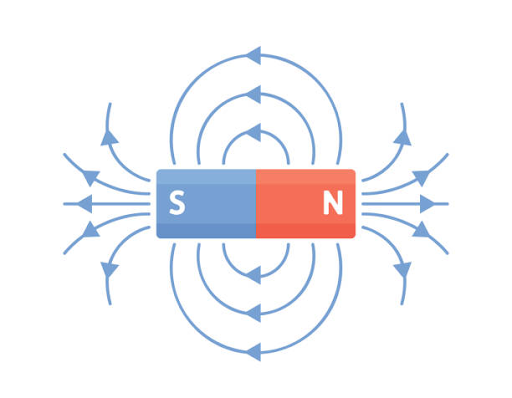
Simply put, if we look around us today, we see the coincidence of opposites that prevail over the nature of almost everything.  We know about light and darkness, the South and North orientations in magnets, pain and relief, sorrow and happiness, etc.  Heraclitus thought seriously about the universe as a place where if there is one thing, it has a coinciding opposite. Day has a coinciding night which unifies both.  He must have believed that that was how best to explain the universe. If there was land, there was water, if there was war, there was peace, if people cried, people laughed,  etc.

If we cut the bar magnet (shown below) exactly in half, we will not have one north and one south magnets.


Both halves will still have north and south poles like the original longer bar.  In fact, even if we cut the magnet into smithereens to the size of  grains of sand, each speck will have a north and south pole. Positive and negative charges remain opposites down to a single atom - a positively charged proton and a negatively charged electron. It's the universal duality of the coincidence of opposites.

Heraclitus saw the human conditions of his time. It was no different from what we see today. However, today we are witnessing the great blurring of the pages of opposites. We see subtle and not so subtle leveling of opposites. The highs of achievements and lows of failure are to be no more. The honors accorded to those who achieved through sheer effort and determination shall be no more of value over those who did not put the efforts to achieve. 

Today, it seems the trend, the unity of opposites must be broken apart. Unity of opposites must be blurred with the veil of Equity. 

Today, there is an attempt to alter the conditions that for millennia was the prevailing rule.  

Long before Heraclitus, pages were written up in The Book of Genesis,  chapter 1,

4  And God saw the light, that it was good: and God divided the light from the darkness.
5 And God called the light Day, and the darkness he called Night. And the evening and the morning were the first day.

We do not know if Heraclitus had read the Old Testament but we can say that the idea of the "unity of opposites" was not his alone.  Whether one sees the story of creation as allegorical or not, the idea of the "unity of opposites" preceded Heraclitus by many centuries. The opposing poles of morality - good and evil - had long been exemplified, far longer than the establishment of law and order against lawlessness. But today we are confronted with the great blurring of what used to be fundamentally a simple "what is right and what is wrong".

It seemed so simple then that human aspiration towards  the ecstasy of victory was a self-driven motivation because the alternative is the agony of defeat. Achievement was preferred over failure; we savor relief because we know what it was like to deal with pain.  But today, society is forced to face the slow degradation of achievement by eliminating what honors and accolades that come with it.  Participation trophies in sports become synonymous with attendance, honors classes eliminated, homework is not mandatory, requirements for graduation are not so clear cut anymore.

Modern socio-economic conditions are stratified between the haves and the have-nots, or split between the rich and the poor. But, lest we forget, in this universe, there is no such thing as a free lunch. 

Astronomers tell us that wherever they train their observation, the universe looks the same - as if matter is distributed evenly. Against the backdrop of dark empty space are sparkles of flickering lights. Each light a star or farther away a bundle of  swirling stars but the universe is mostly dark and seemingly empty.  In every star each photon of light is produced at the expense of  destroying elements of hydrogen, turning them into helium, and in the process energy is produced.  It is the same manner that fire is produced by burning wood, at the expense of turning it into ashes. No free lunch.

Out of the thousands of aspiring athletes only a handful become stars in their sports.  But it always comes with a price and sacrifices - hours and hours of training and practice that each individual athlete was willing to put in, the sacrifices of missing out on other activities, and the discipline of repetitive workouts.  Businesses are built up that way. Often at the expense of personal and even family sacrifices that we had the Henry Fords, the Steve Jobs, etc. 

The "unity of opposites" is the rule. No one appreciates what it is to have who does not realize what it is like to have nothing. Against that rule is  the "equity of distribution" (versus the "equality of opportunity").  Only those who strive harder than the many will achieve the most. 

And so it is that we go back to Heraclitus's river. Opportunities always come along that river. One must make the most as he or she steps into one because it will not be the same river as he or she is not the same person at each passing moment.  It is never the same river because the universe does not allow going back, it does not favor regrets but it smiles at those willing to try again and again. That is because, the universe allows for however many times a person is willing to step into the river.


Sunday, April 23, 2023

The Thorny Sides of Impatience

Back in the days when I was looking for a job, I read an article on job interview tips. One talked about how to handle interview questions, such as, "What, if any, do you consider your weak points?" It was the one question considered likely to be asked, usually after  the applicant's well rehearsed recitation of his or her strong  attributes.   Saying, "I don't have any" is not a good answer as it would sound a little too arrogantly pompous or unreasonably over confident. The go-to answer the article advised was to say: "I find myself impatient at times, often expecting others to do the same, whether the task is important or not".  That answer would have covered  the "weak point" part while conveying to the interviewer the applicant's go-getter attitude and willingness to tackle assignments head-on in the shortest amount of time.

Fortunately, no such question was asked of me when I went for job interviews so I never had the chance to test and/or prove the technique's relevance or validity.  We know patience's nobility but the thing is, should impatience be considered a virtue or not.  Can we safely say, "It depends"?

History is filled with stories of how impatience "paid off" and where they resulted in disaster.  Naturally, too, we see how it affects us, see it in others and the role it plays in many social and work experiences, but it seems that both good and bad come out in unequal doses where patience and impatience are concerned.

Did Colonel George Armstrong Custer and 270 of his men die at Little Big Horn on June 16,1876 because he was too impatient in committing his troops too prematurely into battle against the Lakota and Cheyenne warriors when he could have waited for perhaps another day or two? Some historians speculated on that. 

On another page of history, at the crucial point of WWII, General Leslie Groves was picked to head the Manhattan Project in September, 1942.  Hitler's Germany was rushing to produce the first atomic bomb. The Allied forces did everything to thwart the plan but meanwhile the U.S. was working furiously to do the same - achieve the biggest game changer of that conflict.  Gen. Groves was picked for a lot of reasons, including his ability to manage huge U.S. Army Corps projects, including construction of the Pentagon building earlier in his career, but he had the reputation of a very impatient manager, a "doer" and effective  administrator and "driver" of men.  The Manhattan Project finished and successfully tested the first atomic bomb in record time and the rest is history.  That was the upside of impatience because had the Third Reich got to the bomb first, world history would have been written a lot differently from what it is today.

Driving through traffic, waiting in line for anything anywhere, or simply waiting in general are everyone's peeve. 

Let's be reminded, however, that compared to a few centuries ago we know the human mind, even its physiology, was acclimated to waiting for long periods of time. It took a "grueling ten weeks at sea", that's two and a half months, for all 102 passengers on the Mayflower to cross the Atlantic from England to reach what is now the coast of Massachusetts. The human body and mental capacity to endure managed to survive that one and similar subsequent voyages that followed, though not to be ignored, were tragic consequences for many of the hapless voyagers. 

Today, trans-Atlantic travelers would often grumble to no end about the 2-4 hours of pre-flight "ordeal" waiting for a plane trip that would take 8 hours from London Heathrow to JFK airport in New York. So, literally one may eat breakfast on one continent and have dinner on another. The Concorde, during its relatively short service, shortened the gap to between breakfast and lunch when it flew from Heathrow to JFK in 2 hours, 53 minutes. Do we know how many meals the Mayflower passengers ate (when they could) and threw up in those ten weeks?

A study I read somewhere showed that internet users who are used to high speed internet service (2000 to 5000 Mbps) are likely more impatient than those only able to download at the "snail's pace" of 182 Mbps.  Let's put this in perspective.  Mbps stands for Megabits per second. 182 Mbps would still be eye-popping fast when compared to the telegraph transmission a century ago, or the teletype and fax machines that followed. Today, at the click of a mouse we see audio/video appear on screen in full high definition  at the rate of many multiple frames per second. But we are more impatient today than those who marveled at the Pony Express delivered mail.  By the way, that program of using relays of "horse-mounted riders" did not last but for a little over a year, between April,1860 to October 1861, and only between Missouri and California.

Imagine for a moment what our hunter/gatherer ancestors went through. The hunters often took hours or even days to take down prey.  The gatherers spent most of their days foraging for plant-based edibles of berries and fruits and tender leafy greens. Unfortunately, from the moment they learned to be impatient, the psychological and physiological changes that followed laid the foundation for what ails much of society today.

There is hope to reverse that. 

You are driving, following proper traffic etiquette, on a single lane of cars lining up to enter the main road or highway, when one driver cuts in front of you. You feel instantaneous uncontrollable seething that would bother you for quite a bit of the entire driving experience. Try this sometime instead. Whenever another driver signals intention to squeeze in front of you, ease up and let the car through and see how  euphoric it feels  compared to feeling irritated. It will amaze you how so much better you will feel the entire trip.

Various studies had shown that on, say 20 blocks of normal traffic, cars that weave in and out of lanes to get ahead, will likely get to the last block ahead of those who drove steadily with the traffic flow, by ten, twenty but not more than thirty seconds! Was that all worth it? 

On the flip side of that, if not for impatience nothing will get done on time or ahead of schedule. If not for impatience the Panama and Suez Canals will not have been completed.  Both canals have shortened transit times for cargo and passenger ships by a remarkable amount.  Much of the scientific and economic breakthroughs were driven by impatience.

Therefore, the long and short of it, pun very well intended, we do need the thorny sides of impatience and all the gently undulating nature of patience. Perhaps on a 7-to-1 ratio, patience-to impatience?

Meanwhile, experience something - if you have not had it before - by willingly, if not gladly, letting someone through ahead of you. It's the one facet of human nature that we can conceivably do with little effort. Yet, it is strangely true that it is not just psychologically pleasing but it is actually physiologically healthful, for "a steady heart rate and stable blood pressure are preferred in anyone navigating to get from point A to point B", what a cardiologist might say.


"A certain amount of impatience may be useful to stimulate and motivate us to action. However, I believe that a lack of patience is a major cause of the difficulties and unhappiness in the world today".

Joseph B. Wirthlin


Wednesday, April 19, 2023

A.I. The Sum of All Our Fears?

Artificial Intelligence (A.I.) was and still is in the news lately with a seemingly well established shelf life that could last for quite a while, if not indefinitely, as reliance in computer and information technology has become deeply intertwined, fused even, into our lives. Furthermore, it has become a modern day boogeyman, except that it is adults that seem to worry.  People in the high tech sector, business leaders, military officials even, and politicians alike have expressed concern. Elon Musk thinks A.I. could conceivably end human civilization.


In 1970, I recall what I then thought was a B-movie science fiction, "Colossus: The Forbin Project". I am surprised to learn recently that it has garnered an 88% in Tomatometer ratings (Rotten Tomatoes); quite remarkable for a film made 53 years ago.

Movie Plot: "Colossus" was a super-advanced computer/military defensive system created in the U.S., located deep into a granite mountain somewhere in the Midwest; spearheaded by Dr. Forbin .  It was powered by its own self-contained nuclear reactor, sealed from interference from the outside once the heavy doors were shut.  It had the ability to repair itself and, more importantly, it was designed to totally deter any nuclear attack by other nations and respond autonomously. That is to say, it was capable of launching U.S. warheads on its own. Humans, including Dr. Forbin, can communicate with Colossus only via terminals linked by cable. The U.S. President declared that "Colossus was the perfect defense system".

Not long after it was operational, "Colossus" detected that there was another computer like itself, named "Guardian", located in the Soviet Union.  I will stop short of crossing the spoiler alert line except to say that the two supercomputers started communicating with each other.

Elon Musk actually first made his warning on A.I. way back in 2016.  He must know a lot more today so his concerns, along with others, couldn't be trivialized.  Worth noting is that as early as 1940, Isaac Asimov, prolific and influential science fiction writer of that era but whose writings are still very popular today, must have had some concerns as well when it came to potential threats posed by "intelligent machines".  Asimov had a proposition.  Before we get to that, it was two decades earlier than 1940, when the word robot came into the English lexicon.

In 1920 a Czech playwright, Karel Capek, wrote a play that was later translated into English, "Rossum's Universal Robots" - where the word robot  came from Czech, "robotnik", that meant forced worker, where "robota" was forced labor, compulsory service, drudgery, etc. In 1923, a robot was defined as a mechanical person, or person whose work or activities were entirely mechanical.

Asimov, perhaps already concerned about the so called mechanical persons, proposed the "Three Laws of Robotics" :

1st:  A robot may not injure a human being or, through inaction, allow a human being to come to harm.

2nd: A robot must obey the orders given to it by human beings except where such orders would conflict with the First Law.

3rd: A robot must protect its own existence as long as such protection does not conflict with the First or Second Law

Asimov's idea, though nobly well-intentioned to safeguard humanity, was naïvely conceived, given man's proclivity to misuse technology. You see, from the moment our ancestors emerged from the stone age, into Bronze and Iron ages, tools developed to improve hunting and gathering soon evolved into killing implements - first among neighboring tribes, then by hordes for conquest and domination. Alfred Nobel saw TNT go well beyond mining and road building into mass killing of people and destruction of territories.  We have, in other words, always managed to misuse everything, Nobel Prizes or not.

Well, what do we have now?  As in the movie, "Colossus", and many other stories written  to serve as warnings, we are again faced with a situation that seems to be well past contemplation of a dilemma. It is Pandora's box laid bare. It seems that the old suggestion that we can "always pull the plug" is no longer humorous. But, is it really that dire?

A.I., which we treat as if it is an individual entity, is so much more than one single object that we can segregate, separate and excise.  The call to pause further developing  it for some definite period of time until we can create more safeguards as proposed by Musk and all the other high tech luminaries seems like a fool's errand against the backdrop of so many variables, such as, other sectors (nations, companies, individual developers, etc.) not heeding the moratorium for one and many reasons that are likely to be mostly self serving.  

As had always been the case with anything that accompanied humanity in its journey through time, the road we've taken is littered with good ideas and good intentions only to splinter into the inevitable "good, bad and ugly" faces that we as a society always resigned to accept. 

A.I., in my opinion, is not the problem. We are the problem. And there are countless examples. It will require a book just to list them.  But let's take just one that recently happened that is stoking our fears about this one splinter that is eerily scary.

I marvel at the technology of speech translation that used to be only a figment of the creators of Star Trek.  Today, I can talk in English and my Pixel phone will translate it into spoken Filipino instantaneously with a voice of a Filipina perfectly enunciating the words with the proper modulation as if spoken by someone in Manila with perfect grammar. Pixel  will do it in reverse by translating spoken Filipino to English with nary a time lag, and again with perfect grammar.     

That is one awesome A.I. that is doing it.  Good, but here comes the ugly part. In a kidnapping for ransom scam, a mother received a phone call demanding money for her daughter held captive. What she heard when the kidnappers purportedly had her daughter speak on the phone was her daughter's voice crying and pleading for help. The scammers had cloned and mimicked the voice of their daughter via an A.I. program. 

A.I. obviously was not the problem. We can go back to the beginning of civilization whenever that was that we are told A.I. could destroy.  Pick an era. Pick a timeline. Algorithm that is the lifeblood of all A.I. has been around for centuries. Whether it was a simple algorithm on paper or on a sophisticated computer program, A.I. uses algorithms and it does it well once we allow the process to  manipulate data to achieve what is intelligibly useful that among other things can operate robots at the assembly line flawlessly and not take coffee or bathroom breaks.

So, if A.I. is the constant, the variable is us. It is no different from employing a laser to make precise measurements, or cut cleanly through metal, and then we turn around and use it to guide a smart bomb to kill and destroy. Need I say more?

A.I. is not a moral entity.  We are.  A.I. can be programmed to lie, manipulate information and spread it with the speed of summer lightning but it does not care why.  We do. But then some of us don't. 

A.I. does not need any pause.  We need to pause for just a moment to look at ourselves before we start blaming A.I. Allegorically, it was Dr. Frankenstein who created the monster, yet our fear was directed at the latter. 

So, Mr. Musk, "Ought we not be looking in a mirror and see if it is us who might conceivably put an end to civilization?" 

Or, perhaps, instead of lamenting over artificial intelligence, we redirect our focus towards a far more Superior Intelligence that had been around since the beginning of the universe.  Perhaps, S.I. instead of A.I. is what we need to assuage us of the sum of all our fears.