Wednesday, June 29, 2022

When Age Is Really A Number

"Age is just a number", we often  hear.  Sometimes it is  simple bravado, sometimes it is merely a way to think positively, or often a way for folks to brush off the accepted meaning of old age and the inevitable realization that there is little we can do about getting old. If there is anything we could do  at all, it is to ignore the dreaded calendar.  After all, it is just one  out of every 365-calendar days of the year that seems to be a source of prickly annoyance, once we get past the 40th anniversary of what is a yearly recurring milestone of our existence. 

Corollary to "age is just a number" thing, we've managed to redefine or move the markers by saying, 50 is the new 40. Last I heard, 60 is the new 50.  People are living longer, so others make it conceivable to think 70 "ain't so bad".  Clearly, George Burns, Betty White attested to that and now Clint Eastwood is proving that there is still a good chunk of "Dirty Harry" in him at 92. Meanwhile, Dick Van Dyke who was born on Dec. 13, 1925, still goes to the gym, and still does a slow motion version of a scene from Chitty, Chitty Bang Bang.  Just think, in three years Dick Van Dyke will hold a rare 3-digit age code - 100!  A 2-digit age code that begins at 9 is huge enough and those already at the 7 or 8 age codes are  a 3-generational phenomenon by themselves. Those are celebrities, of course, but we know there are a lot more out there - ordinary folks who get well past beyond the minimum 3-digit age code.

Now, we may have to switch to, "Age is truly a number".  Why?  Well,  the cartoon below, far from a denial, it is actually a resolute response without denying the number.


(Caption): "I used to be old, too, but it wasn't my cup of tea".


If the desire is to live longer, or even just long enough, it is best to have accumulated a number or the number, which means this: each morning that we wake up, realizing we are able to get up, and we do indeed, then get to spend the day, productively or not, watch or at least imagine another sunset, have another dreamy or dreamless night, and to wake up again into another morning, the numbers add up.  The higher that number becomes, the longer we've held on to the ticket to long life, which is to grow old. And there is absolutely nothing wrong with it.

The road to living longer is paved with time, but there is no short cut.  We sometimes encounter a detour, a rerouting, a temporary rest stop, but for as long as the journey continues, expect that with each mile covered, the numbers add up and we want to stay on that road, where ever it leads. George Burns said it best,

"I'm very pleased to be here. Let's face it, at my age I'm very pleased to be anywhere".

Oh, but to be young again! Really? Unless one inherited oodles and oodles of money at birth, there is little of it among the young.  Compound interest only works with time.  99% of the time the number (i.e. savings, 401Ks, etc.) that matters is directly proportional to how much time there was to get to it  and to get to it is a matter of how much we've aged.  So, clearly, age is really a number. 

If time waits for no one, you don't want to be left behind.  You may choose not to board the train but you  have already paid for the ticket.  You might as well enjoy the ride; and the conversation with fellow passengers. At this point in your lives you have quite a glossary of topics to sustain conversation after conversation in the medical field.  If you are not in search of a cure you are dispensing it. You are past talking about replacing the old dishwasher or washing machine, and clearly your bodies have far more mileage than your cars. You no longer worry about the car battery. The question is remembering when  your pacemaker will need one.  You still know your ABC's but you are a lot more conversant about COPD. You used to be hip among friends when it came to Rock and Roll and Boogie Woogie.  Now, you are thinking about getting new Teflon-lined stainless steel hips .  Just kidding.  Let's keep on with the numbers.

Life, at this point, is all about accumulating as many more sunrises and sunsets and enjoying what's in between, including the not-so-obligatory nap in the afternoon. Hobbies do not have deadlines.  Speed reading is not required because a good book must be read slowly. Slow-cooked meals are tastier and more tender and energy saving.  Not from the cooking but from physical energy saved from not having to exert too much in chewing.

Know this too. We make note of celebrities getting into their nineties but here is a short list of ordinary people who are still living at 108: Dorothy Sellers of Freeport, Long Island, NY; Carmen Slough, Arizona; Beatrice Chieko Muranaka, Hawaii;  Ireland's oldest living woman, Mairin Hughes; WWII veteran Chester Edgar Wilson, KY; Ron Schwartz, WI; and on and on.  By the way, that is just those at a specific age of 108, not counting those at between 101 and 107, and many past that.

So, we shouldn't dread The Number. We should embrace it. Ignore the past because there is absolutely nothing that we could do there; the future is where we will be spending the rest of our lives.


Sunday, June 19, 2022

SILVER LININGS

If there is ever the one single phrase in the English language that epitomizes positive thinking, the "silver lining" must be it. It is a carrier of hope even when things seem to have turned desperate; it could also be the key that will open up a door or many other doors when one was shut so badly to one's face; it is serendipity in the midst of unknowable expectations; it is that prize behind "Door No. 3".

What is the origin of the phrase? And how often does the concept or the actual phenomenon of silver linings manifest themselves?

It is apparently from Milton's 1843 poem when he wrote in "Comus", "where the silver lining is the light of the moon shining from behind the cloud.

'To which Thomas Warton added the commentary: "When all succor seems to be lost, Heaven unexpectedly presents the silver lining of a sable cloud to the virtuous."

Would it be too bold to declare that the silver lining has been the essence of the universe all along? Or that the silver lining was baked into all of God's creations and that The Creator made it so that there is a silver lining where darkness dwells. 

If there is such a thing as the DNA of the universe, then the strands that hold the universal genes must be made of silver linings. This will require some explaining, before we get into silver linings that impact us personally.

Though it was there even from the true beginning of creation, that is much too farther back in time to look at it.  We may begin about two thirds through the age of the universe.  It was about four billion years ago when the universe was by then already nine billion years old.  Our sun was just another star out of several others that were created after a super nova explosion.  Any explosion seems a cause of torment but our first silver lining was the birth of our sun amidst a swirling mass of energized plasma.  Along with  our sun were  planets jockeying for their orbital positions around it.  At last they settled into separate orbits, different size marbles careening at thousands of miles per hour, turning on their axes individually along the same plane similar to an old vinyl record on a turn table.  But one planetoid about the size of Mars bumped into the third planet. The collision caused the third planet to tilt on its axis like a leaning top twirling several degrees from the vertical of the turntable's plane. The massive collection of debris from the collision began to collect into a smaller ball, while the rest of the mass ultimately fell back into the third planet.

Silver linings?  Several, actually. That smaller ball became our moon. What good could have come out of a tilted third planet - earth? It is because of the tilt that the northern and southern hemispheres have four seasons. But what about the equatorial region.  Well, it may not have the four seasons but it also means that it has an all year long growing season for vegetation. It makes possible for tropical plants and rain forests to thrive continuously, thus the vast forests are earth's ultimate carbon scrubbers, gobbling up CO2, spitting out oxygen.  The equatorial region gets much of the heat from the sun and together with its faster linear speed relative to the area closer to the poles, it is where hurricanes and typhoons originate. But, is there a silver lining with hurricanes? They are bad because we are here now to experience their ferocity.  But hurricanes and typhoons are like giant and powerful sprinklers, hosing away dead and weak vegetation and surrounding debris and general clean up of the environment. It may only sound facetious but indeed hurricanes and typhoons are part of a huge hydro cleaning crew. These powerful wind generators are solely responsible for spreading living organisms from the mainland to what used to be uninhabited and isolated islands in the middle of oceans. The moon regulates the rise and fall of ocean tides - a phenomenon that is unmatched in regulating the workings of oceans, rivers and bays.  It is clear the Creator had put in place regular and recurring mechanisms that make nature work as it does today.

Lightning was around from the moment the four forces of nature defined themselves as separate entities over 13 billion years ago. Lightning was here when our earth was just a molten ball.  Our early ancestors held them as fearful manifestations of the power of the gods. It is actually more than that.  

"With up to a billion volts of electricity, lightning burns at 50,000 degrees, making it hotter than the surface of the sun. When lightning strikes, it tears apart the bond in airborne nitrogen molecules. Those free nitrogen atoms then have the chance to combine with oxygen molecules to form a compound called nitrates. 

Once formed, the nitrates are carried down to the ground by rainfall. There, plants can absorb the powerful natural fertilizer and have any grit and grime washed away".

That lightning flash we see and the thunder clap that follows is literally the silver lining behind the dark ominous clouds.

67 million years ago, earth, teeming with life, was hit by an asteroid the size of Mt. Everest.  It was a devastating extinction of species, really bad news for the dinosaurs that were the dominant species for the last 160 million years prior.  There were survivors.  One of those were the early small mammals that barely eked out a living in the shadows of the giant reptiles.  The silver lining?  Those mammals were the precursors of our early ancestors.  But in the process did it not cost the destruction  of so many living organisms, primarily the extinction of dinosaurs?  Well, not all the dinosaurs perished.  The tiny species that survived had more tricks up their sleeves. Some of them not only survived but went on to dominate the world above them - the ocean of air.  They evolved into birds. The tiny velociraptors and today's eagles and hawks maintain the classification of raptors. They were and still are formidable predators.  There was a silver lining for dinosaurs.  Predators are regulators for a healthy eco system, balancing the population of prey animals to the vegetation that support them.

Speaking of predator and prey, there is one clear example of why silver linings are behind every natural balancing act.  The cheetah and the gazelle evolved  to be the speediest predator and prey, respectively, on the African savannah.  The slower gazelles died off as they were being caught and only the fastest could pass on their genes; meanwhile, cheetahs that could not keep up also died off and only the speediest could go on to multiply. Since then the speed race between prey and predator went on for millennia.  As a check and balance, the cheetah's success rate is a mere 37%; although it is better than 50% when going after old and/or sickly gazelles, which by the way is a silver lining because only the healthiest go on to outrun their predators and live on to propagate the species.

What about harmful microbes, like viruses and bacteria, and the plague?  Microbes, researchers have uncovered, were likely responsible for our development as a species.  Not only that they triggered many mutations that led to beneficial adaptations and our ultimate physical development, they are a daily ally, residing in our gut throughout our entire lives, performing all kinds of functions - from digestion to regulating some of the workings within our bodies, including training our immune system into a formidable force against other microscopic foreign bad actors.

The bubonic plague that ravaged Europe, killing 25% of the population, was singularly responsible for the early eradication of slavery, serfdom, while enabling land distribution from the clutches of feudal systems, the beginning of fair wages and landownership made possible away from dukes, earls and royal connections.  It was when a huge population of servants and farm workers fell to the plague that forced land barons and landowners to hire and pay workers who were in great demand.  Some landowners were forced to give up some of their lands to ordinary people who later made up the farming industry.  The plague also brought about better sanitation and what came to be the beginnings of health care systems.  There was always a silver lining when we care to look.

If we examine our lives, we will find that a series of silver linings paved much of the way to get us where we are today.  Look back, look closely. And we do need to look closely.  Often, we will likely see that so many things happened, so many people, and many circumstances in our past opened up certain paths for us.  We may not have noticed it then, or we failed to see it, but every challenge and difficulty we faced, were met because somebody may have helped, opportunities opened up, we developed the strength and resolve on our own from somewhere, sometime, but those were all silver linings.  We just didn't see them that way then.  There may have been roadblocks, detours and side trips but most may actually have led to other opportunities, different ways of looking at those we either over looked or set aside that turned to be fortuitous in the end.

Actually, it is looking out for silver linings that make possible for positive outlook and attitude when something not too good happens.  Behind all the chaos we face is the gentle musical tinkling of a silver lining unfurling.  Think of it this way.  If we look out for it, anticipate it, even hope for it, we have just eliminated the one great hindrance in life - worry.  Worry is that thick impervious backing behind the drapes that blocks our view to so many things out there behind the window where perhaps a silver lining is unfurling.

This is worth believing: God did provide the essence of silver linings to the universal DNA from the moment of creation. 


Wednesday, June 8, 2022

The Camel's Nose

Modern era governments have come this far through a series of evolutionary paths that humans went about to organize themselves.  Kingdoms and monarchies that depended solely on the skill and power of an individual who then passed it on through the hierarchical  bloodline, have been gradually replaced by a process where the power is generated from the bottom up. At least, that is how it was supposed to work.  Democracies are definitely that but even socialism, communism and totalitarianism are still required to wield their power through the people, albeit, forcibly either through coercive or veiled subtle means.

Let us not forget that true democracies were born out of establishing individual freedom so that in the process people are allowed to express their views unhindered and to be able to pursue their livelihood towards economic freedom within certain sets of rules and laws agreed to and with concordance from the people.  Such rules and laws must be confined optimally towards fairness and equal distribution of rights and privileges but none of those must favor one group or disallow another for reasons of race and gender.  All of that encapsulated in the nobility of a true justice system.

The American style democracy had a unique history in that, while there was a clear majority of skin color in the beginning, there was diversity of culture and national origins from where they came.  Later on, as the word spread around the world about what was then a new nation, more diversity of people came over on their own while many others were brought in by force. It did not take long for the new nation to go through another evolutionary path by way of The Civil War. Incredibly, democracy was preserved and renewed.

Today it seems that it must endure another evolution. It might seem subtle except that this nation may find itself divided by an ever widening chasm right in the middle.  Long gone were the days when a sitting President from one party and the Speaker of the House from another would get together for an early evening beer after a grueling and contentious debate between opposing legislators in the Hall of Congress.  That was 38 years ago - today's generation cannot relate to - when Ronald Reagan was President and Tip O'Neil was Speaker. That was when politics worked as politicians worked together.  Today, we have politics in great turmoil, a democracy in a delicate balance, except that the two scales are weighted down with seemingly irreconcilable differences. 

Each new administration has every right and all the prerogative to shape the agenda of how it will run the country.  How  was it different after the 2020 election? A year before that election, I wrote, "In Awe of Climate", not truly realizing that what I feared actually came to be:

"Yesterday, Sept. 4, 2019, 425 days from next year's U.S. 2020 election, ten presidential aspirants gathered for a Climate Town Hall for hours. It and almost all the next get together and discussions to follow will be pivotal in one particular way. One of these candidates could conceivably shape the critical agenda for running the next government in case the present administration is voted out of office. It shall be a huge switch in policy because as one of the candidates said last night, "Every Policy Should Be Informed by Climate Change."

Well, what do we have today? The new political party is in power and what we have is, "Every Policy Is Horribly Informed by Climate Change."

I would rather not use the old and tired cliché, so it is with great trepidation that I must: the new administration has succumbed to and had been hijacked by the "perfect storm" of young minority member-legislators of far left wing climate activists and hyper active woke generation. When the then presidential candidate, now President, declared to put the U.S. oil industry out of business, it was a pandering signal to the climate activists of the party that he followed through immediately upon taking office.

It was another clear example of my favorite analogy about reaching the height of insanity when the administration curtailed oil exploration and production here and then go out shopping for the same commodity from Venezuela and Iran; both run by totalitarian regimes.  Shamelessly planning to fly to and visit Saudi Arabia to beg for more oil to come this way after calling that country's regime a pariah to the world during his political campaign is impenitent political amnesia.

Enough about oil, lest my U.S. readers are reminded of the inevitable pain at the gas pump.

In an ideal world the governed expects and gets what the government provides - safety, peace of mind, protection from those who will do them harm (foreign or domestic), general well being and the freedom to express their views without fear.  The government may take from the people in the form of taxes to be able to provide all of the above.

The California Energy Commission now mandates against the use of natural gas for cooking, water  and home heating for all new home and apartment constructions in the name of climate change.  Again, clearly unencumbered by careful logical or common sense thought, this is despite the fact that all electricity to provide for all the appliances are produced mostly by fossil fuel burning plants.  Add to that the mandate to outlaw the sale of combustion engines in the State in the next few years to come will exacerbate the problem.  But, ""Every Policy Should Be Informed by Climate Change."

When Homeland Security created the Disinformation Board, the 1st Amendment Right on free speech was both the intended and non-intended consequence of another ill informed policy.  Anyone who remembers reading Orwell's "1984" in high school or college will find it more than a devilish amusement that a more than real Ministry of Truth had been unfurled out of the fictional pages of a dystopian novel into the inner sanctum of government in 2022.

Now the 2nd Amendment is on the block.  Perhaps not entirely  but it is another thing eyed for curtailment legislatively.

The people will be best served to notice these little things chipping away subtly but slowly before realizing much had been taken. First it is the gas stove, the internal combustion engine, etc. 

Slowly but surely there is a trending desire of taking away from the people by a government created to be a provider and not a taker. We could be witnessing what once was a desert fable about letting the camel's nose inside the tent during a sandstorm.  Soon the camel is fully inside​,​ ​its master pushed away outside into the raging blast of the proverbial sand and wind of woke-ism and the most powerful force of the​​ ​political ​human mind - self delusion.

"The camel's nose is a metaphor for a situation where the permitting of a small, seemingly innocuous act will open the door for larger, clearly undesirable actions".


Totalitarianism anywhere it exists began as a camel's nose that slowly worked its way from one bureaucrat to the next, from one political operative to another, then through the entire political party apparatus until all there is inside that tent is the entire camel.

An entire country could lose its original collective spirit of exceptionalism not from a weakened general populace but from the insidious corruption of its political system by the oligarchy made up of politicians.  Beware of the camel's nose for there is a sand storm brewing.  


Wednesday, June 1, 2022

In The Midst of a Madding World

For those willing to take the time to look, they will see that we - in the USA - is in the thick of a madding crowd.  Not just in the nook and cranny but even in the halls of Congress, for there is a growing illness infecting the nation's psyche. Let's begin with the slightly benign, though no less debilitating.

In the House Judiciary Committee Hearing, on March 1, 2022:

Aimee Arrambide, the executive director of the abortion advocacy group Avow Texas, was asked by Rep. Dan Bishop (R-NC) what she believes the definition of a woman is.

"I believe that everyone can identify for themselves," Arrambide said.

When asked if she then believed that men could therefore get pregnant and have abortions, her response was a simple "yes." Bishop did not push the topic any further.

In a joint Senate Judiciary Committee Hearing two months earlier, the nominee for the recently vacated Associate Justice of the Supreme Court declined to answer a question on how she would define a woman, declaring she is not a biologist. That "duck and weave" of a response was out of avoiding a backlash from the liberal and woke politicians and media if she answered in a singular way that would have described the natural male/female definition of the two sexes. 

Madding (Old English)

adjective:

1. acting madly or senselessly; insane; frenzied:

a quiet place far from the madding crowd.

making mad:

2. a madding grief.

Madding USA might as well sound like, "Made in USA", because only here that a school district had authorized the placement of Tampons in the boys restrooms.

May 6, 2022 .. In July 2021, Democratic Gov. Kate Brown signed the controversial “Menstrual Dignity Act,” which requires all K-12 schools to provide free ..

“Starting next year (2022-2023), products will be available in all restrooms (male, female and all-gender) in every PPS building where education occurs,” the Portland school district said in a 2021 statement.

“To ensure timely compliance, PPS ordered 500 dispensers. Dispensers have been installed in all elementary and middle school girls’ restrooms, and more will be installed in all remaining bathrooms, including boys’ restrooms, next year,” it said.

Oregon is the same state, same governor, that "will no longer require its students to demonstrate proficiency in math, reading and writing in order to earn a high school diploma..".  Students will get a "modified diploma".  

If one is looking for an example of the height of insanity, Mount Everest would seem like a molehill compared to how far up the la la cloud  the State of Oregon had soared.

Meanwhile, in Kiel, Wisconsin, three elementary students were charged by the school district for sexual harassment for not using the proper pronouns to refer to another student, since the latter declared to be referred to "they" in place of "he" or "she".  This pluralization of a singular gender identity is clearly an insane destruction of proper grammar, at a critical time when students are struggling to adhere to the tenets of good writing, reading and math.

Some schools had already disbanded the honors classes for fear of offending those not in it. In many graduation ceremonies we no longer hear about valedictorians and salutatorians.  It will offend the rest of the graduating class.

We wonder why China, Singapore, South Korea and a lot more other countries are outperforming U.S. high school proficiencies in science and math. 

Now, for some of the malignancy that is dividing the country further and weakening it down as represented by no less than a disconnected view  the Secretary of the Treasury Janet Yellen took, when she declared:

“I believe that eliminating the right of women to make decisions about when and whether to have children would have very damaging effects on the economy and would set women back decades”.

In effect what she said was, "that banning abortion would be “very damaging” for the economy by reducing women’s ability to balance their careers and their families".

She doubled down even further, “It means that children will grow up in poverty and do worse themselves,” Yellen responded. “This is not harsh. this is the truth.”

Fortunately, a sitting Black Senator from S. Carolina was able to balance the Senate hearing with one profound statement: 

“I’ll just say that as a guy raised by a Black woman in abject poverty, I am thankful to be here as a United States senator,” he said.

True story, one afternoon a couple of weeks ago, I had a conversation with a black woman who was at the adjoining lane at the pool of the fitness center. She was using the pool as part of her physical therapy post a knee surgery. The conversation led to talking about family.  She has one son that immediately I could tell was much the source of her greatest pride. As a single mother she raised him  since 31 years ago when she was just eighteen.  She went against the advice of many around her to not go through with her pregnancy.  It was the same people around her who blamed her further when at six months old the baby was diagnosed with Down Syndrome.

Her son, whom she describes as not near fully able to function normally, was able to read and write though not at the same pace as the other kids his age growing up, yet is capable of taking care of himself. He is often asked to "deliver a sermon" at their local Baptist church from time to time.

I can tell from her beaming eyes and and broad smiling face how proud she is of that child. She must have sacrificed so much to raise that child while she pursued a vocational career to earn enough to avoid giving him up to foster care early on.  She is 49 now but she still looks at herself as a proud single mom, because that child might be forever childlike but remains the greatest joy of her life.

We can be sure there are countless examples like that but what of the countless more, a hundred times fold, of those whose lives have never seen the dawn of birth, their beating hearts and limbs afloat in motherly cocoons but never had the chance to feel the coolness of the outside air nor the glare of lights outside the womb nor hear the din of voices other than their mothers'.

This issue, mind you, shall be one that will divide the nation further away from where the middle is, almost exactly.  It is so unbelievable that a political system from which this great nation had grown and flourished since its inception almost three centuries ago, buoyed by the rule of the majority, is now divided at the almost unbreachable bulwark of a 50-50 population. 


If this nation could not find a way to re-unite soon, the weakened state of a divided country will open up its belly, infected from within and exposed to all that will be harmful to it from without.

Friday, May 20, 2022

Life Lived More Than Once?

"In Sri Lanka, a toddler one day overheard her mother mentioning the name of an obscure town (“Kataragama”) that the girl had never been to. The girl informed the mother that she drowned there when her “dumb” (mentally challenged) brother pushed her in the river.."

It was later confirmed that indeed there was a family in Kataragama  when years earlier  their daughter drowned while playing with her mentally challenged brother who pushed her into the nearby river. Other details (27 out of 30) that the girl said when she described the town and the people and specific places there panned out but that the two families never knew each other nor was there any kind of connection, such as, common friends or indirect contacts.

Worldwide, thousands of cases have been documented but they're predominantly in countries with populations that are predisposed to beliefs in "past lives", where Hinduism and Buddhism are the prevailing religions. However, it is not new in the West entirely and not limited to the fringes either.  Henry Ford and Thomas Edison were known to believe in the idea.  

Of the two, Henry Ford went on record in several interviews he did in the late 1920's; albeit more within  his pragmatic version of philosophy as opposed to the framework of religion where Hinduism and Buddhism are anchored to.  Now, I will act merely as a moderator with this musing and only   to ask questions but not provide answers on the subject; my Judeo-Christian up bringing, notwithstanding.  This is  a continuation of the last two speculative ponderings, a third of the trilogy, if you will, to follow "Life Lived Once" and "The Midnight Library". 

One more story before I get the reader to weigh in on the subject.

James Leininger was born on April 19, 1998 in Louisiana. When he was about two years old he begun to have nightmares about an airplane crash. He also developed a habit of slamming his toy airplanes nose down into the coffee table, yelling “airplane crash on fire.”  By the time he was about four, he started drawing aerial combat scenes. He later identified himself as James, a pilot out of an aircraft carrier, the USS Natoma Bay and he mentioned another name, Jack Larsen.  Intrigued, his father did some research into WWII history.  The aircraft carrier was involved in the naval assault on Iwo Jima.  Only one pilot was lost from that carrier - 21 year-old James Huston Jr.  And there was another pilot named Jack Larsen, friend of James Huston.

James Leininger is now a young adult who seems to have outgrown the nightmares and memories of ever claiming to be a WWII pilot by the time he was past six years of age.  Although, every now and then he claims to have traces of the memories come in and out.

This is one of a growing number of cases documented in the West since  such a study begun. Dr. Ian Stevenson was made Chair of Psychiatry at the University of Virginia at a relatively young age of 38 in 1957. What started as a personal "hobby/research" in past-life claims by children, it became a huge part of his career when in 1968, Chester Carlson,  inventor of the Xerox copying process, bequeathed part of his wealth - one million dollars - to the University of Virginia to do research on claims of past lives. Why the university acquiesced to the idea was understandable; a million dollars today is not a trivial amount but it was a lot more in 1968, especially coming from such a prominent inventor.

Let's look first at the fringes that I referred to.  The Oscar-winning actress Shirley MacLaine must come to mind.  She had made some really outlandish, if not bizarre, past lives claims, according to her critics who described her as one of these trans channelers. However, her detractors do not lump her into the other fringe group of charlatans and con artists who use the idea to fleece the gullible and the credulous.  Notably, Shirley MacLaine promotes her ideas through a series of lectures but her claims are not in the same category as that of the Sri Lankan girl or James Leininger. And, there is also a common reference to children ages 3-6 with uncanny abilities to play complex classical music, or other special abilities and talents that include proficiencies in math and languages,

With Henry Ford, he was more philosophical with his belief system. In an interview on August 26, 1928, explained:

"I adopted the theory of reincarnation when I was 26. I got the idea from a book by Orlando Smith. Until I discovered this theory I was unsettled and dissatisfied-without a compass, so to speak. When I discovered reincarnation it was as if I had found a universal plan. I realized that there was a chance to work out my ideas. Time was no longer limited. I was no longer a slave to the hands of the clock. There was time enough to plan and to create. I wouldn't give five cents for seeing all the world, because I feel there is nothing in the five continents and on the five seas that I have not somehow seen. Somewhere is a master mind sending brain wave messages to us. There is a Great Spirit. I never did anything by my own volition. I was pushed by invisible forces within and without me. We inherit a native knowledge from a previous existence. Gospel of reincarnation is essence of all knowledge. I do not know where we come from or go to but we accumulate experience. Someday it will be possible to measure the soul. We all retain memories of past lives."

Source: Detroit Times, Geo. Sylvester Viereck interview

Date: 8/26/1928

So, what is all the fascination about, and why?  First, let's get to the three major categories of belief systems.  Atheists don't believe in anything outside of the physical world.  There is no room for the Creator and there is nothing beyond death. The curtain of life closes, darkness follows, it's all over.  The agnostic simply says, "I don't know", but that position is really to keep open a plausible hedge, "just in case".  The last main category is a belief in the Creator or deity (or deities) where the difference is that the latter is not necessarily the Creator but merely part of creation; albeit endowed with hyper human qualities.  In either case, individual consciousness (or spirit, or soul) is believed to survive beyond death, rooted in faith-based belief system. Summarizing, we have the faithful, the atheist and the agnostic.

For this musing we can exclude the atheists and agnostics since there is nothing they can contribute to the topic because they have already chosen to ignore and deny the idea of consciousness past physical death. 

Among the faithful, therefore, is a fundamental question: what happens to consciousness, or spirit or soul after physical death.  Let's just use the most commonly used word -  soul.  And we can set aside the depiction of resurrection in The Book of Revelation for its complexity and deeply profound meanings.

In the Judeo-Christian belief system life after death is definitely a principal tenet of the faith, with varied interpretations on the idea of heaven and/or hell and the conditions surrounding salvation, resurrection and Judgment Day. In Islam, there are fourteen stages of life after death. It is on the 6th stage where the individual is shown the Book of Deeds - a balance sheet of good and bad acts. In the end, the individual who performed good deeds goes to paradise (heaven) and the doer of bad things is punished severely through eternal hell. 

Hinduism and Buddhism do not subscribe to the idea of heaven and hell as specific places where the soul is destined after physical death. Judgment is not concluded over one life but over a series of life and rebirth through a process called reincarnation. The soul (remember, we are using the term to mean spirit or state of consciousness) lives on to assume physical life, though not limited to human life, depending on the person's conduct of his  or her last life. 

The caste system in Hinduism is tolerated because it is part of the process; karma in both Hinduism and Buddhism is a consequence of individual deeds. In both belief systems, the process of rebirth allows for a form of atonement through the next physical life but that the final journey is the attainment of nirvana or spiritual purity. Before that, there is always the hopeful promise that an individual can do better in the next life without fearing death. Furthermore, the motivation to be good to others or perform only good deeds is to insure a better next life; consequently, there is no fear of death as well. 

In the world of the faithful, good acts are rewarded, the bad is punished. The question is: Why is in our story, after hundreds of years of opportunities to learn the difference between what is good and what is bad,  do we continue to muddle the balance sheet?

Where does this leave us? In "Life Lived Once", the individual has one chance.  There is, of course, the lingering question of, "what about the young child or the unborn who never had the chance?" In the "Midnight Library", there was a fanciful idea of choosing another life, a split from one existence for a parallel one, perhaps for one better, and then another ..? In "Life Lived More Than Once", did it allow for that little girl in Kataragama, Sri Lanka another chance, and perhaps another? Does the spirit of Henry Ford or Thomas Edison live on in one of today's innovators? 

As promised, I hope I had asked enough questions to tickle the reader's mind. This musing was not meant to favor one idea over another and clearly it is not to upset one's already established belief system. 

One's faith is personal but in the overall mystery of life, we find that there is much we do not know to attempt at finding the final and conclusive answer. But the faithful is likely to have a better chance  at finding  a portal that can lead to answers, while the atheist and the agnostic have decided not to even try.


Thursday, May 5, 2022

Life Lived Once

After reading my last blog, "The Midnight Library", my wife had a few questions, as I'm sure other readers had, too.  She didn't quite like the idea as premised, particularly about the two  connected stories at the end.  

Well, much of these musings of an "Idle Mind" are to provoke the mind occasionally and at other times to tickle the imagination, while some are only to be taken with a grain of salt. But to ponder the "what life could have been" or "what it could be" against that of "life lived once", and only once, opens up more questions than answers. 

So, I venture to examine the idea of "life lived once", sort of from the opposite side of "The Midnight Library". As always, my intention with some of what I write about is akin to examining the side streets and byways and less trundled meadows beyond the boundaries of the familiar landscapes of the mind. More to flex the mental muscles, if there is such a thing, calisthenics for the brain,  another way to look at it. 

But there are profound questions too with "lives lived once". What of the lives once lived that were cut short, as the lives of very young children? What of those lives that ended abruptly; unrealized potential never to be achieved, dreams lost, destinies never to be known? One  broken  link that ended it all for what could have been an endless chain, never to re-connect again, forever.  What of lives of accomplishments never recognized for the value of their contribution to history?

Max Bruch, born on Jan. 6, 1838, was a German composer who during his long life (died at age 82) produced 200 pieces of music.  Yet, not very many people have heard of him, as most would of Mozart, Beethoven, Brahms, etc. But, at thirty years of age, in 1868, he composed what is considered now to be the most played and recorded by master concert  violinists around the world - his Violin Concerto No. 1 in G minor.
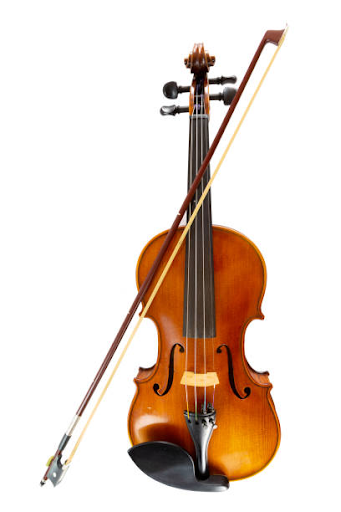


During the war that begun in 1914, (WWI), and because he was German, he lost the ability to earn money from concerts, teaching jobs and commissions for compositions in much of Europe.

In 1915, just a year after the war had started, he was visited by two sister-musicians from America. America was not yet involved in the war then and Bruch welcomed them because the two concert pianists had actually played one of his compositions for piano duet. In 1920, after the war, the two sisters visited him again near Berlin. Bruch, at that time long retired, had fallen into financial hardships. The sisters offered to buy the original signed manuscript for the Violin Concerto no. 1.  Without a written agreement and no down payment, the sisters took the manuscript back to America. Bruch who had high hopes that he will be paid in American dollars never heard from the sisters again.  A few months later Bruch passed away.  Mysteriously, cash of unknown origin arrived.  It was in German marks - practically of little value due to Germany's post war runaway inflation.  It was known that the sisters sold the manuscript in 1949 for an undisclosed amount.  It is now at the Morgan Library.

Max Bruch died destitute.  It was life lived once.  It was also life  full of promise because in the beginning, like Mozart, he started composing at a very young age and went on to be on the right track to fame and fortune. Only to die penniless in the end. Ironically, Mozart's life, despite the fame, also ended similarly.  He too died a pauper with nothing but mounting debts and was buried in a potter's grave. Both, like most composers of that era, did not benefit from any royalties.

Two similar lives lived once.  One, almost forgotten, another celebrated as the epitome of pure musical genius.

Speaking of genius, there was Albert Einstein, of course.  But have you heard of Elise Meitner? How about Mileva Marić?

In 1896, Mileva was the only female in a group of five students, that included Albert Einstein, who were admitted to Zurich's Polytechnic Institute, physics and math department. Four years later, at the end of their education, Mileva finished with a grade point average of 4.7, Albert got 4.6.  But in applied physics, Mileva finished with the highest possible grade of 5.0, while Albert, 1.0.  Mileva also aced it in experimental work, Albert did not.  At the oral exam, a prerequisite for graduation, their professor gave 11 out of the perfect twelve to Albert and the other three male students, but only 5 to Mileva.  Mileva did not get her degree, Albert did.

Albert and Mileva became romantically involved during and after their studies at the Institute. Mileva became pregnant, went back to Serbia, and had a daughter named Liserl.  Other than the name and the speculation that the daughter may have been put up for adoption, there is no birth or death certificate on record.

Eventually, Albert and Mileva got married after Einstein got a job at the Swiss Patent Office. Two sons were born. Mileva took care of the household and the children.  1905 is well known as Einstein's "miracle year" - when he published several theories.  What is not well known is that Mileva, a brilliant mathematician, helped Albert a lot in getting the math right behind the theories and that she actually reviewed and edited Albert's articles before they were sent out for publication. Some historians suggested that Mileva should have been given a lot more credit for Albert's accomplishments. Einstein won the Nobel Prize (But not on the famous Theory of Relativity!, but his work on the photoelectric effect). 

Albert may or may not have said, “I need my wife. She solves for me all my mathematical problems”.


However, in a letter to a friend he did say, on March 27,1901: “How happy and proud I will be when the two of us together will have brought our work on relative motion to a victorious conclusion.”  He was referring to Mileva and The Theory of Relativity.

Less than two decades later, Albert divorced Mileva and married his first cousin, Elsa Einstein, in 1919, with whom he already had an affair while still married to Mileva. Elsa's maiden surname was indeed Einstein. That's right, because Elsa's father was Rudolph Einstein, cousin of Albert's father. They were first cousins because Albert's mother and Elsa's were sisters. They emigrated to the U.S. where Einstein became professor of physics at Princeton University.  They did not have any children. As a footnote, none of Einstein's two sons inherited the brilliance from either or both parents. Hans did become a professor in hydraulics engineering at UC Berkeley. Eduard was institutionalized for mental illness throughout much of his adult life. Einstein had three grand children, only one survived to adulthood, one died at six years old, another barely lived for a month. 

Einstein, through both marriages had affairs with several women, mostly young women.

Albert Einstein recognized his unfaithfulness and emotional ineptitude with a letter to the son of his friend when he wrote, “What I admire in your father is that, for his whole life, he stayed with only one woman. That is a project in which I grossly failed, twice.” Of course, this is not to diminish his genius or his uncanny ability to see how the physical universe worked that no one then figured out the way he did.

Elise or Lise Meitner, born on Nov. 7, 1878 in Vienna, was an Austrian physicist who worked in what was then a male dominated field in research and theory development in Berlin just before the second world war started.  Below is a photo of her and Otto Hahn at the Kaiser Wilhelm Institute of Chemistry, Berlin (1913).  She and Otto together with another German scientist, Fritz Strassman, collaborated on what became the foundation for splitting the atom.


Being a Jew, Lise Meitner left Germany for Sweden just a year before the outbreak of WWII in 1939. Albert Einstein, on the other hand left in 1933 for America when he realized early on the rise of anti-Semitism as the Nazis started gaining power.  Otto and Lise Meitner, bound by a friendship that went on for thirty years of working together, corresponded regularly. Not only did she not help develop the critical process of splitting the atom but that she coined the word, "fission", in her article published in the journal, Nature, on February 11, 1939, as the way to extract the tremendous power of nuclear energy.  Meitner's research and calculations were based on the now famous equation, E = mc².

Albert Einstein knew of her work and, most importantly, Albert was convinced that Germany was about to develop the atom bomb.  Einstein expressed that in a letter to FDR in August, 1939, which led to the Manhattan Project. America won the race in creating the first atomic bomb a few years later, that ended the war in the Pacific.

Otto Hanh was awarded the Nobel Prize for nuclear fission in 1944. Lise Meitner's work was never mentioned.  Sadly, she remained obscured from history to this day.  

Why only these particular lives lived once?   I will get into that briefly.  This musing has already gone on beyond the limit of the reader's attention span.

I tried to intertwine the four "lives lived once" through the pivot of Germany because from there, if one carefully read between the lines is a panoply of the human experience reflected in much of history of any era. Albert played the violin rather seriously as an amateur - a gossamer of a connection to Max Bruch. One of Einstein's possessions that he had with him throughout his life was a violin that he was known to play. That violin sold at auction for over $500 million in 2018.

We had the second world war begin where these lives were mostly lived.  The war, any war, over millennia of the human existence is a story of horrific suffering, atrocities, death of so many lives, including so many unfulfilled ones - of children, young adults, and the unborn. Wars also caused so many to flee their homeland to settle somewhere else. Pick a century, choose an era; such is the story of humanity.

Mileva and Lise who both lived in obscurity to Einstein's limitless fame represent 99.999 % of all lives lived.  Einstein's daughter, Liserl, represents the unknown fate of many young children.  Now, is "life lived once" all there is then?  It will have to wait for the next musing.


Sunday, April 24, 2022

The Midnight Library


"Beyond the edge of the universe {between life and death} is a library that contains an infinite number of books. One tells the story of your life as it is, along with another book for the life you could have lived if you had made a different choice at any point. While we all wonder how our lives might have been, what if you had the chance to go and see for yourself?"

"Every book provides a chance to try another life you could have lived .. Would you have done anything different, if you had the chance to undo your regrets?"

                                                   ------ Matt Haig,  The Midnight Library

On the other hand,  Sylvia Plath, another American prolific poet and novelist said:

"I can never be all the people I want and live the lives I want.  I can never train myself in all the skills I want.  And why do I want?  I want to live and feel all the shades, tones and variations of mental and physical experiences possible in my life."

Sylvia Plath committed suicide at age 30.

First, I must acknowledge the book for its bold if not thought provoking premise along with my apologies to its author, Matt Haig,  for co-opting the book's title for this musing. It's not a very long book, 437 pages of large print and its overall dimension is smaller than a standard hard cover, but just slightly larger than a pocket book. I found the theme and the premise as far too deep, if not entirely fanciful, so I'd say it is not an easy "read". 

But, the reader (of this blog or the book) will have to agree that the idea behind the premise is much too intriguing to be ignored or not pondered upon.  To get one to wonder or imagine "what if" is not entirely radical but it does indeed take anyone to the realm of wishful thinking. But, keep in mind, we are talking about "what if".  However, isn't the "do over" our most intimate wish toward a perfect life?  

Before we get too deeply, let us take a byway to warm up our thoughts about why The Midnight Library  can be a reasonable place for those seeking hope in the event that there is time, hopefully much of it still left, for the proverbial course correction for each individual life.

The perfect example would be the game of chess.  You don't have to know the game to get the gist of the analogy. According to Claude Shannon, American mathematician, there are 10120 possible permutations for a typical  game of chess (that's 10X10 .. 120 times over). That designation is now known as the Shannon number but never mind that it would include everything from the silliest to the sublime on how a game may evolve and end.  If we count only the games by serious players, the number could be just third of that; still a very large number. Another mind blowing conclusion is that the Shannon number is more than all the atoms in the entire universe.  But bear with me because soon you'll see where this is going.

When I was in college - way, way back when - I played a lot of amateur chess among friends and classmates.  I poured over a few chess books, got to be conversant with chess openings and the history of the game (now almost completely beyond recollection).  Often the games were for fun but just as often they turned into both emotionally and physically draining jousts with folks who were otherwise good friends until you got them at the opposite side of a chess board.

I have not played another game with a person in a long time but still do frequently enough against a computer.  The beauty of computer chess is that one gets to choose the level of the game, akin to picking your opponent. In other words one may play against a novice, or one of average skill, or go against a grand master.  And the computer is so gallantly generous as to allow one to have a do-over or even offer to help with a better  move (against itself!) How cool is that?  

But, every now and then, feeling less chivalrous or seeking solace from beneath the thin layer of sportsmanship, I would invoke the chess move "do-over", once or twice or, well, as many as a few times, to salvage what was a great game on my part until that one fatal mistake. So, I would resort to a do-over. The computer, more than its compliant air of indifference, does not really care. Now, as a result, I do once in a while play the perfect game.  A computer voice obligingly either offer to resign or admit, "checkmate".  

Aside from the ego boost, one realizes that, indeed, in chess as in life, there is nothing like a do-over to achieve the perfect outcome. And how we wish it is possible or at the very least, a chance at something better than the prevailing predicament.

In chess one may elect the easier level; as in life, one may choose the easy circumstances with very little challenges.  However, life, unlike in chess, do-over is  hardly an option. Though sometimes possible, the required commitment may be daunting to those eager to try and find it often more challenging to "stick with it".  Alcoholics, drug addicts and criminal recidivists provide perennial proof.

In a coastal area of an island somewhere in the Pacific lived a family of four. The husband is a fisherman.  He has a small outrigger dugout canoe that he takes out before  dawn, if the weather is good, to fish. He is back two hours after sunrise, sometimes with a bounty, sometimes with very little.  He will either be at the open marketplace at the center of the village to sell fish, or he is at home with enough of what little he caught to feed his family for that day.

The wife takes care of a five year old girl and a three year old boy and the one room nipa hut that sits on bamboo stilts. Below, visible through the bamboo flooring are the handful of chickens and  couple of ducks fenced in by a simple enclosure.  Their bathroom and toilet are a one unit affair five yards away by where banana and papaya and guava trees stand as  part of a privacy wall from the rest of the small fishing community. From the other corner of the small lot is a pig pen with a couple of piglets.  She takes care of those two and  the ducks and the chicken.  In seven months the two pigs will be sold. Aside from the money spent to buy two more piglets, the proceeds from the sale she would save for the kids.  There are eggs to sell or eat depending on her husband's luck with the sea or the weather.

This is a happy family.  There are no debts.  There is little to pay for maintaining the house, their lifestyle does not cost much. The family is relatively healthy from the food they eat and the salty fresh air they breathe. What little "needs" they have are cheaply covered. What little "wants" they have are either cheaply addressed or ignored.  A simple but happy life.

Unbeknownst to the wife and the husband and the entire world, twelve thousand miles away from the opposite side of the globe eight years ago was another story.

Above the din and bustle of mid-town Manhattan, New York city, on the 21st floor of a plush tower-apartment, sat Natalie, alone, at the breakfast nook that is a mere section of a 3500 sq. foot luxuriously appointed living space all to herself.  Also, all to herself was a bottle of red wine, half of its $79 content she had already consumed. Again, all to herself was a bottle of prescription pills. She had already taken six of them.

Natalie just came back from a well earned vacation in the Far East, to escape the brutal winter that hit New York in a long time.  It was also to escape just temporarily the hectic life as a senior VP for one of the most powerful financial institutions of Wall Street. It was the break she needed but by the time the "fasten-your-seat-belt"  sign turned off, the reality of a fast paced life woke her up from her last vacation reverie.  JFK International Airport was still blanketed with snow.  Her phone lit up with texts and several messages.  She had a summon from the Board to come to the office bright and early at seven the following Monday morning. The late night TV business broadcast the last two hours of prime time about the potential financial crisis presumably to hit in the morning.

Natalie had a good life.  Wharton Business School, sixteen job offers before graduation. The years went by quickly.  Way too fast, really. She was brilliant and motivated.  She was 39 years old, unmarried, and a senior VP. She ate nothing but catered lunch almost every day. She gets picked  up and whisked around to wherever and back by limo with more than one dedicated driver at her beck and call every day, including weekends. She had a fitness trainer and dietician, all part of her negotiated salary package.

All that came with a price.  No long term personal relationship to speak of, professional alliances were only as good as the trade winds of the business cycle.  She had very few close friends and people in social gatherings suddenly would tone down their conversations to a murmur partly to gape at her good looks, expensive attire and in awe of her status, or to be filled with envy every time she entered the room.

She was refilling her glass to the brim, finishing off the bottle, while the pills were by then consumed to the last remaining handful of capsules left.  As she tipped the glass for the last gulp she was thinking of the woman hawking fresh fruit to the tourists from her dugout canoe next to the water's edge of Natalie's hotel as Natalie was having breakfast with someone she just met five days ago.

An hour later after the last drop of wine, after eight more pills, Natalie was perusing the books at The Midnight Library. 

It is now eight years since then.  Natalie is now Natividad but she has no knowledge of everything in that New York apartment, nor about anything before then.  She is at the present moment mending a torn shirt of her boy and if she has time before tending to the chicken and the ducks and the piglets, she will also patch her husband's well worn trouser.

Natividad might herself one day get to visit the Midnight Library. However, there is a strong possibility she may not find it necessary.


(P.S. - I made the story up and therefore not based on actual people I know or read about.  However, my family, as I was growing up in one of the central islands of the Philippines, lived as humbly as that of Natividad's. It is the best way I know how to illustrate the essence of the fanciful "what ifs" and "what could have been" in the imaginary world that is The Midnight Library).